
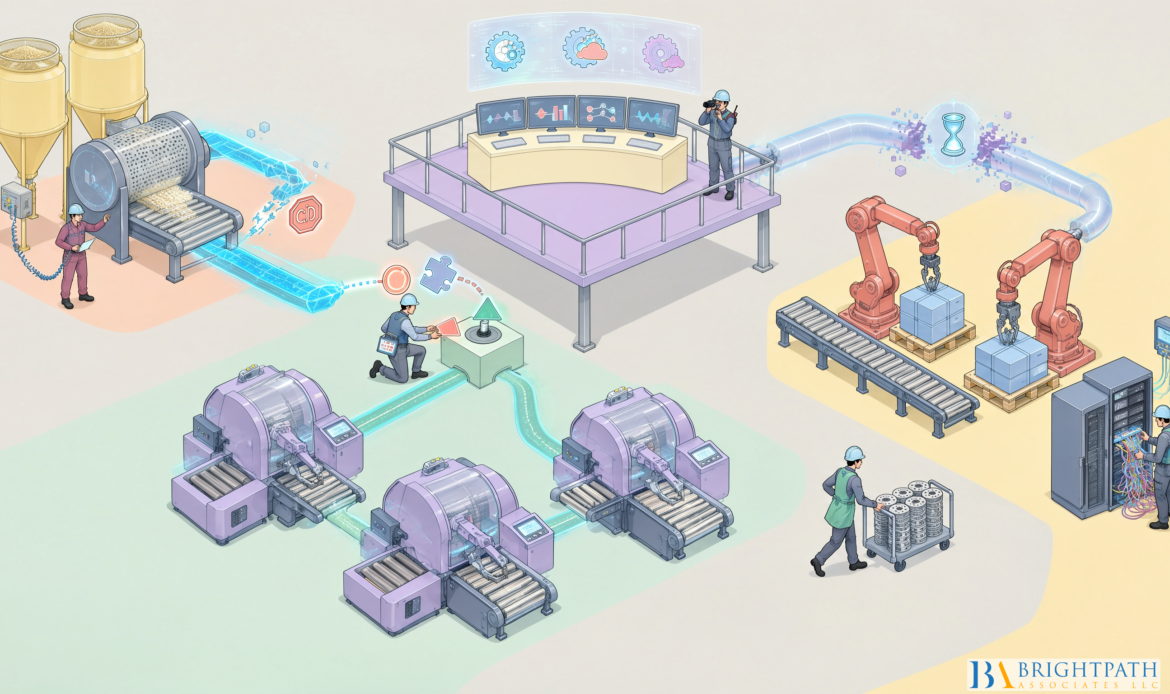
[Bethany, Connecticut – 04 November 2026] – BrightPath Associates has highlighted the growing importance of data interoperability in accelerating automation across the Paper & Forest Industry. Its latest industry analysis explains how disconnected manufacturing systems, inconsistent data structures, and outdated technology infrastructure can prevent paper mills from achieving the full benefits of digital transformation. As paper and pulp manufacturers invest in modern automation, artificial intelligence, and advanced analytics, establishing reliable connections between operational systems is becoming essential for improving productivity, controlling costs, and strengthening long-term competitiveness.
For C-suite executives, the challenge extends beyond purchasing new technology. Modern mills may already operate connected equipment, industrial sensors, production monitoring systems, and cloud-based applications. However, these technologies cannot deliver their full value when information cannot be accurately exchanged and understood across departments. The analysis, titled Data Interoperability: The Hidden Barrier to Mill Automation, examines why building a connected and reliable data environment is becoming a strategic priority for paper manufacturers.
Disconnected Systems Continue to Challenge Mill Automation
Paper and pulp manufacturing facilities often operate with multiple systems installed at different times and supplied by different technology vendors. Distributed Control Systems (DCS), Programmable Logic Controllers (PLC), Quality Control Systems (QCS), Manufacturing Execution Systems (MES), and Enterprise Resource Planning (ERP) platforms all manage different operational activities.
Although these systems can collect valuable information, inconsistent naming conventions, missing production details, different measurement units, and incompatible data structures can make information difficult to share. For example, a quality issue identified by one system may not be easily connected with machine performance, maintenance records, production schedules, or raw material information.
The BrightPath analysis highlights an important distinction: “equipment can be connected without its data being understandable, trusted, or available in the right context.” This means connectivity alone cannot guarantee successful automation. Manufacturers must ensure that information retains its meaning as it moves between systems. Without this foundation, even advanced analytics and artificial intelligence applications may produce incomplete or unreliable results.
Building a Strong Foundation for Paper and Pulp Technology
Successful automation requires more than connecting machines to a central platform. Paper manufacturers need consistent data standards, accurate equipment information, reliable sensors, and clearly defined responsibilities for managing operational information.
Creating a common data structure can help organizations connect production measurements with machine conditions, product grades, maintenance activities, and manufacturing schedules. Technologies such as OPC UA, application programming interfaces (APIs), and edge computing can support information exchange between legacy equipment and modern digital platforms.
This approach is particularly important for companies investing in Paper and Pulp Technology. Instead of replacing every existing machine or control system, manufacturers can evaluate integration solutions that allow older equipment to communicate with newer platforms. This can reduce unnecessary capital expenditure while supporting gradual modernization.
Executives should also prioritize specific business objectives before investing in large technology platforms. Improving production quality, reducing equipment downtime, monitoring energy consumption, and strengthening maintenance planning can provide practical starting points for automation projects.
Supporting Sustainability and Forest Product Innovation
Data interoperability also has significant implications for sustainability across the paper and forest products sector. Manufacturers are facing growing expectations to improve resource utilization, reduce waste, and strengthen environmental performance while maintaining profitability.
Reliable data connections can help companies monitor fiber consumption, production waste, energy usage, water consumption, and product quality. These insights can support better decisions across Paper Recycling Solutions and sustainable manufacturing initiatives.
For example, recycled-fiber quality can influence production performance and finished-product consistency. When supplier information, fiber characteristics, laboratory results, and machine operating conditions are connected, production teams can better understand how raw material variations affect manufacturing outcomes.
Similarly, Timber Harvesting operations can benefit from improved information exchange between forestry activities, transportation networks, inventory systems, and mill operations. Better visibility into fiber availability and material movement can support planning and supply chain coordination. These capabilities can also strengthen Forest Product Innovation and the development of Sustainable Materials.
The wider Paper & Forest Industry is therefore increasingly dependent on reliable digital infrastructure to balance operational performance, resource efficiency, and changing market expectations.
Overcoming Barriers to Digital Transformation
Despite the opportunities, implementing data interoperability across paper mills involves several challenges. Legacy equipment, cybersecurity risks, integration costs, inconsistent historical records, and employee resistance can slow modernization efforts.
Manufacturers should begin with clearly defined operational requirements and test proposed technology solutions using representative production data. They should also establish data ownership policies, standardize equipment information, and ensure that information can be recovered following network interruptions.
Importantly, automation strategies should connect technology investments with measurable business outcomes. Improvements in production reliability, product quality, energy efficiency, inventory management, and operating margins can help executives evaluate the commercial value of digital transformation.
As Automation in Paper Industry operations continues to advance, companies that establish reliable data foundations will be better positioned to introduce predictive maintenance, digital twins, advanced analytics, and artificial intelligence applications.
About BrightPath Associates
BrightPath Associates is an executive search and recruitment firm serving businesses across multiple industries in the United States. The company helps organizations identify experienced executives, senior professionals, and specialized talent to support business growth, operational improvements, and long-term strategic objectives. Its mission is to connect businesses with the right leadership talent while helping organizations build stronger and more effective teams.
Media Contact:
Name: Corporate Communications Team
Company: BrightPath Associates
Email: media@brightpathassociates.com
Website: https://brightpathassociates.com