
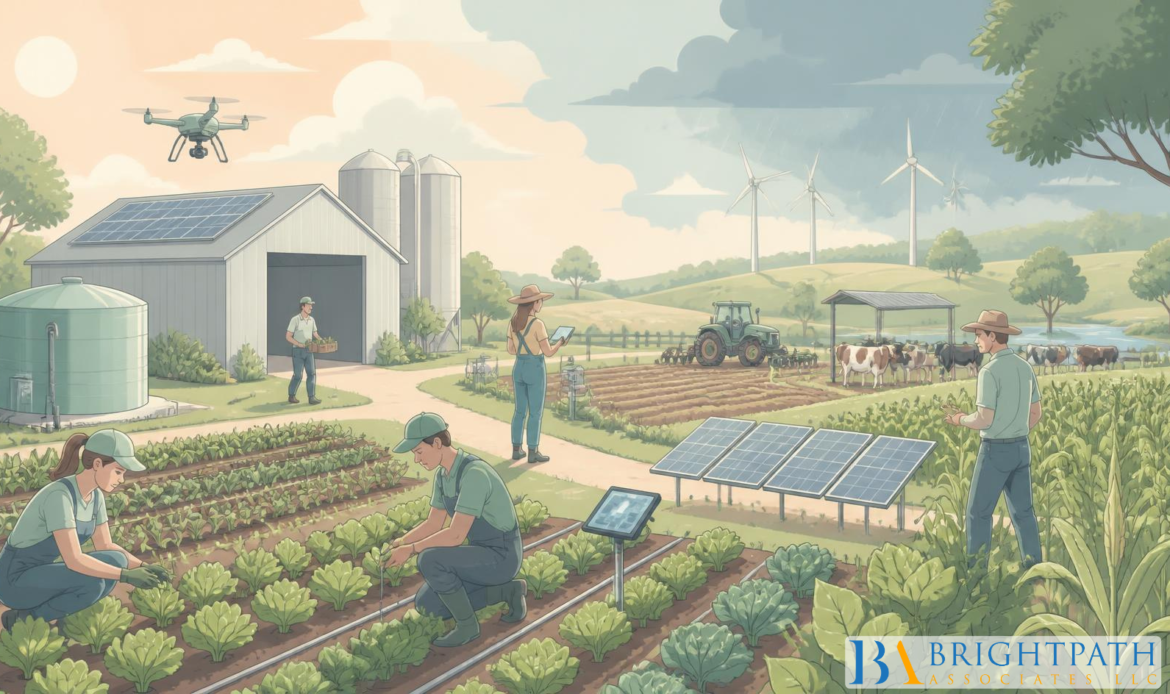
[Bethany, Connecticut – 16 October 2026] – BrightPath Associates is highlighting the importance of climate stress-testing as agricultural businesses prepare for the environmental and operational challenges expected to shape farming through 2040. In its latest industry analysis, the company explores how C-suite executives, farm owners, and agricultural leaders can assess climate vulnerabilities, improve resource management, and strengthen long-term profitability through agricultural technology, sustainable farming, financial planning, and workforce development.
Rising temperatures, unpredictable rainfall, prolonged droughts, and extreme weather events can place pressure on crop yields, livestock health, soil quality, and operating costs. For decision-makers responsible for business continuity and food production, preparing for these risks requires more than reacting to changing weather. It requires evaluating how farms would perform under different conditions and identifying weaknesses before they lead to significant losses.
Climate Stress-Testing Becomes a Strategic Priority
A climate stress-test allows farm operators to examine how environmental disruptions could affect production, costs, and cash flow. Rather than relying entirely on historical weather patterns, executives can evaluate scenarios involving water shortages, heat stress, pest outbreaks, supply chain interruptions, and rising agricultural input prices. These assessments help businesses identify critical dependencies and develop practical contingency plans.
BrightPath Associates’ analysis, Is Your Farm Operation Built for the 2040 Climate Reality? A Stress-Test, emphasizes that climate resilience depends on several connected factors, including water availability, soil health, financial preparedness, and workforce capabilities. Leaders can explore the complete Farm Operation Climate Readiness Strategy for the 2040 Climate Reality to understand how structured risk assessments can support more informed operational decisions.
For C-suite executives, the objective is to protect productivity while maintaining financial stability. Reviewing irrigation capacity, energy dependence, labor availability, insurance coverage, and supplier reliability can help organizations identify where targeted improvements may reduce future risks.
Agricultural Technology Supports Smarter Resource Management
Agricultural technology is creating new opportunities to monitor field conditions and improve decisions. Precision agriculture tools, including soil moisture sensors, satellite imagery, weather stations, and GPS-guided machinery, can help farmers identify crop stress, optimize irrigation, and apply fertilizers more efficiently. These capabilities become particularly valuable when water supplies are limited or growing conditions change unexpectedly.
Digital Farming and Farm management software can further strengthen operational visibility by combining weather forecasts, field histories, machinery records, input costs, and production data. Farm managers can use this information to compare possible outcomes, evaluate investment options, and understand how lower yields or higher operating expenses could affect profitability.
However, technology alone cannot guarantee resilience. Agricultural businesses must consider equipment compatibility, maintenance requirements, data quality, connectivity, and employee training before committing to new systems. A gradual implementation strategy focused on measurable operational problems can help organizations improve efficiency without adding unnecessary complexity.
Leadership and Workforce Readiness Will Shape Agricultural Resilience
Climate adaptation also requires skilled people who can turn strategic plans into practical action. Agricultural businesses may need stronger capabilities in irrigation management, sustainability, digital agriculture, equipment maintenance, financial planning, and supply chain coordination. Employees must understand emergency procedures and know how to respond to heat stress, severe weather, water shortages, and equipment failures.
This makes Executive search recruitment an important consideration for growing agribusinesses. Recruiting experienced operations leaders, sustainability specialists, and agricultural technology professionals can help organizations connect technical improvements with commercial objectives. At the same time, training existing employees can build the digital and operational skills needed to manage new systems effectively.
The broader Farming Industry will need an integrated approach that combines sound leadership, reliable infrastructure, informed technology adoption, and responsible resource management. For executives, the priority is to develop operations that can adapt to changing conditions while maintaining productivity, profitability, and dependable food production.
About BrightPath Associates
BrightPath Associates is an executive recruitment and talent solutions firm that helps organizations identify qualified professionals and leadership talent across multiple industries. The company focuses on connecting businesses with people who can support growth, operational performance, workforce development, and long-term strategic objectives. Through its industry-focused recruitment approach, BrightPath Associates aims to help organizations build capable teams for evolving business challenges.
Media Contact:
Name: Corporate Communications Team
Company: BrightPath Associates
Email: media@brightpathassociates.com
Website: https://brightpathassociates.com