
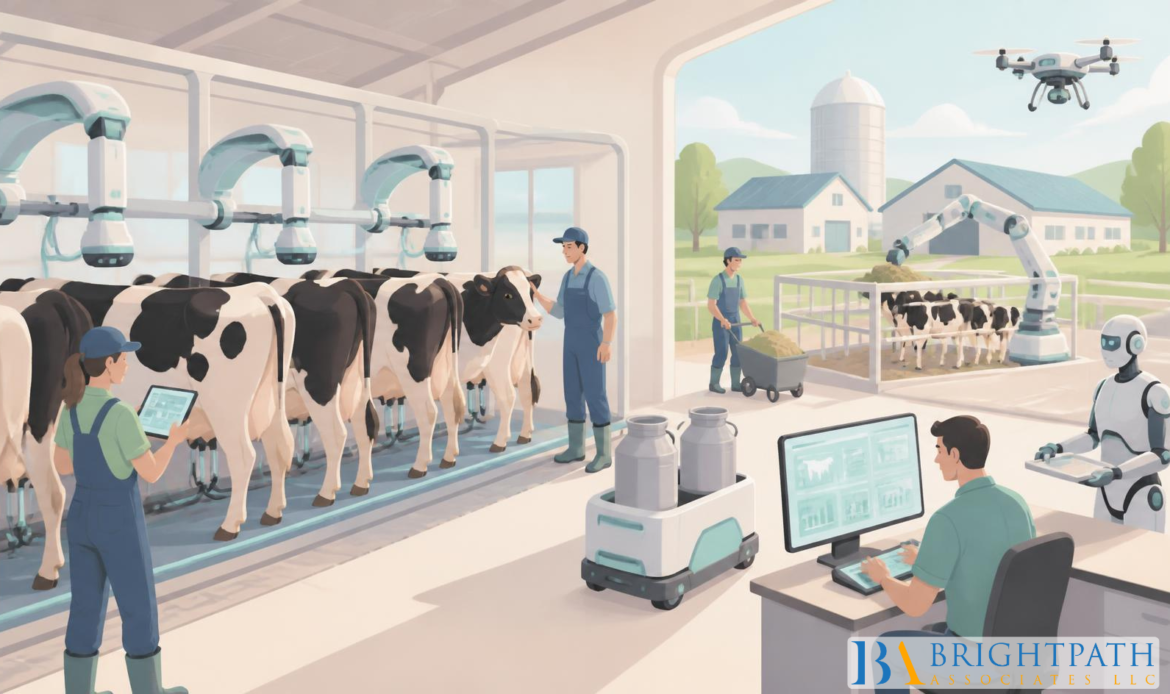
[Bethany, Connecticut – 16 October 2026] – BrightPath Associates has highlighted how artificial intelligence (AI), robotics, and digital monitoring are reshaping labor and productivity on modern dairy farms. The company’s latest industry analysis explores how dairy businesses can use automation to improve milk production, monitor animal health, address workforce challenges, and strengthen operational performance while preserving the human expertise essential to responsible farming. For C-suite executives, the shift presents an opportunity to align technology investments, workforce planning, and long-term business growth.
As dairy producers face rising operating costs, labor shortages, evolving consumer expectations, and growing sustainability demands, technology is becoming an important part of modern farm management. However, successful transformation requires more than purchasing automated equipment. Dairy leaders must integrate digital tools with employee training, animal welfare, and practical operational knowledge to create resilient and productive businesses.
AI Improves Farm Management and Milk Production
AI-powered monitoring systems can analyze information from wearable sensors, automated milking equipment, cameras, feeding systems, and environmental monitors. These tools can help farm managers identify changes in animal movement, feeding behavior, rumination, and milk output. Early alerts allow employees to investigate possible health or production issues before they become more serious, supporting better-informed decisions and more consistent farm operations.
According to BrightPath Associates’ analysis, “The value of AI therefore comes not only from automation but also from its ability to help people make better-informed decisions.” Human judgment remains essential when interpreting alerts, assessing animal welfare, and determining when veterinary or management intervention is needed.
Modern Milk production technologies can also provide information about milking frequency, individual animal performance, and selected milk-quality indicators. When connected with cooling, storage, sanitation, and traceability systems, these technologies can strengthen quality management and support better coordination between farms and processors. This creates opportunities to connect farm-level improvements with broader Dairy product development and Food technology initiatives.
Robotics Reshapes Daily Dairy Farm Operations
Robotic milking systems, automated feed pushers, manure removal equipment, and robotic cleaning solutions can reduce repetitive and physically demanding tasks. These Dairy automation technologies can improve consistency in routine operations, helping employees focus more attention on animal care, equipment monitoring, and unusual production conditions.
However, automation also introduces new responsibilities. Equipment requires maintenance, reliable connectivity, technical support, and contingency plans for unexpected failures. Dairy executives should evaluate installation costs, infrastructure requirements, expected productivity improvements, and staff training before committing to large-scale investments. Technology selection should reflect the farm’s actual needs rather than assumptions that automation will automatically deliver financial or operational benefits.
The broader Dairy Industry is experiencing a shift toward integrated digital operations, where equipment, workforce capabilities, and production objectives must work together. Carefully planned automation can help businesses manage labor constraints while maintaining appropriate standards for hygiene, animal care, and product quality.
Digital Transformation Supports Sustainable Growth
Sustainable dairy farming practices increasingly depend on effective resource management, responsible animal care, and measurable operational improvements. AI-enabled monitoring and precision feeding systems can help farm managers evaluate feed use, identify inefficiencies, and monitor resource consumption. Automated cleaning and manure handling may also improve process consistency, depending on farm infrastructure and implementation.
Meanwhile, Dairy supply chain management can benefit from connected production records, traceability systems, and improved information sharing between farms, processors, distributors, and retailers. Digital demand forecasting and Dairy e-commerce platforms can create additional commercial opportunities, but businesses must also manage inventory, product freshness, delivery schedules, and cold-chain requirements.
Effective Dairy industry growth strategies therefore require leaders to assess technology costs, operational risks, workforce readiness, and measurable business outcomes. The broader Dairy industry digital transformation must connect farm operations with processing, distribution, and customer expectations rather than treating each investment as an isolated project.
About BrightPath Associates
BrightPath Associates is an executive recruitment and talent solutions firm that helps organizations identify professionals and leaders who support business growth, operational performance, and long-term success. The company works with businesses across multiple industries, helping them develop stronger teams and align talent strategies with evolving business needs. BrightPath Associates is committed to connecting organizations with the right people to support sustainable growth and organizational development.
Media Contact:
Name: Corporate Communications Team
Company: BrightPath Associates
Email: media@brightpathassociates.com
Website: https://brightpathassociates.com