
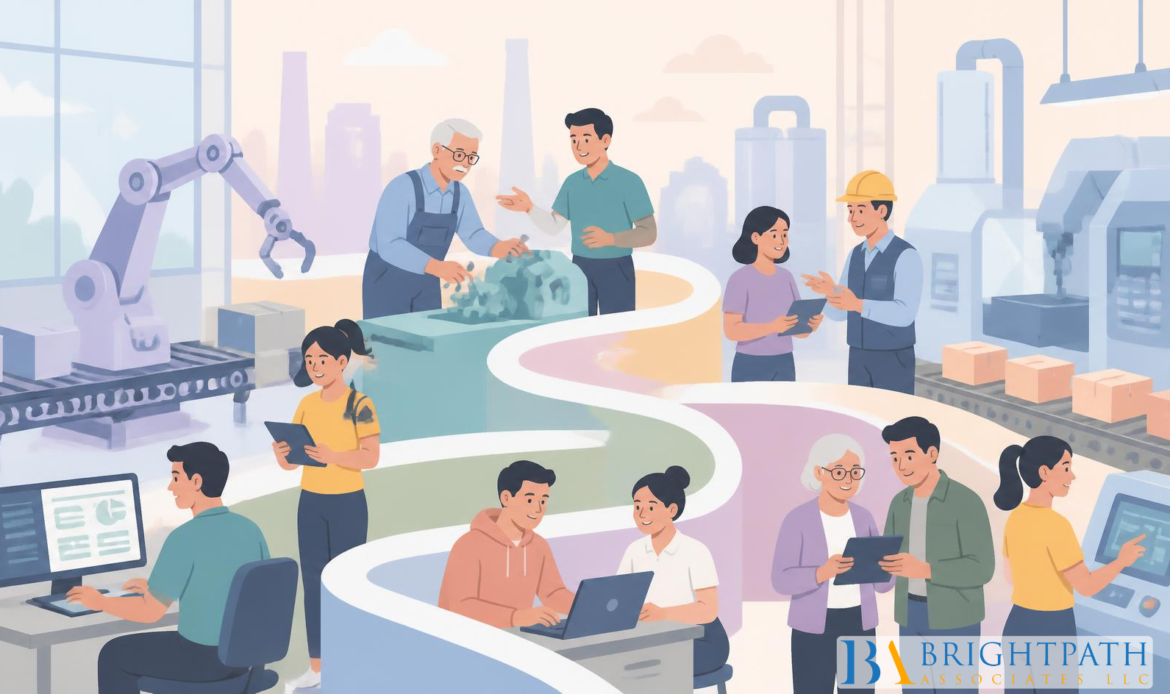
[Bethany, Connecticut – 14 October 2026] – BrightPath Associates is highlighting the importance of developing a workforce roadmap that addresses generational differences and prepares businesses for long-term growth. The company’s analysis explores how organizations can align the experience of established employees with the technology skills, fresh perspectives, and changing career expectations of younger professionals. For C-suite executives in the Paper & Forest Industry, a structured workforce strategy can help address talent shortages, support operational modernization, and strengthen competitiveness as sustainability requirements and manufacturing technologies continue to evolve.
The paper, pulp, forestry, and wood product sectors are navigating several workforce challenges at once. Experienced employees hold valuable operational knowledge, while digital transformation is creating demand for new technical and analytical skills. Without a clear approach to knowledge transfer, employee development, and leadership succession, companies risk losing institutional expertise and slowing innovation. A well-designed workforce roadmap can help executives turn generational differences into opportunities for collaboration, productivity, and business resilience.
Managing Generational Differences Through Strategic Workforce Planning
A multigenerational workforce brings different experiences, communication preferences, technical abilities, and expectations to the workplace. Senior employees may offer deep knowledge of production processes, equipment reliability, supplier relationships, and safety practices. Younger professionals may bring familiarity with digital tools, automation, data analytics, and emerging approaches to sustainability. Organizations benefit most when they combine these strengths instead of treating generational differences as barriers.
BrightPath Associates’ article, Adapting Your Workforce Roadmap to Generation Clash, explores how businesses can approach generational differences through more effective workforce planning. For paper and forest product companies, this means building systems that encourage mentoring, cross-functional learning, open communication, and shared responsibility for business outcomes.
Executives can support this transition by creating structured knowledge-transfer programs, offering role-specific training, and establishing clear career development pathways. Reverse mentoring can also help experienced employees learn new digital methods while younger team members gain practical insights into production challenges. These approaches can strengthen engagement and reduce the risk of losing critical expertise when experienced employees retire or move into new roles.
Preparing for Technology and Sustainability Changes
The Paper & Forest Industry is experiencing changes in production methods, environmental expectations, and customer demand. Automation in the paper industry is helping manufacturers improve process consistency, monitor equipment performance, and reduce avoidable downtime. At the same time, advances in paper and pulp technology are creating opportunities to improve resource efficiency, product quality, and manufacturing performance.
These developments require more than capital investment. Businesses need employees who can operate advanced equipment, interpret production data, maintain automated systems, and adapt to changing processes. Workforce development should therefore connect technology investments with practical training and measurable operational goals. By preparing employees for evolving responsibilities, companies can improve manufacturing efficiency while supporting a safer and more adaptable workplace.
Sustainability also makes workforce planning increasingly important. Paper recycling solutions, sustainable materials, and forest product innovation can help companies respond to customer expectations and resource pressures. However, adopting these approaches requires expertise in material handling, process optimization, product development, and environmental performance. Executives who integrate workforce development into sustainability planning can better prepare their teams to implement new processes and deliver consistent results.
Connecting Workforce Strategy With Industry Economics
Changes in workforce capabilities have direct implications for paper industry economics. Labor availability, energy costs, equipment utilization, raw material prices, and production efficiency all influence profitability. Companies that struggle to recruit or retain skilled employees may face higher training costs, delayed projects, maintenance challenges, and reduced output. A forward-looking workforce roadmap helps leaders identify critical roles, assess future skill requirements, and prioritize investments in people.
Businesses across wood product manufacturing, timber processing, and the lumber industry must also respond to changing lumber industry trends, evolving forestry regulations, and the operational demands of timber harvesting. These interconnected activities depend on employees who understand safety requirements, resource management, production planning, and environmental responsibilities. Leadership teams must ensure that workforce plans reflect the realities of their operations rather than relying on a one-size-fits-all recruitment strategy.
Executives seeking broader industry insights can explore the Paper & Forest Products Industry to better understand the sector’s business environment and workforce priorities. Aligning talent planning with market conditions can help organizations prepare for operational changes, improve succession planning, and build teams capable of supporting long-term growth.
About BrightPath Associates
BrightPath Associates is an executive recruitment and talent solutions firm that helps businesses identify leadership and specialized professionals across multiple industries. The company supports organizations in addressing hiring challenges, strengthening leadership teams, and aligning talent strategies with business objectives. Its mission is to help companies connect with the right professionals to support sustainable growth and long-term success.
Media Contact:
Name: Corporate Communications Team
Company: BrightPath Associates
Email: media@brightpathassociates.com
Website: https://brightpathassociates.com