
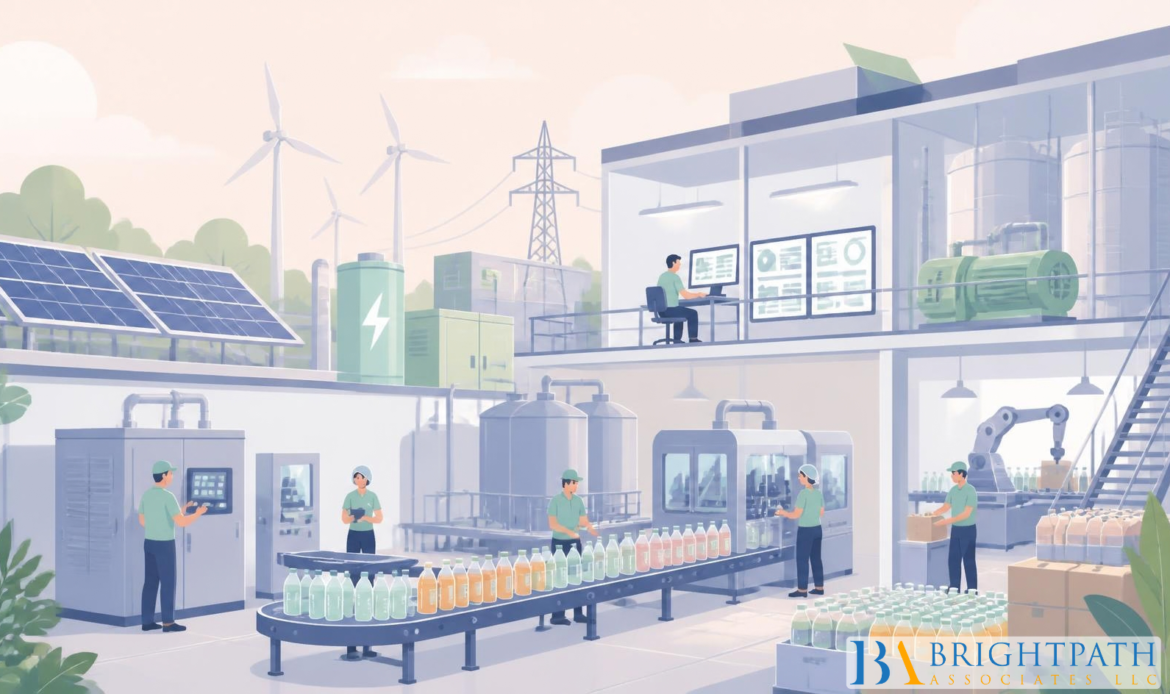
[Bethany, Connecticut – 08 October 2026] – BrightPath Associates highlights how Energy as a Service (EaaS) and innovative energy management models are helping beverage manufacturers rethink power consumption, reduce operational challenges, and support long-term production efficiency. As energy costs, sustainability expectations, and manufacturing demands continue to influence business decisions, these models offer industrial leaders new ways to access energy infrastructure, modernize facilities, and improve operational performance through technology and specialized expertise.
Beverage plants depend on energy-intensive operations, including mixing, processing, refrigeration, bottling, packaging, and cleaning. Managing these requirements while maintaining production schedules can be challenging for executives responsible for profitability and business growth. Energy as a Service offers an alternative to traditional infrastructure ownership by allowing manufacturers to work with specialized providers that may finance, install, operate, or maintain energy systems under service-based agreements. This approach can help businesses explore modern energy solutions while managing capital expenditure and operational risks.
Energy as a Service Creates New Opportunities for Beverage Manufacturers
Traditional energy infrastructure investments can require substantial upfront capital, technical expertise, and ongoing maintenance. For beverage manufacturers operating multiple production lines or facilities, these requirements can limit the resources available for equipment upgrades, capacity expansion, and process improvement. Energy as a Service can help address these challenges by shifting some infrastructure responsibilities to service providers, depending on the agreement and project structure.
The model may include energy-efficient equipment, on-site renewable energy, battery storage, combined heat and power systems, and advanced energy monitoring technologies. Instead of managing every component independently, manufacturers can evaluate service arrangements based on energy performance, reliability, operating costs, and long-term business requirements. The right approach depends on facility conditions, energy demand, local utility arrangements, and the provider’s capabilities.
For a deeper understanding of these developments, BrightPath Associates explores Innovative Power Models for Beverage Plants Through Energy as a Service. The analysis provides industry-focused context for leaders assessing how alternative energy models can support manufacturing operations and strategic investment decisions.
Industrial Automation Strengthens Energy Efficiency
Energy management becomes more effective when it is connected with manufacturing automation. Modern industrial facilities use programmable logic controllers, sensors, supervisory control and data acquisition systems, and advanced control systems to monitor equipment and manage production processes. Integrating energy data with these technologies can help operators identify unnecessary consumption, detect equipment inefficiencies, and adjust operations according to production requirements.
For example, SCADA systems can provide visibility into equipment performance, temperature conditions, energy consumption, and process variables. A properly designed automation system can help manufacturers identify periods of excessive energy use and coordinate equipment operation more effectively. Industrial machine vision and robotics integration can also contribute indirectly to efficiency by improving product inspection, reducing production errors, and supporting consistent manufacturing processes.
These opportunities make the Industrial Automation Industry an important part of the broader energy transformation. When energy systems and production controls work together, beverage manufacturers can make better-informed decisions about equipment utilization, process scheduling, maintenance, and resource allocation.
Automation Solutions Support Long-Term Operational Performance
Successful energy modernization requires more than installing efficient equipment. Manufacturers must evaluate how new technologies interact with existing production lines, electrical infrastructure, safety requirements, and business objectives. Automation solutions manufacturing teams can support this process by designing systems that connect energy monitoring with production controls and operational reporting.
PLC programming service providers can help configure equipment logic, coordinate machinery operation, and support the integration of energy-related functions into existing control systems. Meanwhile, industrial software specialists can help configure SCADA systems to present meaningful information about consumption, equipment status, and process performance. These capabilities can improve visibility, but results depend on system compatibility, accurate data, effective implementation, and ongoing monitoring.
Manufacturers should also assess the financial and operational terms of an EaaS agreement before making commitments. Relevant considerations include contract duration, performance guarantees, maintenance responsibilities, energy-price exposure, system ownership, and service-level commitments. A structured evaluation helps executives understand whether a proposed model supports their facility’s needs and delivers value over its expected operating life.
About BrightPath Associates
BrightPath Associates is an executive search and recruitment firm that helps businesses identify leadership and specialized talent across multiple industries. The company works with organizations to strengthen their workforce, support strategic growth, and address evolving hiring requirements. Through industry-focused recruitment services, BrightPath Associates aims to connect businesses with professionals who can advance operational performance and long-term business objectives.
Media Contact:
Name: Corporate Communications Team
Company: BrightPath Associates
Email: media@brightpathassociates.com
Website: https://brightpathassociates.com