
Introduction
For decades, #PlasticsManufacturers have relied on physical prototypes, pilot runs, engineering trials, and repeated process adjustments to validate new products and manufacturing systems. While these approaches remain important, they can be expensive and time-consuming. A design may look successful on paper but encounter unexpected problems when it reaches tooling, production, or full-scale manufacturing.
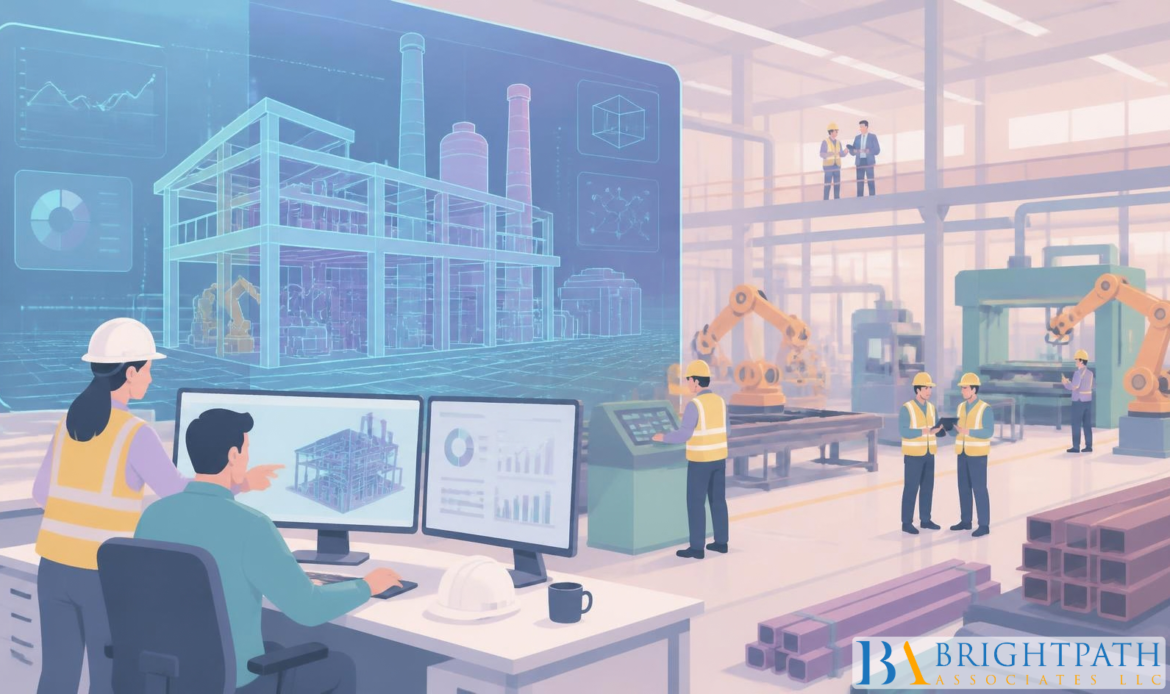
Digital twins are changing this equation. By creating a virtual representation of a physical product, machine, process, or entire manufacturing environment, companies can simulate performance before making expensive physical commitments. Instead of immediately cutting steel, producing molds, modifying production lines, or purchasing equipment, manufacturers can first test scenarios within a digital environment.
For the plastics industry, this capability has significant strategic implications. From injection molding and extrusion to blow molding, recycling, packaging, and advanced polymer processing, digital twins can help organizations understand how changes will behave before those changes reach the factory floor.
As competition increases, companies are increasingly connecting digital simulation with plastics manufacturing technology investment, operational planning, product development, and long-term business strategy.
Plastics manufacturing involves complex interactions among materials, machinery, temperature, pressure, tooling, cooling systems, cycle times, and production conditions. A small change in one parameter can affect multiple parts of the process.
For example, changing a polymer formulation may influence melt flow, cooling behavior, dimensional stability, cycle time, and product quality. Modifying mold geometry can affect filling patterns, pressure requirements, cooling rates, and potential defects.
A digital twin allows manufacturers to model these relationships before implementing changes physically. Engineers can evaluate different scenarios, identify potential constraints, and optimize processes without repeatedly interrupting production.
This creates a more disciplined approach to engineering decision-making. Instead of asking whether a design might work, organizations can use simulation to build stronger evidence about how it is likely to perform.
Simulating Tooling Before Cutting Steel
Tooling represents one of the most significant areas where digital twins can create value. Injection molds and other specialized tooling can require substantial investment, and changes after fabrication can be expensive.
Digital simulation allows engineers to evaluate mold filling, cooling, warpage, pressure distribution, and other performance factors before the physical tool is manufactured.
The objective is not to eliminate physical testing altogether. Rather, digital simulation can reduce the number of physical iterations required before reaching a commercially viable design.
This can shorten development cycles while reducing material waste and engineering rework. For manufacturers competing on speed and cost, the ability to identify problems earlier can become a meaningful competitive advantage.
Technology investment decisions have traditionally involved evaluating equipment specifications, expected output, labor requirements, maintenance costs, and return on investment. Digital twins add another dimension by allowing organizations to simulate how proposed technologies could perform under different operating conditions.
Before investing in a new injection molding machine, automated material-handling system, extrusion line, or packaging system, manufacturers can model expected production performance.
This can support more informed plastics manufacturing technology investment decisions. Instead of evaluating equipment solely through supplier demonstrations or theoretical capacity figures, companies can assess how a proposed system might interact with their existing processes.
Digital twins can therefore become a decision-support mechanism for capital expenditure planning.
Digital Twins and Supply Chain Visibility
The benefits of digital twins extend beyond the factory floor. Modern plastics businesses operate within complex networks involving polymer suppliers, compounders, mold manufacturers, equipment providers, logistics companies, distributors, and customers.
This makes plastics industry supply chain management increasingly dependent on visibility and scenario planning.
A digital twin of a supply chain can model disruptions such as raw-material shortages, transportation delays, supplier capacity constraints, or sudden changes in customer demand. Management can then evaluate potential responses before a disruption becomes operationally damaging.
For example, if a key resin supplier experiences a capacity problem, a digital model can help evaluate alternative suppliers, inventory levels, transportation options, and production schedules.
The value lies in moving from reactive supply-chain management toward scenario-based planning.
Digital twins can also support plastics industry #CompetitiveAnalysis by helping companies understand their own operational performance relative to market expectations.
Manufacturers can model production costs, cycle times, equipment utilization, scrap rates, energy consumption, and capacity scenarios. These insights can help executives identify where the company has operational advantages and where competitors may have an edge.
A manufacturer with shorter development cycles, lower scrap rates, better machine utilization, or faster changeovers may be able to respond to customer demands more effectively.
Digital simulation can therefore become part of a broader strategic process rather than remaining solely within engineering departments.
Supporting Plastics Market Expansion Strategies
Entering a new market requires more than identifying customer demand. Manufacturers must determine whether existing production systems can support new product requirements, regulatory expectations, material specifications, and volume levels.
Digital twins can help organizations evaluate these questions before committing significant capital.
For companies developing plastics market expansion strategies, simulations can model additional production capacity, new product lines, regional manufacturing requirements, and potential changes in demand.
Executives can compare different expansion scenarios and evaluate whether it is more efficient to expand an existing plant, add equipment, establish a new facility, or work with a strategic manufacturing partner.
This improves the quality of expansion decisions while reducing uncertainty.
Manufacturing risk rarely comes from a single source. Equipment failure, material shortages, quality problems, workforce constraints, regulatory changes, and demand volatility can all affect production performance.
Digital twins provide a platform for plastics industry risk management because they allow organizations to test potential disruptions virtually.
A manufacturer can simulate equipment downtime, reduced raw-material availability, production bottlenecks, or changes in customer demand. Management can then examine how these scenarios influence throughput, inventory, costs, and delivery commitments.
This creates an opportunity to develop contingency strategies before a real disruption occurs.
The ability to simulate risk becomes particularly valuable as plastics manufacturers face greater pressure to maintain reliable supply while controlling costs.
Digital Twins and Economic Uncertainty
The plastics sector is strongly influenced by broader economic conditions. Raw-material prices, energy costs, consumer demand, interest rates, construction activity, automotive production, packaging demand, and global trade conditions can all affect manufacturers.
Understanding #PlasticsEconomicTrends therefore requires more than reviewing historical market data. Companies increasingly need the ability to model how economic changes could affect their operations.
A digital twin can support scenario analysis by allowing management to examine production and capacity decisions under different market assumptions.
If demand falls, the company can simulate reduced production schedules. If demand increases, management can model capacity expansion. If material prices rise, the organization can examine alternative formulations or sourcing strategies.
This gives executives a more dynamic approach to economic planning.
Digital twins become more powerful when they are connected to other technologies. Sensors, industrial software, artificial intelligence, automation platforms, cloud computing, advanced analytics, and manufacturing execution systems can all contribute data to a digital model.
This creates a broader plastics industry innovation ecosystem.
Equipment manufacturers can provide machine data. Material suppliers can contribute polymer characteristics. Software companies can provide simulation capabilities. Engineering teams can interpret results and optimize designs.
Collaboration among these participants can accelerate innovation because organizations no longer need to develop every capability independently.
The result is an ecosystem where digital information flows between product development, manufacturing, suppliers, and customers.
Strategic Partnerships and Digital Transformation
The implementation of digital twins frequently requires capabilities that may not exist within a plastics manufacturer. This creates opportunities for plastics industry strategic partnerships.
Manufacturers may collaborate with engineering firms, software developers, equipment manufacturers, automation providers, universities, research institutions, and technology consultants.
Strategic partnerships can accelerate implementation while providing access to specialized expertise.
However, successful partnerships require clearly defined objectives. Companies should understand whether the digital twin is intended primarily for product development, process optimization, predictive maintenance, capacity planning, supply-chain management, or broader business transformation.
A well-defined purpose ensures that digital-twin investment produces measurable operational value rather than becoming another disconnected technology initiative.
Technology does not eliminate the need for experienced professionals. In fact, digital transformation can increase demand for individuals capable of interpreting complex data and translating simulation results into practical manufacturing decisions.
Engineers need to understand both physical manufacturing processes and digital modeling environments. Operations leaders must know how simulation results affect production schedules and commercial objectives. Executives need to evaluate whether digital investments support long-term business strategy.
This is creating new requirements for talent acquisition within the plastics sector. Companies increasingly need professionals who combine technical knowledge with strategic thinking.
Organizations working with specialized #PlasticsIndustryRecruiters can gain access to candidates with experience across manufacturing engineering, automation, process development, materials science, operations, and digital transformation.
Executive Leadership and Digital Twin Adoption
Digital twin programs often cross traditional organizational boundaries. Engineering, operations, IT, supply chain, finance, procurement, and executive leadership may all become involved.
Consequently, successful adoption requires leaders who can coordinate different functions and connect technology investment with commercial outcomes.
This is where #ExecutiveSearchRecruitment becomes strategically relevant. Hiring a senior manufacturing, engineering, operations, or technology executive with experience in digital transformation can significantly influence whether a digital initiative becomes a successful operational capability or remains an isolated pilot project.
Leadership must establish a culture in which simulation is integrated into decision-making rather than treated as an experimental technology.
Companies pursuing plastics industry global leadership increasingly need to compete on more than production volume. Speed of innovation, manufacturing flexibility, quality consistency, supply-chain resilience, and technology adoption can differentiate organizations in international markets.
Digital twins provide an opportunity to improve each of these dimensions.
A global manufacturer can use digital models to standardize processes across multiple facilities while still accounting for local production conditions. New products can be evaluated virtually before being introduced across multiple plants.
This creates greater consistency and potentially reduces the risks associated with large-scale implementation.
The most important shift created by digital twins is cultural. Manufacturing organizations have historically accepted physical trial-and-error as part of engineering development.
Digital twins do not remove experimentation. Instead, they move a significant portion of experimentation into a virtual environment.
Engineers can explore more scenarios, identify potential problems earlier, and make better-informed decisions before committing physical resources. The physical prototype then becomes a validation step rather than the first opportunity to discover fundamental design problems.
This approach can reduce waste, shorten development cycles, and improve confidence in major manufacturing decisions.
Conclusion
The digital twin is becoming an important strategic capability for plastics manufacturers seeking greater speed, efficiency, resilience, and innovation. Its value extends from mold design and process optimization to supply-chain planning, technology investment, risk management, and market expansion.
For manufacturers, the principle is straightforward: before cutting steel, changing production infrastructure, or committing major capital, simulate the likely outcome.
The organizations that successfully integrate digital twins into their operating models will be better positioned to make decisions based on evidence rather than assumptions. Combined with strong plastics industry strategic partnerships, advanced manufacturing capabilities, experienced leadership, and focused talent acquisition, digital twins can transform how plastics companies design, invest, innovate, and compete.
The future of plastics manufacturing will not eliminate the physical factory. Instead, it will increasingly pair every important physical decision with a digital counterpart—allowing manufacturers to test possibilities, understand risks, and optimize outcomes before committing resources in the real world.
Find your next leadership role in Plastics Industry today!
Stay informed with the latest insights on Plastics Industry!