
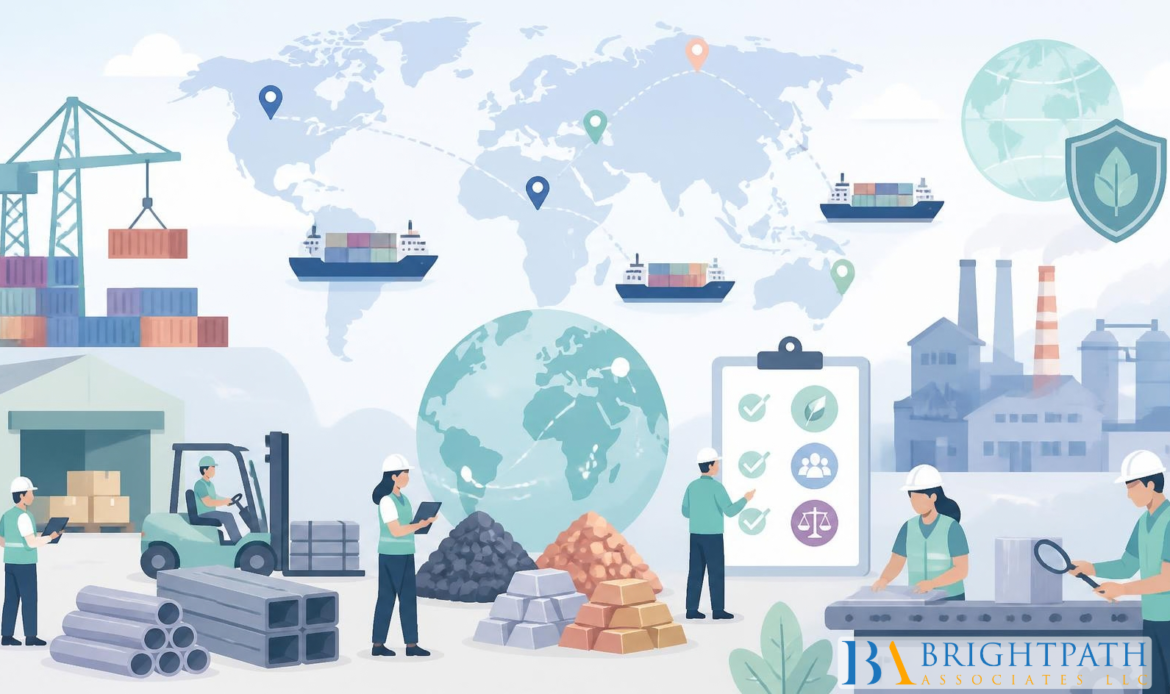
[Bethany, Connecticut – 02 October 2026] – BrightPath Associates has highlighted the growing impact of global trade changes on metal and material sourcing compliance, emphasizing the need for stronger traceability, supplier due diligence, environmental oversight, and supply-chain governance. As tariffs, geopolitical developments, import requirements, environmental regulations, and sustainability expectations continue to influence international sourcing, C-suite leaders in the Environmental Services Industry are increasingly required to connect procurement decisions with Environmental compliance and long-term business resilience.
The latest BrightPath analysis explains that sourcing decisions are no longer based only on price, availability, and delivery. Companies must increasingly understand where materials originate, how they are produced, whether suppliers meet applicable requirements, and what environmental impacts are associated with production and transportation. The article notes that “sourcing is no longer simply a question of securing the right material at the right price,” highlighting the broader strategic responsibilities now facing business leaders.
Global Trade Changes Increase the Need for Material Traceability
Global material supply chains connect mining companies, processors, manufacturers, traders, logistics providers, and distributors across multiple markets. Changes in trade policy and geopolitical conditions are encouraging organizations to diversify suppliers and sourcing regions, but diversification can also introduce additional compliance responsibilities.
When organizations add new suppliers, they may need to examine material origin, environmental permits, product certifications, labor practices, sanctions exposure, and import requirements. The detailed analysis of Global Trade Shifts on Metal and Material Sourcing Compliance explains how stronger traceability and risk-based supplier due diligence can help organizations understand potential regulatory and environmental exposure.
Material traceability can also provide valuable information about mining, processing, refining, transportation, and manufacturing. Digital systems can connect supplier records, certifications, purchase orders, shipment details, and compliance documentation, giving leadership teams greater visibility across complex sourcing networks.
Compliance Extends From Air Pollution to Water Treatment
Environmental compliance within material sourcing can involve emissions, waste management, chemical handling, water consumption, discharge standards, permits, and environmental reporting. These requirements can vary across jurisdictions, making supplier evaluation especially important for organizations operating internationally.
Air pollution control is particularly relevant to industries involved in mining, refining, smelting, and energy-intensive material processing. Buyers may increasingly need to understand whether suppliers have appropriate emissions monitoring and pollution-control systems. Similarly, Water treatment and water-management capabilities can become important considerations when sourcing from regions where industrial operations place significant demands on local water resources.
For companies operating within the broader Environmental Services Industry, these developments create opportunities to provide environmental assessments, regulatory support, emissions measurement, water monitoring, waste-management expertise, and sustainability services to organizations managing increasingly complex supply chains.
Technology and Leadership Support Sourcing Transformation
Digital technology can help companies centralize supplier documentation, monitor regulatory information, identify missing records, and improve material traceability. Artificial intelligence can potentially help identify unusual supplier-data patterns and emerging risk indicators, while other digital technologies can support trusted information sharing across supply-chain participants.
However, technology alone cannot resolve sourcing compliance challenges. Organizations need clear governance, standardized supplier requirements, risk-based due diligence, and defined accountability. The BrightPath analysis emphasizes that companies should continuously monitor changes in trade policies and environmental requirements and assess how those changes could affect suppliers, materials, contracts, and markets.
This evolving environment is also increasing demand for specialized leadership. Executive search recruitment can help organizations identify executives with experience in environmental regulation, sustainability, supply-chain governance, procurement, technology, and risk management. Environmental executive search is particularly relevant as environmental responsibilities increasingly intersect with finance, operations, procurement, and corporate strategy.
About BrightPath Associates
BrightPath Associates is an executive recruitment and talent solutions firm serving organizations across the United States. The company helps businesses identify leadership and specialized professionals who can support growth, operational performance, workforce development, sustainability, and long-term business objectives. Its mission is to connect organizations with the right people while making the hiring process more strategic and effective.
Media Contact:
Name: Corporate Communications Team
Company: BrightPath Associates
Email: media@brightpathassociates.com
Website: https://brightpathassociates.com