
Introduction
#EnvironmentalCompliance has become a critical operational responsibility for organizations across energy, manufacturing, infrastructure, transportation, utilities, and other industrial sectors. Companies must increasingly collect, monitor, verify, store, and report large volumes of environmental information. This can include emissions data, energy consumption, waste generation, water usage, discharge measurements, equipment performance, and other operational indicators required by internal policies and Environmental regulations.
For many organizations, environmental reporting still depends on spreadsheets, manually entered measurements, disconnected databases, and periodic data collection. These processes can introduce transcription mistakes, duplicate records, missing information, inconsistent measurement units, and delays in reporting. As environmental requirements become more detailed and operational data volumes increase, manual processes can become difficult to manage efficiently.
Automation offers a pathway toward more reliable environmental data management. By connecting sensors, industrial equipment, monitoring platforms, Environmental management systems, and reporting applications, organizations can reduce manual data entry while improving visibility into environmental performance. The same digital infrastructure can also support Renewable energy innovation, Sustainable energy solutions, Clean energy initiatives, and Green technology adoption.
Environmental compliance depends on accurate information. A small error in a measurement, date, unit, facility identifier, or reporting category can create inconsistencies in compliance records. When data is collected manually from multiple facilities, the risk increases because each location may follow slightly different processes.
Employees may need to transfer information from monitoring equipment into spreadsheets and then move that information into reporting systems. Repeated data handling increases the possibility of transcription errors.
Manual processes can also consume significant employee time. Environmental professionals may spend hours validating data, correcting inconsistencies, searching for missing records, and preparing reports instead of focusing on environmental improvement initiatives.
Automation can reduce these repetitive activities by allowing information to move directly from measurement systems into centralized databases.
Environmental Management Systems as the Digital Foundation
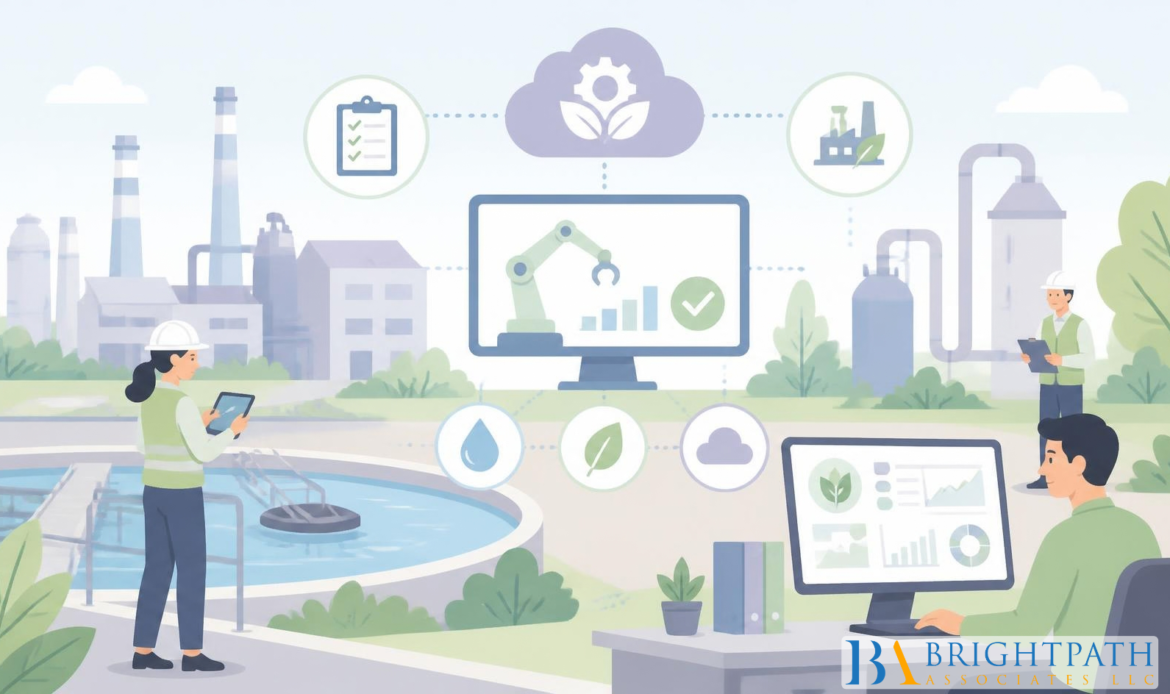
Environmental management systems provide a structured framework for managing environmental responsibilities, objectives, monitoring activities, and compliance information. When integrated with automated data collection, these systems can become the central platform for environmental performance management.
Connected sensors and monitoring devices can continuously capture relevant operational information. Data can then be transferred into an Environmental management systems platform for validation, analysis, storage, and reporting.
This architecture can create a more consistent information flow. Instead of relying on employees to repeatedly copy information between systems, automated connections can move data according to predefined rules.
Organizations can also establish automated validation checks. If a measurement falls outside an expected range or contains an incorrect unit, the system can flag it for review before it enters a formal compliance report.
The expansion of Renewable energy innovation is creating increasingly digital energy infrastructure. Solar installations, wind farms, battery storage facilities, smart grids, and distributed energy systems generate substantial volumes of operational data.
This information can support both energy management and environmental reporting. Automated platforms can collect data on electricity generation, equipment performance, resource consumption, and other relevant indicators.
For renewable energy operators, automated data systems can provide continuous visibility across geographically distributed assets. Instead of collecting information from individual facilities manually, organizations can centralize operational and environmental information.
This becomes increasingly valuable as renewable energy portfolios expand across multiple regions.
Renewable Energy Technology and Automated Monitoring
#RenewableEnergyTechnology is increasingly connected through sensors, control systems, cloud platforms, and predictive analytics. These technologies can support automated monitoring of equipment and environmental performance.
In a wind energy facility, for example, connected systems can collect information about turbine performance, operating conditions, power generation, and maintenance requirements. Similar digital infrastructure can be applied to solar installations and energy-storage systems.
When environmental and operational data are integrated, organizations can develop a more complete understanding of asset performance.
Automated systems can also help identify unusual conditions. If equipment performance changes unexpectedly, an alert can prompt investigation before the issue develops into a larger operational or environmental problem.
Environmental regulations require organizations to maintain reliable records and demonstrate compliance with applicable requirements. The specific requirements vary by jurisdiction and industry, but accurate documentation is a common operational need.
Automation can help organizations establish standardized data collection processes. Measurement frequency, data formats, validation rules, and record-retention procedures can be configured within digital systems.
This can reduce inconsistencies between facilities and make audits easier to manage. Historical records can be stored centrally, allowing authorized personnel to retrieve information without searching through physical documents or multiple disconnected spreadsheets.
However, automation does not remove the need for human oversight. Organizations must ensure that monitoring equipment is properly calibrated, software rules are correctly configured, and automated records accurately represent the underlying environmental conditions.
Sustainable Energy Solutions and Operational Efficiency
The relationship between compliance and sustainability is becoming increasingly important. Sustainable energy solutions can reduce resource consumption and emissions while improving operational efficiency.
Automated monitoring provides the information needed to measure these improvements. Organizations can track energy consumption, renewable generation, equipment efficiency, and other performance indicators in near real time.
This data can support decision-making about energy investments. If a facility consistently demonstrates high energy consumption during specific operating periods, managers can investigate whether equipment upgrades, process changes, or renewable energy systems could reduce consumption.
The same data can support environmental reporting and internal sustainability objectives.
The Wind energy industry illustrates the importance of automated environmental and operational data management. Wind farms often contain numerous turbines distributed across large geographic areas, creating logistical challenges for manual data collection.
Automated monitoring systems can collect information from individual turbines and consolidate it within centralized platforms. This can improve operational visibility while reducing the administrative burden associated with manual reporting.
Environmental monitoring can also be connected with operational systems where appropriate. Organizations can establish workflows for identifying unusual conditions, recording incidents, and generating reports.
As wind portfolios grow, scalable digital infrastructure becomes increasingly important for maintaining consistent operational and compliance processes.
Renewable Energy Economics and Investment Decisions
#RenewableEnergy economics is influenced by equipment costs, energy prices, financing conditions, asset performance, maintenance requirements, and regulatory environments. Reliable operational data can improve investment analysis by providing better visibility into actual asset performance.
Automation can help organizations evaluate whether renewable energy assets are meeting expected production and efficiency levels. It can also support maintenance planning and identify opportunities to reduce operational costs.
For investors and operators, accurate data is essential for evaluating long-term asset performance. Automated systems can provide a continuous record rather than relying solely on periodic manual reporting.
This can improve the quality and timeliness of information used in financial and strategic decisions.
The transition toward Clean energy requires organizations to manage increasingly complex energy systems. Renewable generation may be combined with conventional power, storage technologies, efficiency programs, and distributed energy resources.
Automated reporting systems can bring these different sources of information together. Organizations can monitor energy consumption and generation across facilities and compare performance over time.
Automated reporting can also reduce the administrative effort involved in preparing internal sustainability reports. Data can be organized according to predefined reporting structures, reducing the need for repeated manual calculations.
This creates more time for environmental teams to focus on analyzing performance and developing improvement strategies.
Green Technology and the Future of Compliance
Green technology is increasingly connected with digital infrastructure. Technologies designed to reduce environmental impacts are often accompanied by sensors, software, analytics, and automated controls.
This creates an opportunity to integrate environmental compliance directly into operational processes. Instead of treating compliance as a periodic reporting exercise, companies can incorporate environmental monitoring into everyday facility management.
Real-time dashboards can provide managers with visibility into key indicators. Automated alerts can highlight unusual conditions, while centralized records can support audits and regulatory reporting.
The result is a shift from reactive compliance toward continuous environmental performance management.
One of the most important benefits of automated compliance systems is the ability to introduce standardized validation rules. These rules can identify missing fields, unusual values, inconsistent units, duplicate records, and other common data-quality problems.
For example, a system can automatically compare new measurements with predefined operating ranges. If a value is significantly different from historical patterns, the system can flag it for human review.
Automated validation does not necessarily mean that unusual data is incorrect. Environmental conditions can legitimately change, and equipment can generate unexpected readings. Instead, the purpose of validation is to identify information that requires investigation before it becomes part of an official report.
This creates a balance between automation and professional oversight.
Improving Audit Readiness
#EnvironmentalAudits often require organizations to demonstrate where data came from, how it was collected, who reviewed it, and how records were maintained. Manual processes can make this difficult because information may be distributed across spreadsheets, emails, paper documents, and individual employee records.
Integrated digital systems can create clearer data trails. Organizations can record timestamps, data sources, validation activities, approvals, and changes to information.
This can make internal reviews more efficient and provide stronger documentation when external audits occur.
Automation changes the type of work required within environmental and energy organizations. As data collection becomes more automated, employees may spend less time performing repetitive administrative tasks and more time interpreting information, managing systems, investigating exceptions, and developing improvement programs.
This transformation is influencing Renewable energy jobs. The sector increasingly requires professionals with expertise in environmental management, data analytics, automation, software systems, engineering, and regulatory compliance.
Organizations therefore need workforce strategies that combine traditional environmental knowledge with digital capabilities. Training existing employees can be valuable, but companies may also need to recruit professionals with specialized technical expertise.
Leadership and Executive Search Recruitment
Digital environmental transformation requires leadership capable of connecting technology with operational and sustainability objectives. Executives must understand environmental requirements while also evaluating investments in data infrastructure, automation, renewable energy, and organizational capability.
#ExecutiveSearchRecruitment can support organizations seeking leaders with experience in environmental management, energy transformation, digital systems, industrial operations, and sustainability strategy.
Leadership teams must also establish appropriate governance around automated compliance. Clear responsibilities are necessary for monitoring data quality, reviewing exceptions, maintaining equipment, updating regulatory requirements, and approving official reports.
Automation is most effective when supported by strong organizational accountability.
Organizations seeking to automate environmental compliance should begin by understanding their existing data flows. Identifying where information is collected, manually entered, reviewed, stored, and reported can reveal the areas most vulnerable to errors.
The next stage is connecting appropriate monitoring equipment and software platforms. Organizations can then introduce validation rules, centralized data storage, automated alerts, and reporting workflows.
Implementation should be gradual and measurable. Companies can begin with high-volume or high-risk data processes before expanding automation across additional environmental indicators and facilities.
Employee involvement is also important. Environmental professionals understand the context behind the data and can help determine which automated alerts and validation rules are meaningful.
Conclusion
Automating environmental compliance can significantly reduce the risks associated with manual data entry while improving the visibility, consistency, and accessibility of environmental information. Integrated digital systems can connect monitoring equipment, Environmental management systems, operational technologies, and reporting platforms into a more reliable data environment.
The same infrastructure can support Renewable energy innovation, Renewable energy technology, Sustainable energy solutions, Clean energy deployment, and Green technology initiatives. In the Wind energy industry and other renewable sectors, automated monitoring can become particularly valuable as organizations manage increasingly distributed assets.
Accurate data also supports better responses to Environmental regulations and provides stronger documentation for audits and internal decision-making. At the same time, automation is changing workforce requirements, creating demand for professionals who combine environmental expertise with digital and technical capabilities.
The broader transition is therefore not simply about eliminating spreadsheets or reducing manual entry. It is about creating an environmental management infrastructure in which accurate information moves efficiently from physical operations to decision-makers. As Renewable energy economics, sustainability objectives, and regulatory expectations continue to evolve, organizations that invest in reliable digital compliance systems can establish a stronger foundation for efficient, transparent, and data-driven environmental management.
Executive Search Recruitment will also remain important as organizations seek leaders capable of bringing together technology, environmental responsibility, operational performance, and workforce transformation. The future of compliance will depend not only on automated systems but on the people and governance structures that ensure those systems deliver accurate and meaningful information.
Find your next leadership role in Renewable Energy and Environment Industry today!
Stay informed with the latest insights on Renewable Energy Environment Industry!