
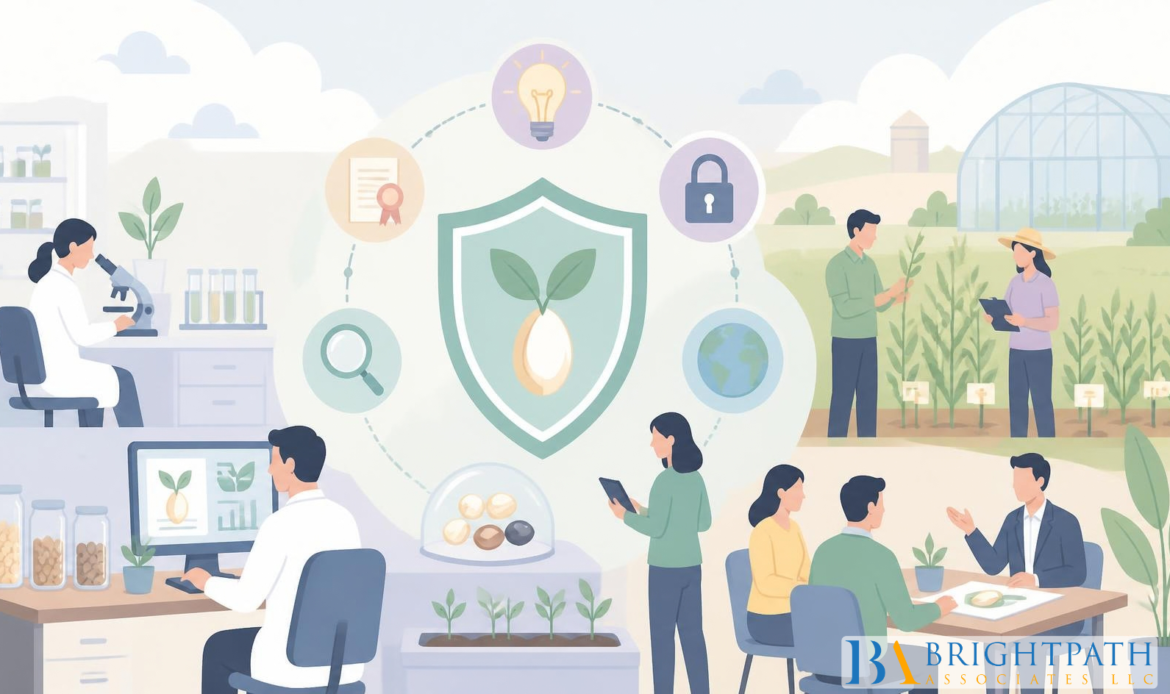
[Bethany, Connecticut – 30 September 2026] — BrightPath Associates has highlighted the growing strategic importance of intellectual property (IP) in modern seed development and its role in shaping the future of agriculture. The latest industry analysis examines how C-Suite leaders can use intellectual property to protect research, strengthen competitive positioning, support Agricultural innovation, and create long-term value as the Farming Industry adopts Agricultural technology, Digital Farming, and more sustainable production practices.
Intellectual Property Becomes a Strategic Agricultural Asset
Modern seed development increasingly combines genetics, biotechnology, data, and advanced research. Developing improved seed varieties can require significant investment in research, testing, breeding, technology, and specialized talent. Intellectual property protections can therefore help organizations protect innovations while creating opportunities to commercialize research and establish stronger market positions.
BrightPath Associates’ analysis, “The Strategic Importance of Intellectual Property in Modern Seed Development,” explores how IP can extend beyond legal protection to become part of an organization’s broader business strategy. For agricultural executives, intellectual property can influence investment decisions, research priorities, licensing arrangements, partnerships, and approaches to market expansion.
The strategic value becomes particularly relevant as producers and agricultural companies respond to changing climate conditions, resource constraints, evolving consumer expectations, and demand for more productive farming systems. Intellectual property can provide organizations with a framework for protecting innovations designed to improve crop performance, resource efficiency, and agricultural resilience.
Agricultural Technology Creates New Investment Opportunities
The growth of Agricultural technology is creating new opportunities for collaboration between seed developers, technology companies, researchers, producers, and investors. Technologies such as data analytics, artificial intelligence, remote sensing, biotechnology, and Farm management software can generate new sources of information and support more informed decisions throughout the agricultural value chain.
For C-Suite leaders, this changing environment creates a need to evaluate how intellectual property fits within technology investments and strategic partnerships. Companies may need to determine which innovations should be protected internally, which can be licensed, and where collaboration can accelerate commercialization. Strong IP strategies can also help organizations protect proprietary knowledge while participating in the wider agricultural innovation ecosystem.
These developments have implications beyond farming operations. Better seed technologies can influence Food production by supporting reliable crop output and helping producers adapt to environmental and market pressures. As agricultural companies seek sustainable growth, protecting valuable innovations can become part of a broader strategy for strengthening resilience and maintaining competitiveness.
Leadership and Talent Support Agricultural Innovation
Technology and intellectual property strategies require specialized leadership. Organizations working across seed development, biotechnology, agricultural technology, and digital agriculture need professionals who understand both technical innovation and commercial objectives. Executive search recruitment can help agricultural organizations identify leaders with expertise across research, technology, commercialization, intellectual property, and business strategy.
Leadership is particularly important as agricultural organizations balance innovation with practical farming requirements. New technologies must deliver measurable value while fitting into existing production systems, supply chains, regulatory environments, and customer expectations. Executives who can connect scientific research with commercial strategy can help organizations translate innovation into sustainable business opportunities.
The broader agricultural sector is also becoming more interconnected. Partnerships between seed developers, technology providers, research organizations, universities, and producers can accelerate innovation while expanding access to expertise and resources. For companies operating across the Farming Industry, these relationships can support innovation while creating new pathways for growth.
Protecting Innovation for Long-Term Agricultural Growth
The strategic importance of intellectual property is likely to increase as agricultural organizations invest in technologies designed to address productivity, sustainability, and resilience challenges. Seed development sits at the intersection of biological research, technology, investment, and food production, making IP strategy an important consideration for executives responsible for long-term growth.
BrightPath Associates’ detailed analysis of Intellectual Property in Modern Seed Development provides further insight into how agricultural organizations can view intellectual property as part of a broader innovation and business strategy. By aligning IP protection with research, technology investment, talent, and commercialization goals, organizations can create stronger foundations for future agricultural innovation.
About BrightPath Associates
BrightPath Associates is an executive recruitment and talent solutions firm that helps organizations identify the leadership and specialized professionals needed to support sustainable growth. The company works with businesses across industries, providing recruitment and workforce solutions aligned with evolving business needs. Its mission is to connect organizations with capable talent while helping leaders build stronger and more effective teams.
Media Contact:
Name: Corporate Communications Team
Company: BrightPath Associates
Email: media@brightpathassociates.com
Website: https://brightpathassociates.com