
Introduction
#CustomMachinery has always required a high level of engineering judgment. Unlike standardized equipment, custom machines must often be designed around specific production environments, operating conditions, material requirements, customer specifications, and space limitations. Every modification can create new engineering questions, making the product development cycle lengthy and complex.
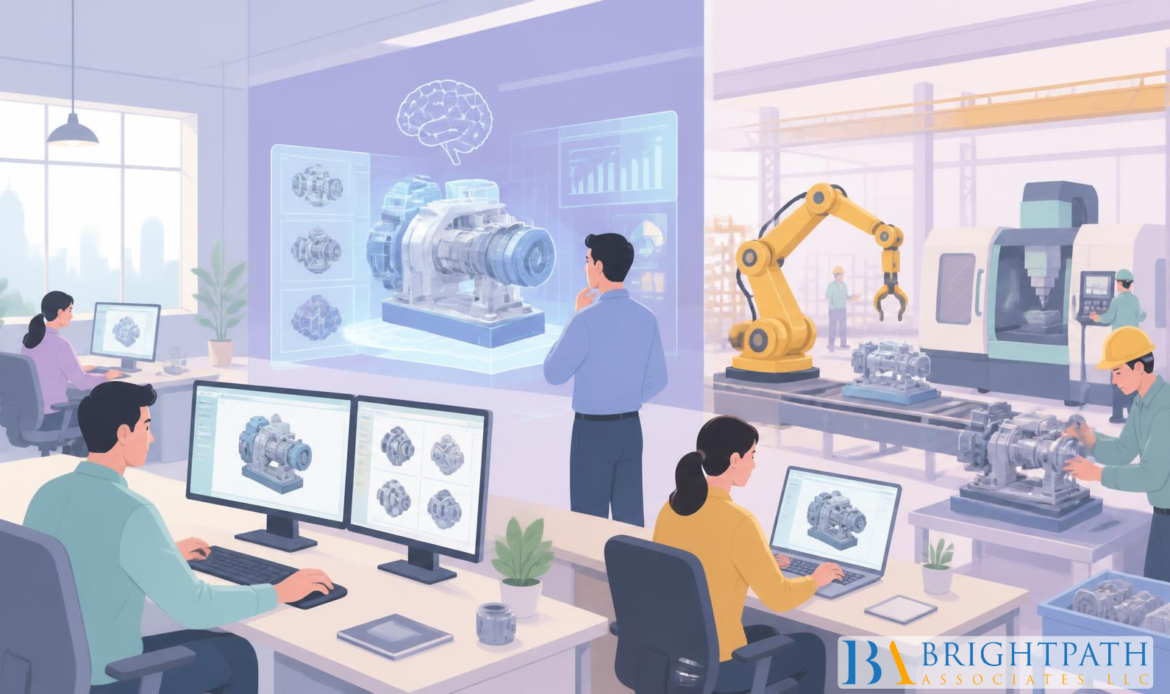
Generative AI is beginning to change this process. Instead of relying entirely on sequential design iterations, engineering teams can use artificial intelligence to explore multiple concepts, analyze design requirements, identify potential improvements, and accelerate repetitive engineering tasks. The objective is not to remove engineers from the design process. It is to give them better tools for exploring possibilities and making informed decisions earlier.
For the Industrial machinery sector, this shift could have significant implications. Companies that design custom equipment can potentially reduce unnecessary iterations, improve Manufacturing efficiency, and bring engineered solutions to customers faster while maintaining human oversight and technical validation.
Custom machinery projects usually begin with a problem rather than a predefined product. A customer may require a machine capable of handling a particular material, achieving a specific production speed, operating within a restricted footprint, or integrating with existing equipment.
Engineers must translate these requirements into mechanical, electrical, software, safety, and manufacturing specifications. This process can involve repeated discussions between customers, designers, production teams, procurement professionals, and field specialists.
Generative AI can help organize this information and identify relationships between requirements. Engineers can use AI-assisted systems to analyze technical documentation, previous projects, specifications, and design constraints before developing detailed concepts.
Engineering iteration is essential because a first design is rarely perfect. However, every additional iteration consumes engineering hours and can affect procurement, prototyping, machining, testing, and production schedules.
Generative design approaches allow engineers to investigate more alternatives earlier in the process. Instead of manually creating every possible variation, AI-supported systems can generate potential configurations based on predefined requirements and constraints. Engineers can then evaluate the alternatives and select those worth developing further.
Generative AI Changes the Conceptual Design Process
Traditional engineering workflows often move from requirements to a concept, followed by testing and modification. Generative AI introduces a broader exploration model. An engineering team can define objectives such as strength, weight, material usage, manufacturability, cost, dimensions, or operating performance and then examine multiple possible solutions.
This is particularly relevant to custom machinery because each project can have different priorities. A machine designed for a high-speed production environment may prioritize throughput, while another application may prioritize precision, durability, compactness, or ease of maintenance.
Generative AI can help engineers explore these trade-offs before significant resources are committed to physical prototypes.
Many Industrial machinery companies have years of valuable engineering knowledge stored in CAD files, drawings, specifications, maintenance records, project documentation, and production data. Much of this information is difficult to access efficiently because it is distributed across different systems.
AI can support engineering knowledge retrieval by helping teams locate relevant previous designs, components, specifications, and project information. This can reduce the time engineers spend searching through historical documentation and make previous organizational knowledge more accessible.
For US Machinery manufacturers competing on customization and responsiveness, the ability to reuse engineering knowledge without simply copying old designs can become increasingly valuable.
Improving Design for Precision Machining
A theoretically excellent design may become expensive or impractical to manufacture. Precision machining introduces requirements related to tolerances, tooling, material selection, surface finishes, geometry, setup time, and production capabilities.
#GenerativeAI can contribute to design-for-manufacturing workflows by evaluating design alternatives against known manufacturing constraints. When integrated with engineering and manufacturing data, AI-assisted systems can help identify designs that may create unnecessary machining complexity.
This does not eliminate the need for experienced machinists or manufacturing engineers. Instead, it creates an opportunity to identify potential issues earlier, before they become expensive production problems.
Engineering and manufacturing teams sometimes operate with different priorities. Designers may focus on performance, while manufacturing teams focus on practical production requirements.
Generative AI can help bridge this gap by bringing more manufacturing information into the design process. A design can be evaluated not only for theoretical performance but also for manufacturability, material availability, machining requirements, assembly complexity, and expected production implications.
The result can be a more integrated product development process.
Generative AI and Industrial Automation Solutions
Modern custom machinery increasingly needs to communicate with sensors, robotics, production software, and other equipment. This means mechanical design is becoming closely connected with electrical engineering, controls, software, and automation.
Industrial automation solutions require engineers to consider how machines will operate within a larger production ecosystem. Generative AI can assist by helping teams examine system-level requirements and identify potential design alternatives.
For example, engineers developing automated material-handling equipment may need to consider machine geometry, sensor placement, control logic, robot interaction, operator access, safety requirements, and production throughput simultaneously.
AI-supported engineering can help teams manage this complexity by making more information available during early design stages.
Physical prototypes remain essential for validating custom machinery, but digital simulation can reduce the number of unnecessary physical iterations.
Generative AI can work alongside simulation and digital modeling technologies to explore potential configurations before engineers build the final machine. This approach can make experimentation less expensive and allow teams to identify potential weaknesses earlier.
The greatest value comes when AI becomes part of a broader digital engineering workflow rather than functioning as an isolated design tool.
Machinery Maintenance Should Influence Design
Custom machinery should not be evaluated only on how well it performs when newly installed. Maintenance requirements can have a significant impact on its long-term operating value.
Generative AI can help engineers consider maintenance accessibility, component replacement, service requirements, inspection points, and expected failure conditions during the design process.
A machine that performs exceptionally well but requires difficult maintenance access may create unnecessary downtime for the customer. #EngineeringTeams can therefore use AI-supported analysis to compare designs from a lifecycle perspective.
Historical Machinery maintenance records can also become valuable engineering inputs. If particular components repeatedly experience failures, AI-assisted systems may help identify patterns that designers can consider in future machine generations.
This creates a feedback loop between engineering and field performance. Instead of treating maintenance as a separate post-sale activity, manufacturers can incorporate service intelligence into future product development.
Generative AI and Manufacturing Efficiency
Manufacturing efficiency begins long before a machine reaches the factory floor. Delays in requirements interpretation, design review, documentation, simulation, and engineering approvals can affect the entire production schedule.
Generative AI can automate or accelerate selected administrative and analytical tasks, allowing engineers to spend more time on high-value technical decisions.
The goal is not simply to make engineers work faster. It is to reduce low-value repetitive work so engineering capacity can be directed toward complex problems that require judgment and experience.
For custom machinery businesses, responsiveness can influence whether a company wins a project. Customers often want preliminary concepts, feasibility assessments, and cost estimates quickly.
AI-supported engineering workflows can help teams evaluate requirements and develop early design concepts faster. While final engineering decisions still require professional review, faster early-stage analysis can improve the company’s ability to respond to opportunities.
The Role of Used Machinery in AI-Enabled Engineering
Used machinery can provide useful information for custom equipment designers. Existing machines may reveal how particular components perform under real operating conditions, which configurations are durable, and where maintenance problems commonly occur.
AI can help organizations analyze historical equipment records and compare previous machine configurations. This knowledge can inform the design of new equipment without requiring every engineering decision to start from zero.
For manufacturers serving customers with limited capital budgets, understanding the performance characteristics of used machinery can also help engineers develop retrofit, modernization, or integration solutions.
Many industrial customers do not want to replace an entire production line. They may instead want to upgrade selected machines with new automation, controls, sensors, or mechanical components.
Generative AI can support these engineering projects by helping teams evaluate different modernization scenarios. This can make custom engineering more adaptable to the realities of existing #IndustrialEnvironments.
Machinery Financing and the Business Case for Faster Design
Machinery financing decisions are influenced by project cost, expected productivity, operating expenses, customer demand, and anticipated return on investment.
When engineering teams can evaluate alternatives faster, customers may gain greater clarity about machine configuration and expected capabilities earlier in the purchasing process. This does not guarantee better financing outcomes, but it can contribute to more informed capital planning.
For equipment manufacturers, faster engineering cycles can also improve resource utilization and project scheduling.
Generative AI therefore has implications beyond engineering departments. Sales, finance, procurement, operations, and executive leadership can benefit when product development becomes more transparent and predictable.
The real opportunity is to connect engineering intelligence with broader business decision-making.
Generative AI Is Changing Manufacturing Jobs, Not Eliminating Engineering
The adoption of AI will change the requirements associated with Manufacturing jobs. Engineers will increasingly need to understand how to work with AI-assisted design tools, simulation platforms, data systems, digital twins, and automation technologies.
At the same time, traditional #MechanicalEngineering knowledge will remain essential. AI can generate possibilities, but experienced professionals must determine whether those possibilities are technically sound, manufacturable, safe, compliant, and commercially practical.
This makes hybrid expertise increasingly valuable.
Custom machinery operates in physical environments where errors can have significant consequences. Engineering validation, testing, certification, safety review, and customer acceptance cannot simply be delegated to an AI system.
The strongest model is therefore human-led engineering supported by AI. Engineers define the problem, establish constraints, evaluate alternatives, and approve the final solution.
The Industrial Machinery Industry Needs a New Engineering Workforce
The Industrial machinery industry is becoming more multidisciplinary. Mechanical engineers increasingly interact with automation specialists, software developers, data analysts, controls engineers, manufacturing experts, and cybersecurity professionals.
Organizations adopting generative AI will need leaders capable of connecting these disciplines rather than treating them as isolated functions.
This creates a talent challenge. Companies may find that traditional engineering hiring criteria are no longer sufficient for highly digital product-development environments.
#ExecutiveSearchRecruitment can help organizations identify leaders who understand both industrial engineering and emerging technologies. For custom machinery businesses, leadership experience may need to span product development, manufacturing operations, automation, digital transformation, customer requirements, and commercial strategy.
The most valuable leaders may not simply be AI specialists. They may be industrial executives who understand where AI can create measurable value while recognizing where engineering judgment must remain in control.
Building a Practical Generative AI Strategy
Manufacturers do not need to transform their entire engineering department overnight. A practical approach begins with specific problems such as design documentation, component selection, historical drawing retrieval, concept generation, simulation preparation, or maintenance knowledge analysis.
Small, measurable applications can help organizations understand where AI provides meaningful value.
Generative AI is only as useful as the information surrounding it. Companies need organized technical documentation, reliable engineering data, clear version control, and appropriate access policies.
Without a strong data foundation, AI may produce suggestions that are difficult to validate or disconnected from actual manufacturing conditions.
The final objective should be an engineering workflow in which AI expands exploration while experienced professionals retain responsibility for technical decisions.
This approach can create a balance between speed and reliability. It also helps organizations introduce AI without undermining the knowledge and accountability that industrial engineering requires.
Conclusion
Generative AI is creating a new opportunity for custom machinery manufacturers to rethink how products are conceived, evaluated, manufactured, and maintained. By accelerating design exploration, connecting historical engineering knowledge, supporting Precision machining considerations, strengthening Industrial automation solutions, and incorporating maintenance intelligence earlier in development, AI can help reduce unnecessary delays across the product lifecycle.
For US #MachineryManufacturers, the opportunity is not simply to adopt another technology. It is to create a faster and more connected engineering model in which people, data, simulation, automation, and AI work together.
The future of Industrial machinery will still depend on engineering expertise. However, the organizations that combine that expertise with intelligent digital tools may be better positioned to respond to increasingly complex customer requirements, improve Manufacturing efficiency, develop new capabilities, and compete for specialized talent.
Generative AI therefore represents more than a faster way to create designs. It can become a new layer of engineering intelligence—one that helps custom machinery businesses move from repetitive iteration toward faster, more informed, and more adaptable product development.
Find your next leadership role in Machinery Industry today!
Stay informed with the latest insights on Machinery Industry!