
Introduction
#EngineeringOrganizations across aerospace, defense, and advanced manufacturing are under increasing pressure to improve productivity while controlling development costs. Complex engineering programs often involve enormous volumes of technical documentation, simulations, design iterations, compliance requirements, testing procedures, and cross-functional collaboration. As organizations attempt to shorten development cycles without compromising quality, artificial intelligence agents are emerging as an important tool for improving engineering workflows.
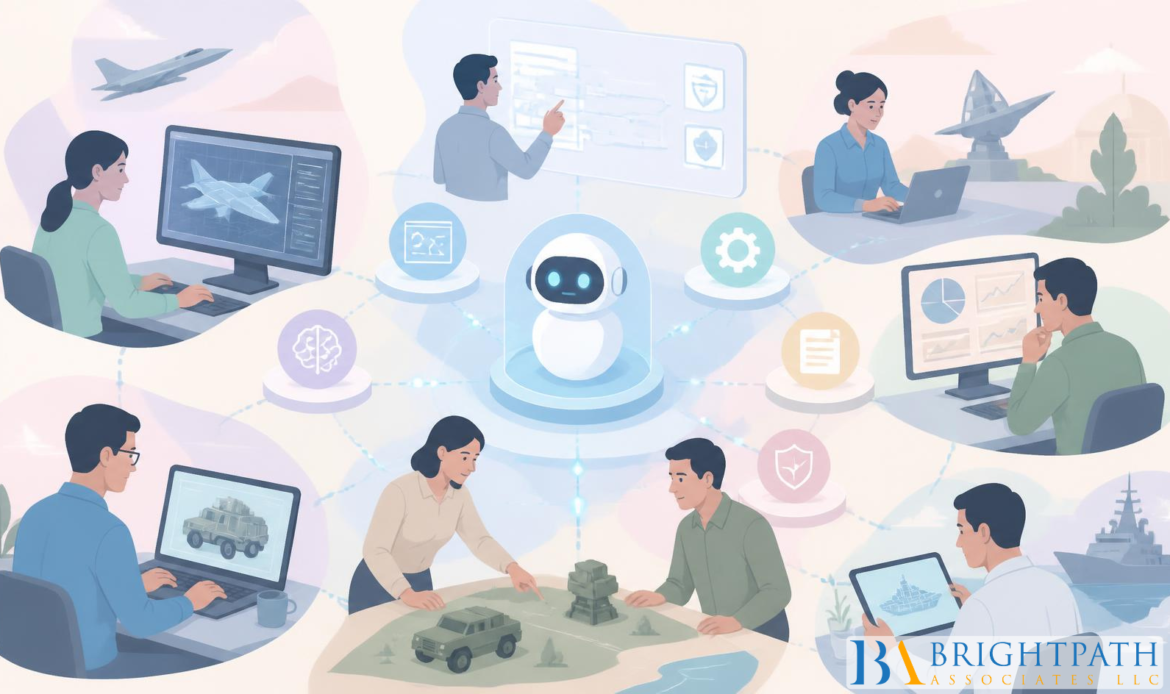
AI agents differ from conventional software automation because they can interpret information, execute multi-step tasks, identify patterns, and support decision-making within defined boundaries. When integrated carefully, they can assist engineers with documentation, design analysis, simulation preparation, data processing, testing, and knowledge management.
For organizations operating within the aerospace and defense ecosystem, the opportunity is particularly significant. Defense manufacturing, Space Electronics, Space Robotics, cybersecurity, and simulation-intensive engineering all involve processes where intelligent automation can potentially reduce repetitive work. However, successful implementation requires more than purchasing an AI platform. Companies need a structured savings plan that connects technology investments with measurable engineering outcomes.
Understanding AI Agents in Engineering
AI agents can be designed to perform specific engineering-oriented workflows under human supervision. Rather than replacing engineering judgment, they can handle repetitive or information-intensive activities that consume valuable technical time.
An agent might organize engineering requirements, summarize test results, compare design documentation, generate preliminary reports, retrieve technical information, or assist with simulation workflows. Multiple agents can also be connected to support a larger process, provided that appropriate security and validation controls are established.
The economic value comes from reducing the time engineers spend on low-value administrative activities. If highly skilled engineers can devote more time to system architecture, problem-solving, validation, and innovation, the organization can potentially increase output without proportionally increasing headcount.
Before implementing AI agents, organizations should establish a clear baseline for existing engineering costs. The objective is to understand where employees spend time and which activities create the greatest opportunity for efficiency improvements.
Engineering organizations can examine design-cycle duration, documentation effort, simulation preparation, testing administration, requirements management, quality reviews, and information retrieval. These activities can then be evaluated according to frequency, complexity, risk, and potential automation value.
A savings plan should focus on measurable outcomes. Reducing the hours required to produce engineering documentation, shortening simulation preparation time, or improving the speed of technical research can provide a clearer return-on-investment calculation than a general claim that AI will make engineers more productive.
AI Agents and Aerospace Industry Trends
#AerospaceIndustry trends increasingly emphasize digital engineering, model-based systems engineering, advanced simulation, autonomous systems, additive manufacturing, and data-driven development. These trends create an environment where AI agents can become part of a broader engineering transformation.
Aerospace programs frequently involve large multidisciplinary teams working across mechanical, electrical, software, systems, manufacturing, and regulatory functions. AI agents can potentially improve communication between these disciplines by organizing information and identifying relationships across large technical datasets.
The most valuable applications are likely to emerge where engineering complexity and information volume intersect. Organizations that successfully integrate AI into these processes can improve productivity while maintaining human oversight over critical engineering decisions.
Defense Space Systems require exceptionally high levels of reliability, documentation, testing, and coordination. Engineering teams may work across spacecraft structures, propulsion, communications, sensors, power systems, software, and mission operations.
AI agents can assist with requirements analysis, technical document organization, test-data review, simulation preparation, and configuration management. They can also help engineers locate relevant information across large repositories of technical documentation.
Because defense systems often involve sensitive information, AI deployment must be carefully controlled. The objective should be to create secure environments in which AI provides productivity benefits without compromising classified, proprietary, or mission-critical information.
Supporting Space Electronics Engineering
Space Electronics represents another area where AI-enabled workflows can provide value. Electronic systems used in space must meet demanding requirements involving radiation, thermal conditions, power consumption, reliability, and long mission durations.
Engineering teams can use AI agents to support component documentation, requirements traceability, test-result organization, and design-review preparation. Agents may also help identify inconsistencies across technical records before human engineers conduct final reviews.
The benefit is not simply faster documentation. Better information organization can reduce the probability that engineers overlook relevant requirements or previous test findings.
Space Robotics is becoming increasingly important as missions require autonomous systems capable of operating in environments where direct human control is limited. Robotic systems require sophisticated integration of mechanical design, sensors, electronics, software, control systems, and artificial intelligence.
AI agents can assist engineering teams by organizing multidisciplinary information and supporting simulation and testing workflows. They may also help engineers evaluate different design configurations and identify potential issues before physical testing.
For robotics programs, the ability to iterate rapidly can be commercially valuable. AI-assisted engineering can potentially reduce the time between initial concepts, simulation, prototype development, and validation.
Space Cybersecurity and AI Governance
#SpaceCybersecurity must remain a central consideration when introducing AI agents into aerospace and defense engineering. AI systems themselves can become targets for manipulation, unauthorized access, data leakage, or malicious inputs.
Organizations should therefore establish strict access controls, data-classification policies, authentication mechanisms, monitoring systems, and human approval requirements. Engineering teams must know which information an AI agent is permitted to access and which actions require human authorization.
AI governance should be integrated into the engineering workflow from the beginning rather than treated as an afterthought. Security controls can protect both technical information and the integrity of engineering decisions.
Defense Simulation provides a particularly strong environment for AI-assisted engineering because simulations generate large amounts of structured and unstructured information. Engineers may need to prepare models, configure scenarios, analyze outputs, compare results, and document findings.
AI agents can assist with these repetitive tasks while engineers retain responsibility for model assumptions and final interpretation. An agent might organize simulation inputs, compare selected outputs, identify unusual results, and prepare preliminary summaries for expert review.
This can help engineering teams run more analytical cycles without requiring engineers to manually perform every administrative step associated with each simulation.
AI and Defense Manufacturing
Defense manufacturing involves complex production processes, strict quality requirements, specialized materials, and extensive documentation. Manufacturing engineers must coordinate design requirements with production realities while maintaining traceability.
AI agents can support production documentation, work-instruction development, quality-data analysis, inventory information, and maintenance workflows. When integrated with manufacturing systems, they may help identify recurring production problems and provide engineers with relevant historical information.
The greatest value comes from connecting engineering intelligence with manufacturing data. This can create a feedback loop in which production experience informs future design decisions.
Space Regulatory requirements add another layer of complexity to engineering programs. Organizations must manage technical standards, export controls, licensing requirements, safety considerations, contractual obligations, and other regulatory requirements depending on the nature of the project and market.
AI agents can help organize regulatory documentation and identify relevant requirements, but they should not be treated as final authorities on compliance. Regulatory interpretation requires qualified human oversight.
The appropriate model is therefore AI-assisted compliance preparation. Agents can help engineers locate information, organize documentation, and identify potential gaps while legal, regulatory, and engineering specialists make final decisions.
Integrating AI Without Disrupting Engineering Teams
One of the greatest implementation challenges is organizational rather than technological. Engineers may resist AI systems if they believe automation threatens professional judgment or introduces additional complexity.
Successful adoption begins with clearly defining what the AI agent is responsible for and what remains under human control. Engineers should understand that AI is being introduced to eliminate repetitive work and improve information access rather than remove accountability.
Pilot programs can provide an effective starting point. A company can select one workflow, establish a baseline, introduce an AI agent, measure the results, and then determine whether the system should be expanded.
A credible savings plan requires measurable performance indicators. Engineering organizations can compare workflow duration before and after AI implementation, while also monitoring quality, error rates, review requirements, and employee utilization.
Time savings should not automatically be interpreted as headcount savings. In many cases, the greater benefit comes from redirecting engineering capacity toward higher-value work.
For example, if an #AIAgent reduces documentation effort, engineers may use the recovered time for additional design iterations or testing. This can improve program quality and accelerate development without reducing the size of the technical workforce.
Space Venture Capital is increasingly interested in technologies that can improve the economics of aerospace development. AI-enabled engineering platforms can become attractive investment opportunities when they demonstrate measurable productivity improvements and scalable applications.
For startups, AI agents can help small engineering teams accomplish work that historically required larger support organizations. For established companies, AI can help modernize legacy workflows and improve competitiveness.
Investors and corporate decision-makers should nevertheless evaluate AI projects based on actual workflow impact rather than technological novelty. A successful engineering AI investment should demonstrate a clear connection between implementation costs and operational benefits.
Leadership and Executive Search Recruitment
Technology adoption ultimately depends on leadership. Engineering organizations need executives who understand both technical innovation and operational economics. Leaders must determine where AI agents can provide value, establish governance structures, allocate investment, and manage organizational change.
#ExecutiveSearchRecruitment can help aerospace and defense organizations identify leaders with experience across engineering, digital transformation, cybersecurity, manufacturing, and advanced technology. As AI becomes embedded in engineering operations, leadership roles will increasingly require the ability to connect technical capabilities with measurable business outcomes.
The most effective leaders will understand that AI adoption is not simply an IT project. It is an operating-model transformation requiring engineering, security, finance, human resources, and executive leadership to work together.
The long-term objective should be to create an engineering environment in which AI agents become trusted productivity tools. This requires continuous evaluation, model monitoring, cybersecurity controls, employee training, and workflow optimization.
Organizations should periodically review whether AI agents are producing accurate outputs and whether their responsibilities remain appropriate. Engineering processes evolve, regulations change, and new technologies emerge, so AI workflows must evolve as well.
A sustainable strategy also requires maintaining human expertise. AI can accelerate information processing, but experienced engineers remain essential for judgment, creativity, accountability, and understanding complex physical systems.
Conclusion
Integrating AI agents into engineering workflows can create significant opportunities for aerospace, space, and defense organizations seeking greater productivity and cost efficiency. Applications across Defense Space Systems, Space Electronics, Space Robotics, Defense Simulation, and Defense manufacturing demonstrate how intelligent automation can support complex technical environments.
However, the strongest savings plans do not begin with technology. They begin with identifying costly workflows, establishing measurable baselines, selecting appropriate use cases, and maintaining human oversight. Security and Space Cybersecurity must remain central, while Space Regulatory requirements must be incorporated into governance frameworks.
As Aerospace industry trends continue toward digital engineering and increasingly autonomous systems, AI agents can become an important component of competitive strategy. Organizations that combine technology investment with strong leadership, workforce development, and disciplined implementation will be better positioned to achieve meaningful engineering savings without compromising quality, security, or accountability.
The future of engineering is therefore unlikely to be defined by humans versus AI. It will be defined by engineering organizations that successfully combine human expertise with intelligent digital capabilities to design, test, manufacture, and operate increasingly sophisticated systems.
Find your next leadership role in Defense and Space Industry today!
Stay informed with the latest insights on Defense and Space Industry!