
Introduction
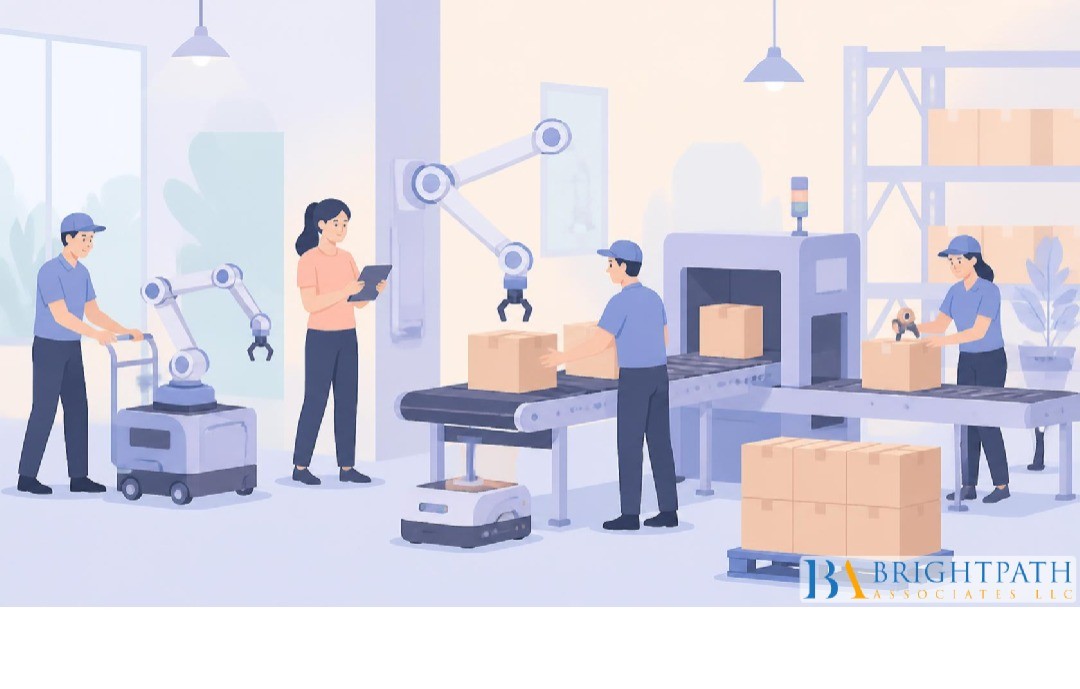
#PackagingManufacturers are facing a new operational reality. Customer expectations are increasing, product lifecycles are becoming shorter, labor availability is tightening, and manufacturers are under growing pressure to improve productivity without significantly increasing operating costs. For growing packaging lines, robotics can provide an effective path toward higher efficiency, consistency, and scalability.
However, robotics has traditionally been associated with large capital investments, complex installations, and highly automated facilities. This perception can discourage small and mid-sized packaging manufacturers from considering robotic technology. In reality, manufacturers do not always need to completely redesign their production facilities. Affordable robotic upgrades can be introduced incrementally, targeting specific processes where automation can generate measurable improvements.
The objective is not to automate everything at once. Instead, packaging companies can identify operational bottlenecks, repetitive processes, labor-intensive activities, and quality challenges where robotics can deliver the greatest value. This approach allows businesses to modernize their production capabilities while maintaining financial discipline.
Modern packaging operations involve numerous repetitive activities, including product handling, case packing, palletizing, labeling, sorting, inspection, and material movement. Many of these processes require consistent speed and precision but can also place significant physical demands on workers.
The Packaging industry labor shortage has made these challenges more visible. Manufacturers may struggle to recruit and retain workers for repetitive production roles, particularly when demand is increasing. Robotics can help address this challenge by taking over repetitive tasks while allowing employees to focus on machine supervision, quality management, maintenance, and higher-value activities.
Automation also provides manufacturers with greater production consistency. A robotic system can perform repetitive movements with predictable accuracy over long operating periods, reducing variability caused by fatigue or manual handling.
For growing businesses, these benefits can make robotics a practical tool for increasing capacity without relying exclusively on additional labor.
Starting With Targeted Robotic Upgrades
The most affordable automation strategy is often the one that focuses on a specific production problem. Instead of replacing an entire packaging line, manufacturers can identify a single process that limits throughput or creates excessive labor requirements.
Robotic palletizing is one example. A manufacturer experiencing increasing shipment volumes may find that manual palletizing has become a production bottleneck. Introducing a robotic palletizing cell can increase throughput while reducing repetitive physical work.
Similarly, robotic pick-and-place systems can automate product transfer between machines, while collaborative robots can support packing, loading, and other repetitive activities.
This targeted approach allows manufacturers to evaluate performance improvements before committing to larger investments. Successful projects can then become the foundation for additional automation.
Robotics delivers the greatest value when it is integrated into an efficient production process. Simply installing a robot onto an inefficient packaging line may automate the inefficiency rather than eliminate it.
Packaging machinery optimization should therefore come before or alongside robotic investment. Manufacturers should examine cycle times, machine utilization, changeover processes, material flow, downtime, quality losses, and operator movement.
The objective is to understand where the real bottlenecks exist. In some cases, improving machine settings or reorganizing material flow may deliver significant benefits without requiring new equipment. In other cases, robotics may be the most effective solution.
This process-oriented approach helps manufacturers avoid unnecessary capital expenditure while ensuring that automation investments solve genuine operational problems.
Affordable Robotics and Modular Automation
Modern #RoboticsTechnology provides more flexibility than previous generations of industrial automation. Modular robotic cells can be designed around specific processes and expanded as production requirements increase.
Collaborative robots are particularly relevant for smaller manufacturers because they can often operate alongside employees in appropriate applications and may require less extensive infrastructure than traditional industrial robots. Their flexibility makes them suitable for tasks that change frequently or involve multiple product formats.
The affordability of automation should not be measured solely by the initial equipment price. Manufacturers should evaluate the total cost of ownership, including installation, programming, maintenance, energy consumption, training, downtime, and expected productivity gains.
A relatively small automation investment can generate substantial value if it addresses a high-cost bottleneck.
Robotics is increasingly becoming part of a broader Packaging industry digital transformation. Modern robotic systems can communicate with production equipment, manufacturing software, sensors, and data platforms.
Connectivity enables manufacturers to monitor robot performance, production rates, downtime, and maintenance requirements. This creates greater visibility into how automated equipment contributes to overall production performance.
Digital integration can also support better decision-making. Instead of relying exclusively on manual observations, managers can use operational data to understand where production losses occur and where additional automation could provide value.
For growing packaging companies, this creates a scalable technology foundation. A robotic upgrade implemented today can potentially become part of a more connected manufacturing environment in the future.
Predictive Analytics for More Reliable Robotics
Reliability is critical when automation becomes part of a high-volume packaging process. An unexpected robotic failure can interrupt production and create downstream delays.
Predictive analytics packaging technologies can help manufacturers monitor equipment performance and identify early indicators of potential problems. Data related to motor performance, cycle times, temperature, vibration, error patterns, and other operational conditions can provide useful insight into equipment health.
Predictive analytics can support proactive maintenance by helping teams identify when a robot or related component may require inspection. Instead of relying exclusively on fixed maintenance schedules, manufacturers can increasingly make decisions based on actual equipment behavior.
This approach can improve equipment availability and contribute to greater production resilience.
Automation also has an important connection to supply chain performance. Packaging companies operate within complex networks involving raw material suppliers, manufacturers, distributors, retailers, and customers.
Supply chain resilience packaging strategies increasingly focus on creating production systems that can respond quickly to changing demand and supply disruptions.
Flexible robotic systems can support this objective by enabling manufacturers to adjust production processes without completely restructuring their workforce. A flexible packaging cell may handle multiple product formats or packaging configurations, helping manufacturers respond to changing customer requirements.
Automation can therefore become a strategic capability rather than simply a labor-saving technology.
Supporting Sustainable Packaging Goals
Sustainability is another factor influencing packaging technology decisions. Manufacturers are under pressure to reduce material waste, improve energy efficiency, and support more environmentally responsible packaging formats.
#SustainablePackagingCertifications can increasingly influence customer and market expectations. Manufacturers seeking certification or demonstrating environmental performance need reliable processes capable of controlling material usage and production quality.
Robotic systems can contribute by improving precision during packaging operations. Accurate product placement, controlled material handling, and consistent application of packaging materials can reduce waste.
The technology can also support the transition toward Circular economy packaging models. As packaging companies experiment with recyclable, reusable, or redesigned packaging formats, flexible automation can help manufacturers manage changing production requirements.
The growth of Bioplastic packaging development presents another opportunity for flexible automation. Bioplastics can introduce different processing characteristics compared with traditional materials, requiring manufacturers to adapt equipment and production processes.
Automation systems capable of handling changing production conditions can make these transitions easier. Robots can be programmed for different packaging configurations, product dimensions, and handling requirements.
For companies developing new sustainable packaging products, flexible automation can help reduce the operational barriers associated with moving from product development to commercial-scale production.
Managing Automation Investment Carefully
Affordability does not mean selecting the cheapest robotic system available. A low-cost solution that fails to deliver the required reliability, speed, or flexibility can ultimately become more expensive.
Manufacturers should evaluate automation projects according to measurable business outcomes. These may include increased throughput, reduced labor dependency, lower product damage, improved quality, reduced downtime, and greater production flexibility.
A phased investment strategy can help control financial risk. Companies can begin with one high-impact application, measure its performance, and use the results to determine whether additional robotic upgrades make economic sense.
This approach is particularly useful for growing companies that need to preserve cash while expanding production capacity.
Successful automation requires more than hardware. Manufacturers need people who understand production strategy, robotics, engineering, maintenance, workforce planning, and technology integration.
As automation adoption increases, leadership requirements within the packaging sector are becoming more specialized. Packaging executive search can help organizations identify leaders capable of managing technology-driven manufacturing transformation.
These executives must understand how automation affects operational costs, workforce structures, production planning, quality, and long-term competitiveness. They must also be capable of developing technology strategies that align with business growth objectives.
For organizations expanding their automation footprint, Packaging equipment executive search can be particularly valuable when recruiting leaders with specialized knowledge of machinery, automation systems, and packaging production environments.
Building a Workforce Around Automation
Robotics should not be viewed solely as a replacement for employees. In many cases, automation changes the nature of work rather than eliminating it completely.
Employees may transition from repetitive manual tasks toward equipment monitoring, programming, maintenance, quality control, and process improvement. This requires investment in training and #SkillsDevelopment.
Manufacturers that successfully combine human expertise with robotic technology can create more resilient production environments. Employees provide judgment, problem-solving, and adaptability, while robots deliver repeatability and consistent performance.
The combination can be especially valuable when companies are dealing with a persistent Packaging industry labor shortage.
As packaging technology evolves, leadership talent will increasingly influence how effectively companies capture the benefits of automation. #ExecutiveSearchRecruitment can help manufacturers identify professionals capable of managing both operational performance and technological transformation.
The ideal leaders for modern packaging organizations must understand automation investment, sustainability, digital systems, supply chain resilience, and workforce development. They need to make technology decisions based on business value rather than technological novelty.
Strong leadership can ensure that robotic upgrades remain connected to broader strategic goals, from increasing production capacity to supporting sustainable packaging innovation.
Conclusion
Affordable robotics can give growing packaging manufacturers a practical way to increase productivity without completely rebuilding their production facilities. The strongest strategy is often incremental, beginning with targeted processes where automation can address clear bottlenecks, labor challenges, or quality issues.
Packaging machinery optimization, predictive analytics, digital connectivity, and flexible robotics can create a foundation for long-term manufacturing improvement. At the same time, sustainability initiatives such as Circular economy packaging and Bioplastic packaging development are creating new requirements for flexible production systems.
The future of packaging automation will not necessarily belong to companies that invest the most money in robotics. It will belong to organizations that invest strategically, select the right applications, develop capable employees, and build leadership teams equipped to manage technological change.
For growing packaging lines, the question is no longer whether robotics is affordable. The more important question is where a carefully targeted robotic upgrade can create the greatest operational value—and how that first upgrade can become the foundation for a smarter, more resilient, and more scalable packaging operation.
Find your next leadership role in Packaging and Containers Industry today!
Stay informed with the latest insights on Packaging and Containers Industry!