
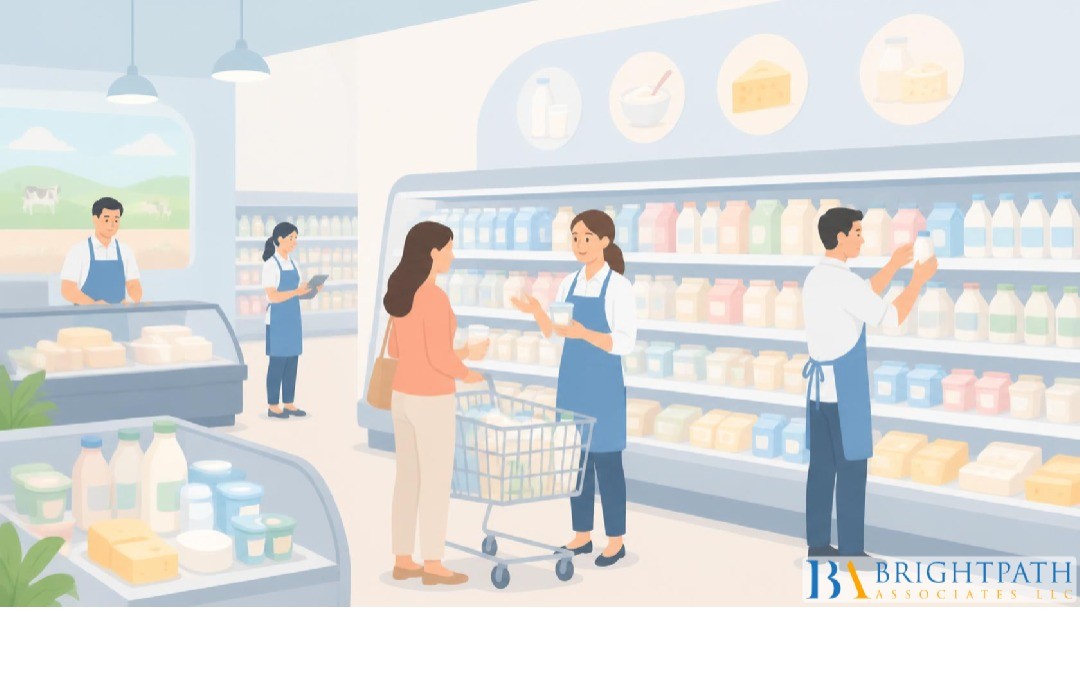
The #DairyIndustry aisle is changing. For decades, consumers approached dairy shopping with relatively predictable habits: they selected milk, yogurt, cheese, butter, cream, or other familiar products based on brand loyalty, price, availability, and household needs. Today, however, the decision-making process is becoming more complex. Consumers are increasingly interested in nutrition, convenience, sustainability, product origin, ingredients, packaging, animal welfare, and personalized dietary choices. At the same time, digital commerce and changing retail models are reshaping how customers discover and purchase food.
For dairy businesses, this transformation creates a significant opportunity. Companies that understand consumer preferences and translate those insights into relevant products, experiences, and communications can strengthen loyalty in an increasingly competitive market. Personalization is no longer limited to recommending products online. It is becoming a broader business strategy that connects consumer data, product development, manufacturing, marketing, retail, supply chains, and leadership.
The future of the dairy sector will therefore depend not only on producing high-quality dairy products but also on understanding what individual consumers value and delivering those expectations consistently.
The Dairy Consumer Is Becoming More Selective
Consumers are no longer simply asking whether a product tastes good or fits within their budget. They increasingly want to understand what they are buying and how it fits into their lifestyle. Protein content, sugar levels, ingredients, functional benefits, convenience, sustainability, and dietary preferences can all influence purchasing decisions.
This shift creates a challenge for dairy manufacturers because consumers do not form one homogeneous market. A young professional may prioritize high-protein products and convenience, while a family may focus on value and nutrition. Another customer may prioritize organic ingredients or products associated with sustainable dairy farming practices.
Personalization allows companies to recognize these differences rather than attempting to serve everyone with the same product proposition. The more accurately a dairy company understands its customer segments, the more effectively it can develop products and experiences that resonate with specific needs.
Behind personalized dairy experiences is a growing technology ecosystem. Food technology is helping companies develop new products, improve formulation, enhance food safety, and understand consumer preferences. At the same time, digital platforms are allowing brands to interact with consumers more directly.
Data generated through online purchases, loyalty programs, customer feedback, social media engagement, and digital marketing can provide valuable insights into purchasing behavior. When responsibly analyzed, this information can help dairy companies understand which products customers prefer, when they purchase them, what influences their decisions, and which product attributes matter most.
The result is a shift from mass-market assumptions toward more data-informed decision-making.
Milk Production Technologies Support Product Innovation
Personalization begins much earlier than the retail shelf. #MilkProductionTechnologies are increasingly helping dairy producers improve efficiency, quality monitoring, animal health management, and production consistency.
Advanced monitoring systems can provide information about herd performance, milk quality, environmental conditions, and production patterns. This information can support better operational decisions while creating greater visibility throughout the dairy value chain.
As consumers become more interested in transparency, the ability to connect production information with product communication may become increasingly valuable. Customers may want greater insight into where products originate, how animals are cared for, and how environmental responsibilities are managed.
Technology can help dairy companies build the information infrastructure required to respond to those expectations.
Automation Is Changing Dairy Manufacturing
Dairy automation technologies are also transforming processing and packaging operations. Automated systems can support repetitive tasks, quality control, filling, packaging, cleaning, temperature management, material handling, and production monitoring.
The industrial value of automation is clear, but its connection to personalization is equally important. Personalized products and smaller production runs can create additional complexity for manufacturers. Companies need flexible production systems that can respond to changing consumer demand without creating excessive costs or inefficiencies.
Automation can help manufacturers achieve greater consistency while improving their ability to manage different product formats and production requirements.
The most effective companies will not use automation simply to reduce labor requirements. They will use it to create more flexible, responsive, and reliable manufacturing operations.
The traditional dairy aisle is no longer the only place where consumers interact with dairy brands. Dairy e-commerce is creating new opportunities for companies to communicate directly with customers and understand purchasing behavior.
Online shopping provides brands with information that may be difficult to obtain through traditional retail channels. Companies can see which products attract attention, which combinations customers purchase, how frequently products are reordered, and how consumer preferences differ across locations.
E-commerce also provides opportunities for targeted product recommendations and customized promotions. A customer who frequently purchases high-protein yogurt may receive information about related products, while another customer interested in family-sized products may receive different recommendations.
However, personalization must remain useful rather than intrusive. Consumers are more likely to respond positively when recommendations provide genuine value instead of simply creating more marketing noise.
Personalization Requires a Connected Supply Chain
A personalized customer experience can quickly become a supply-chain challenge. If a company introduces multiple product variations, packaging formats, flavors, sizes, or functional formulations, its manufacturing and distribution network becomes more complex.
This makes #DairySupplyChain management increasingly important.
Companies need accurate demand forecasting, efficient inventory management, reliable suppliers, flexible manufacturing capacity, and effective logistics. A personalized strategy can fail if customers regularly encounter stock shortages or delayed deliveries.
The objective should therefore be to connect consumer insights with operational planning. Data about what customers want should influence procurement, production, inventory, and distribution decisions.
When marketing promises personalization but operations cannot deliver it, customer trust can suffer.
Sustainability Is Becoming Part of the Customer Experience
Sustainability is increasingly connected to consumer perception. Customers may consider packaging, emissions, animal welfare, water usage, waste, transportation, and farming practices when evaluating dairy products.
Sustainable dairy farming practices can therefore influence more than environmental performance. They can also become part of a company’s brand identity.
Dairy companies that invest in responsible production practices need to communicate those efforts clearly and credibly. Consumers are becoming more skeptical of vague environmental claims, which means businesses need evidence behind sustainability messaging.
Transparency can strengthen customer relationships when companies explain what they are doing, why it matters, and how progress is measured.
The broader dairy industry digital transformation is bringing together technologies that were previously managed separately. Production systems, farm technologies, supply-chain platforms, customer analytics, e-commerce systems, and enterprise software can increasingly exchange information.
This connectivity creates the possibility of a more responsive dairy business.
Consumer demand can influence product development. Product demand can influence production planning. Production requirements can influence procurement. Supply-chain information can influence customer communication.
The result is a more integrated business model in which information flows across the organization rather than remaining isolated within departments.
For mid-sized dairy companies, this integration can provide a meaningful competitive advantage because they can potentially make decisions faster than larger organizations with more complex structures.
Personalization Can Support Dairy Industry Growth Strategies
Personalization should not be treated as a marketing trend alone. It can become part of broader dairy industry growth strategies.
Companies can use consumer insights to identify underserved market segments, develop differentiated products, improve #CustomerRetention, strengthen pricing strategies, and identify new distribution channels.
For example, growing interest in high-protein nutrition may create opportunities for specialized dairy products. Demand for convenient food may support portable formats. Consumers seeking sustainable choices may respond to transparent sourcing and environmental initiatives.
The important consideration is whether these opportunities are supported by genuine consumer demand and operational capabilities.
Successful growth requires alignment between what customers want and what the organization can deliver profitably.
The Human Side of Dairy Digital Transformation
Technology may provide the information, but people determine how effectively it is used. Dairy companies need employees and executives who can interpret data, understand consumers, manage technology, optimize operations, and make strategic decisions.
This creates new talent requirements across the industry. Data specialists may work alongside food scientists. Digital marketing professionals may collaborate with supply-chain leaders. Operations executives may need to understand automation and analytics.
The ability to connect these disciplines can become a major competitive advantage.
As dairy companies become more technology-driven, leadership teams must evolve as well. Executives need to understand not only dairy production but also digital transformation, customer behavior, sustainability, technology investment, and organizational change.
Personalization requires coordination across departments, which makes leadership particularly important. Product development, manufacturing, marketing, technology, procurement, sales, and logistics must work toward a shared understanding of the customer.
This is one reason dairy industry executive search is becoming increasingly relevant. Companies may need leaders who can combine traditional industry expertise with digital capabilities and consumer-focused thinking.
An executive with a deep understanding of dairy production but limited experience with digital transformation may struggle to lead a technology-enabled personalization strategy. Conversely, a technology executive without an understanding of food manufacturing, quality, regulation, and supply-chain realities may face a different set of challenges.
The strongest leadership teams will combine complementary capabilities.
#ExecutiveSearchRecruitment can help organizations identify leaders with the combination of technical knowledge, strategic thinking, operational experience, and change-management capabilities required in a rapidly evolving dairy sector.
Personalization Must Be Built on Trust
There is another critical consideration: customer trust. Personalization depends on data, and consumers increasingly want to understand how their information is collected and used.
Dairy companies need to approach customer data responsibly. Transparency, appropriate data protection, and clear communication should be central to digital strategies.
The objective should be to use data to improve the customer experience, not to create a sense that consumers are being monitored excessively.
Trust can become a competitive advantage. Customers who believe a company understands their needs without compromising their privacy are more likely to develop long-term relationships with that brand.
The Future of the Dairy Aisle Is More Than Personalization
The dairy aisle of the future may look very different from the one consumers know today. Products may become more specialized, purchasing experiences may become increasingly digital, and sustainability information may become more visible.
Behind these changes will be a combination of food technology, automation, consumer analytics, digital commerce, advanced production systems, and increasingly sophisticated supply-chain management.
But technology alone will not determine which companies succeed.
The real differentiator will be the ability to connect technology with human understanding. Dairy businesses need to understand what consumers want, why they want it, and how those expectations can be delivered efficiently and responsibly.
The dairy industry is moving toward a model where customer experience extends across the entire value chain. It begins with production and farming, continues through processing and distribution, and ultimately reaches the consumer through retail and digital channels.
Companies that connect these stages can create stronger customer relationships and more responsive businesses.
The opportunity for dairy leaders is to view personalization not as a single marketing tactic but as an organizational capability. It requires data, technology, flexible operations, sustainable practices, supply-chain visibility, and talented people working toward a common objective.
The companies that successfully bring these elements together may be better positioned to achieve long-term dairy industry growth while responding to increasingly diverse consumer expectations.
As personalization, digital transformation, automation, and sustainability continue to reshape the sector, leadership will determine how effectively dairy companies turn these trends into business opportunities. The future of the dairy aisle may ultimately belong to organizations that can combine the science of food, the power of technology, the efficiency of modern operations, and the human understanding required to build lasting customer relationships.
Find your next leadership role in Dairy Industry today!