
Introduction
For mid-sized companies, sustainability is increasingly moving from a corporate aspiration to an operational and strategic priority. Customers, investors, regulators, employees, and supply chain partners are paying greater attention to how businesses manage environmental impacts across their operations. While direct emissions from facilities and #PurchasedEnergy are relatively straightforward to identify, Scope 3 emissions can be significantly more complex.
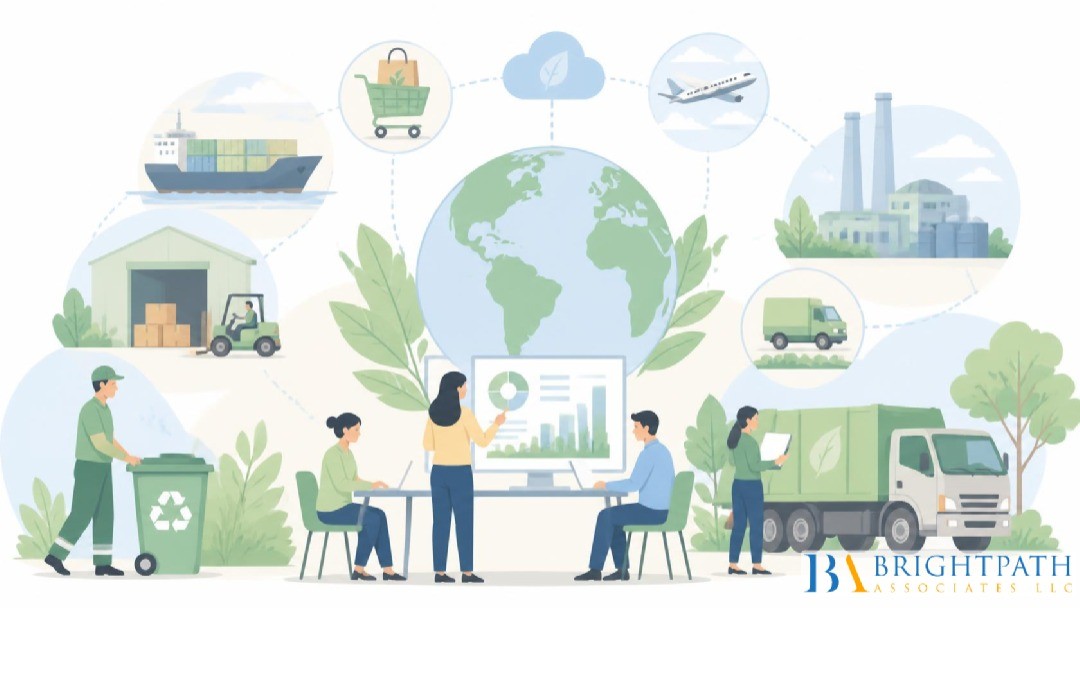
Scope 3 emissions represent indirect greenhouse gas emissions associated with activities across a company’s value chain. These emissions can originate from purchased materials, transportation, business travel, employee commuting, waste, use of sold products, and other upstream or downstream activities. For many organizations, these indirect sources can represent a substantial portion of their overall carbon footprint.
For mid-sized firms, addressing Scope 3 emissions does not need to become an overwhelming exercise. A structured approach can help organizations identify the most significant sources, improve data quality, engage suppliers, and develop practical reduction strategies. With the right combination of technology, expertise, and leadership, Scope 3 management can become an opportunity for operational improvement rather than simply another compliance obligation.
Understanding the Scope 3 Challenge
Scope 3 emissions are difficult to manage because companies generally have less direct control over the activities that generate them. A manufacturer may control its factory energy consumption, but it does not necessarily control how raw materials are produced or how suppliers transport those materials.
Similarly, a company may sell equipment that consumes energy throughout its operational life. Although the company does not directly operate that equipment, the emissions associated with its use can contribute to its broader value-chain footprint.
This complexity makes Scope 3 measurement fundamentally different from traditional environmental accounting. Organizations need to examine their entire value chain rather than focusing exclusively on internal facilities.
For mid-sized businesses with limited sustainability teams, the challenge can initially appear significant. However, organizations can make meaningful progress by prioritizing material emission sources instead of attempting to measure every activity with perfect precision from the beginning.
The growth of professional Environmental services is helping companies address increasingly complex sustainability requirements. Environmental consultants, technology providers, engineering organizations, and specialized service firms can support companies with emissions assessments, environmental data management, regulatory interpretation, and reduction planning.
For mid-sized firms, external expertise can be particularly valuable when internal resources are limited. A company may have strong engineering or operational capabilities but lack specialists who understand greenhouse gas accounting across complex supply chains.
The most effective approach is generally collaborative. External environmental professionals can establish methodologies and provide technical guidance, while internal teams contribute operational knowledge and supplier relationships. This combination can produce more practical and credible sustainability strategies.
Creating a Practical Scope 3 Measurement Framework
The first step toward managing Scope 3 emissions is understanding where significant emissions are likely to occur. Companies should begin by mapping their value chains and identifying major categories of purchased goods, transportation, waste, business travel, employee activities, and product use.
#DataQuality should then be evaluated. Some emissions may be calculated using detailed supplier information, while others may initially require industry averages, spend-based estimates, or other standardized approaches.
The objective at the beginning should not be perfection. Establishing a reasonable baseline creates a foundation for improvement. As organizations gain experience, they can replace estimates with more specific supplier and operational data.
This staged approach prevents Scope 3 initiatives from becoming stalled by the demand for complete information.
Environmental Innovation and Better Data
Environmental innovation is increasingly influencing how companies collect, analyze, and act on sustainability information. Digital platforms, connected systems, analytics tools, and automated reporting can help organizations improve visibility across complex supply chains.
Better data can reveal relationships between procurement decisions, logistics, production processes, waste generation, and emissions. This allows companies to identify areas where environmental improvements may also generate operational benefits.
For example, reducing unnecessary transportation can lower emissions while also reducing logistics costs. Improving material efficiency can reduce waste while decreasing purchasing requirements. Energy-efficient products can reduce environmental impacts while potentially improving customer value.
This illustrates an important principle: environmental management does not always need to be separated from business performance.
Mid-sized organizations often depend heavily on suppliers, making supplier engagement a critical component of Environmental sustainability strategies. Companies cannot effectively manage Scope 3 emissions without understanding the environmental performance of their supply networks.
Supplier conversations should focus on transparency and collaboration rather than simply imposing reporting requirements. Businesses can encourage suppliers to provide emissions information, establish environmental targets, improve energy efficiency, and adopt cleaner production methods.
Over time, procurement teams can incorporate sustainability considerations into supplier evaluation and selection. This creates a commercial incentive for suppliers to improve their environmental performance.
Strong supplier relationships can also help companies identify opportunities for material substitution, packaging reduction, logistics optimization, and other emissions-reduction initiatives.
The Connection Between Environmental Compliance and Scope 3
#EnvironmentalCompliance remains an important consideration for businesses operating in increasingly regulated markets. Although Scope 3 requirements can vary depending on jurisdiction, industry, customer expectations, and reporting frameworks, organizations are facing growing pressure to demonstrate environmental responsibility.
Mid-sized companies should therefore avoid treating Scope 3 as a short-term reporting exercise. Building internal processes for environmental data collection and governance can improve preparedness as expectations evolve.
Compliance should also be integrated with broader business planning. Procurement, operations, finance, risk management, and executive leadership should understand how environmental requirements may influence costs, supplier relationships, capital investments, and market access.
Clean Technology as a Reduction Strategy
Measurement is only the beginning. Once significant Scope 3 sources have been identified, companies need to determine how emissions can be reduced. Clean technology can play an important role in this transition.
Depending on the industry, opportunities may include energy-efficient equipment, electrification, renewable energy systems, low-carbon manufacturing technologies, advanced monitoring systems, and more efficient transportation solutions.
For mid-sized firms, investments should be prioritized according to both environmental and commercial value. Technologies that reduce energy consumption, improve productivity, or lower operating costs may provide stronger business cases than solutions based solely on environmental benefits.
This approach can make sustainability investment easier to justify to financial stakeholders.
Scope 3 discussions often focus heavily on greenhouse gases, but companies should also consider broader environmental impacts. Air pollution control is an important component of responsible industrial operations, particularly for businesses involved in manufacturing, processing, transportation, and energy-intensive activities.
Technologies that reduce particulate emissions, volatile compounds, nitrogen oxides, and other pollutants can contribute to broader environmental performance. Improvements in air quality management may also support regulatory compliance, worker protection, and community relationships.
A comprehensive environmental strategy should therefore consider carbon emissions alongside other forms of environmental impact.
Green Technology and Supply Chain Transformation
The adoption of #GreenTechnology is creating new opportunities for companies to reduce environmental impacts throughout their value chains. Sustainable materials, energy-efficient production systems, low-emission transportation, advanced recycling technologies, and intelligent monitoring platforms can all contribute to emissions reduction.
However, technology adoption must be connected to measurable business objectives. Simply purchasing a technology described as “green” does not guarantee meaningful environmental improvement.
Mid-sized firms should evaluate lifecycle impacts, implementation requirements, operating costs, maintenance needs, scalability, and expected emissions reductions before making significant investments.
Water Treatment and the Broader Environmental Footprint
Water is another important component of industrial sustainability. Water treatment technologies can help businesses manage water quality, reduce waste, recover usable resources, and improve operational efficiency.
Although water-related impacts are not identical to Scope 3 greenhouse gas emissions, they can form part of a broader environmental management strategy. Companies that evaluate carbon, water, waste, air quality, and resource consumption together can develop a more complete understanding of their environmental footprint.
This integrated approach is especially relevant for industrial businesses operating in regions where water availability and environmental regulation are becoming increasingly important.
The broader Environmental industry is evolving rapidly as businesses face more complex sustainability expectations. New technologies, reporting practices, regulatory frameworks, and environmental management models are creating demand for professionals with specialized knowledge.
Mid-sized organizations may need expertise spanning emissions accounting, environmental engineering, sustainability strategy, compliance, clean technology, data analysis, and supply chain management.
The challenge is finding professionals who can connect these technical disciplines with commercial realities. Sustainability leaders must increasingly understand not only environmental science but also procurement, finance, operations, technology, and executive strategy.
The Growing Importance of Environmental Executive Search
As environmental responsibilities become more strategic, leadership requirements are changing. Environmental executive search can help organizations identify senior professionals capable of managing sustainability transformation across complex business environments.
The modern environmental executive may be responsible for developing emissions strategies, managing regulatory expectations, working with suppliers, evaluating technology investments, communicating with stakeholders, and integrating sustainability into corporate strategy.
These responsibilities require a combination of technical knowledge and leadership capability. Mid-sized firms should therefore evaluate candidates based on their ability to influence multiple departments rather than focusing exclusively on #EnvironmentalCredentials.
Building Internal Ownership of Scope 3
Successful Scope 3 management cannot remain solely within the sustainability department. Procurement teams influence supplier emissions, logistics teams influence transportation impacts, product teams influence lifecycle performance, and operations teams influence material and energy efficiency.
Executive leadership must establish clear ownership and encourage cross-functional collaboration. Environmental objectives should be integrated into business planning rather than treated as a separate initiative.
This can also improve employee engagement. When employees understand how their decisions influence the company’s environmental footprint, sustainability becomes part of daily operations rather than an abstract corporate goal.
One of the most valuable outcomes of Scope 3 measurement is improved business intelligence. Environmental data can reveal inefficiencies that traditional financial or operational reporting may overlook.
A company may discover that a particular supplier has unusually high transportation emissions, that certain materials create excessive waste, or that product design decisions influence downstream energy consumption. These insights can lead to changes that improve both sustainability and competitiveness.
In this context, Scope 3 management becomes more than carbon accounting. It becomes a method for understanding how value is created, transported, consumed, and ultimately recovered across the business ecosystem.
Mid-sized organizations have an opportunity to approach Scope 3 strategically because they can often move faster than large corporations while maintaining closer relationships with suppliers and employees. However, they need leadership commitment and a clear implementation framework.
Executives should establish realistic baselines, prioritize significant emission sources, engage key suppliers, invest in appropriate technologies, and gradually improve data quality.
The objective should be continuous improvement rather than immediate perfection. Every improvement in measurement creates a stronger foundation for the next stage of environmental performance.
The Role of Executive Search Recruitment
As sustainability becomes increasingly integrated into business strategy, organizations need leaders who can translate environmental objectives into operational results. #ExecutiveSearchRecruitment can help mid-sized firms identify executives with the multidisciplinary capabilities required for this transition.
The strongest candidates may combine environmental expertise with experience in operations, manufacturing, supply chain management, technology, finance, or corporate strategy. Their ability to influence decision-making across the organization can determine whether environmental initiatives become isolated programs or genuine business transformations.
Leadership recruitment is therefore becoming an important element of long-term environmental strategy.
Conclusion
Scope 3 emissions may initially appear complicated, but mid-sized firms do not need to solve the entire challenge simultaneously. A practical approach begins with understanding the value chain, identifying the most significant emission sources, establishing a credible baseline, improving data quality, and developing realistic reduction strategies.
The broader transition toward Environmental sustainability is creating opportunities for companies to improve efficiency, strengthen supplier relationships, adopt Clean technology, enhance Environmental compliance, and prepare for changing market expectations.
By combining environmental expertise, technology, supplier collaboration, operational discipline, and capable leadership, mid-sized firms can transform Scope 3 from a complex reporting challenge into a strategic opportunity.
The future of environmental management will increasingly belong to organizations that can connect sustainability with business performance. For mid-sized firms, taking a practical approach to Scope 3 today can create stronger resilience, greater transparency, and a more competitive position in tomorrow’s environmental economy.
Find your next leadership role in Environmental Services Industry today!
Stay informed with the latest insights on Environmental Services Industry!