
Introduction
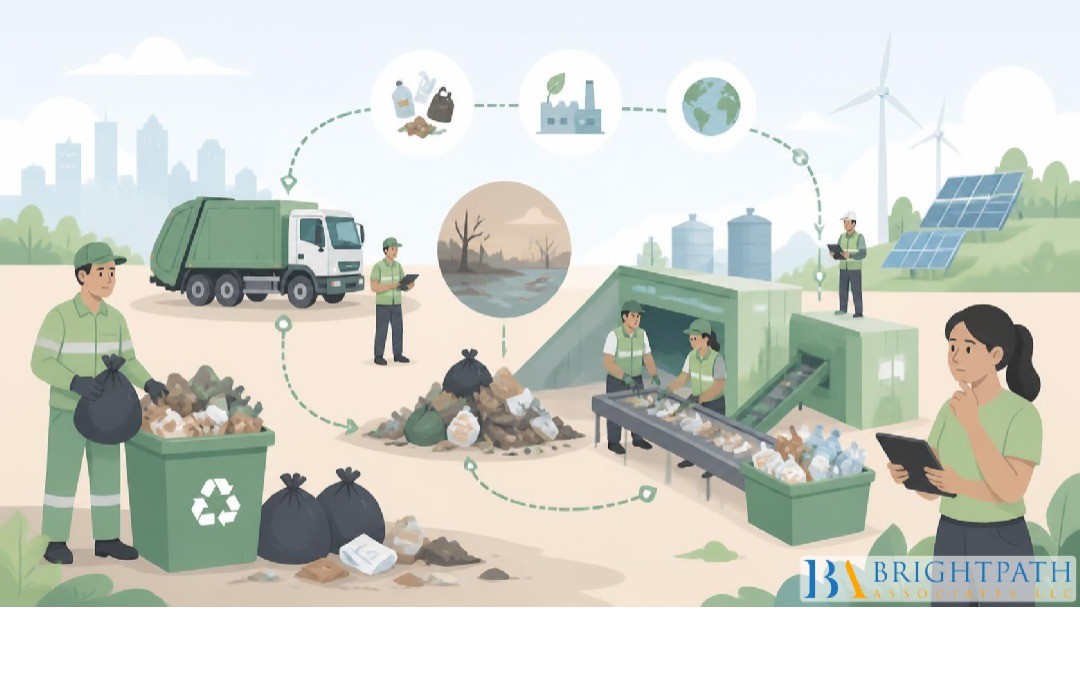
#WasteManagement is no longer limited to collecting, transporting, processing, and disposing of unwanted materials. Modern waste streams are increasingly connected to manufacturing, renewable energy, construction, technology, healthcare, and industrial production. As organizations face stricter Environmental regulations and greater expectations for sustainability, the ability to trace materials throughout their lifecycle has become a critical component of responsible business management.
Supply chain traceability provides organizations with visibility into where materials originate, how they are transported, where they are processed, and what happens to them at the end of their useful life. Without this visibility, companies can face environmental, financial, operational, regulatory, and reputational risks that may remain hidden until a serious incident occurs.
The issue is particularly important as businesses invest in Clean energy and Green technology. Renewable energy infrastructure generates new categories of materials, components, and end-of-life products that require effective collection and processing strategies. From wind turbine components to solar equipment, batteries, electrical systems, and specialized industrial materials, the waste management ecosystem is becoming more complex.
For executives, traceability should therefore be viewed not simply as a compliance mechanism but as a strategic capability. Strong traceability can strengthen Environmental management systems, improve resource efficiency, support Sustainable energy solutions, and create greater confidence throughout the supply chain.
The Growing Complexity of Modern Waste Supply Chains
Traditional waste management systems often involve numerous participants. Materials may move from manufacturers to distributors, customers, collection companies, transport providers, recycling facilities, processors, and final disposal locations.
Each transition creates an opportunity for information to be lost. If documentation is incomplete or inconsistent, organizations may struggle to determine where waste originated or whether it was handled according to established requirements.
This becomes particularly challenging when waste contains valuable, hazardous, recyclable, or regulated materials. A company may believe that a material has been responsibly recycled because it was transferred to a third party, but without sufficient traceability, it may have limited visibility into what actually happened.
Supply chain traceability closes these information gaps by creating a documented chain of custody.
Environmental regulations are becoming more complex across many industries. Governments and regulatory agencies increasingly expect companies to demonstrate that waste is handled responsibly.
Without reliable records, organizations may struggle to prove compliance. Even when waste has been handled correctly, insufficient documentation can create uncertainty during inspections, audits, or investigations.
Poor traceability can also make it difficult to identify responsibility when environmental incidents occur. If a waste shipment is mishandled, organizations may need to determine which supplier, carrier, processor, or facility was involved.
A robust traceability system can provide evidence that supports compliance and accountability.
For organizations operating across multiple jurisdictions, this becomes even more important because environmental requirements can vary between regions.
Environmental Management Systems and Supply Chain Visibility
#EnvironmentalManagementSystems are designed to help organizations identify environmental impacts, establish controls, monitor performance, and improve processes.
Traceability strengthens these systems by providing reliable information about material flows.
When organizations know where waste comes from and where it goes, they can better identify opportunities for reduction, recycling, reuse, and process improvement.
Traceability can also help management establish measurable environmental objectives. Instead of simply reporting that waste has been reduced, businesses can track specific material categories and determine how much is recycled, recovered, reused, or disposed of.
This creates a stronger foundation for environmental decision-making.
The growth of Renewable energy innovation is creating significant environmental opportunities, but it also introduces new supply chain challenges.
Renewable energy technology depends on specialized equipment, materials, components, and infrastructure. As installations mature, organizations must increasingly consider what happens to these assets when they require replacement or reach the end of their useful lives.
Solar panels, batteries, electrical components, composite materials, and wind energy equipment can create complex waste streams.
The Wind energy industry, for example, has invested heavily in larger and more advanced turbine systems. These technologies can improve energy generation, but their components require appropriate end-of-life planning.
Traceability allows operators and manufacturers to understand the lifecycle of these materials and develop more effective recovery strategies.
Renewable Energy Technology and End-of-Life Planning
Renewable energy technology is often discussed in terms of installation and energy generation, but lifecycle management is becoming equally important.
Companies investing in renewable infrastructure should consider material recovery when equipment is designed and procured.
Traceability can help organizations document component specifications, materials, suppliers, maintenance history, and eventual disposal or recycling pathways.
This information can support future recovery efforts and potentially improve the economics of recycling.
It can also support circular business models in which components are refurbished, reused, remanufactured, or recovered rather than simply discarded.
Poor traceability creates financial risks that may not be immediately visible.
When organizations lack accurate information about waste volumes and material destinations, they may overpay for disposal services, miss recycling opportunities, or maintain inefficient contracts.
Traceability can help businesses compare waste streams and identify where valuable materials are being lost.
This is increasingly important as Renewable energy economics evolve. The economics of renewable infrastructure depend not only on energy generation but also on capital costs, maintenance, material availability, regulatory requirements, and end-of-life considerations.
Improving recovery rates can potentially create additional value from materials that would otherwise become waste.
Supply Chain Disruption and Operational Risk
Traceability can also improve supply chain resilience. When businesses know where materials originate and how they move through the supply chain, they can identify dependencies and vulnerabilities.
If a recycling facility becomes unavailable, for example, a company with detailed traceability information can more quickly identify alternative processing options.
Without that information, organizations may have to reconstruct supply chains manually, causing delays and potentially increasing costs.
The same principle applies to recalls, environmental incidents, supplier failures, and regulatory changes.
Better information enables faster decision-making.
#EnvironmentalPerformance increasingly influences how companies are evaluated by customers, investors, employees, regulators, and business partners.
Organizations that make sustainability claims without reliable evidence can face reputational risks.
Traceability provides the data necessary to support environmental statements. It allows companies to demonstrate where materials were processed and how waste outcomes were achieved.
This is especially important for businesses positioning themselves around Clean energy or Sustainable energy solutions.
Credibility depends on measurable performance rather than broad sustainability messaging.
Green Technology and Digital Traceability
Green technology is increasingly being combined with digital systems to improve environmental performance.
Cloud-based platforms, connected sensors, automated reporting, digital documentation, and data analytics can create greater visibility across waste supply chains.
These systems can reduce reliance on paper records and make information available to managers in real time.
Digital traceability can also improve communication between organizations. Suppliers, transport providers, recyclers, and customers can potentially share standardized information rather than maintaining disconnected records.
However, technology must be supported by appropriate processes and governance. A digital platform cannot solve problems caused by inaccurate data or poorly defined responsibilities.
Effective traceability begins with identifying the critical points in the material lifecycle.
Organizations should understand which materials require detailed tracking, which suppliers handle them, what documentation is necessary, and which environmental risks are associated with each stage.
The system should establish clear ownership of information. Employees and external partners need to understand who is responsible for recording, verifying, and updating material information.
Standardized data formats can also improve consistency.
Over time, organizations can use the collected information to identify recurring problems and improve waste-management processes.
Renewable Energy Jobs and the Need for New Skills
The expansion of renewable energy is creating demand for professionals across engineering, manufacturing, project management, operations, environmental compliance, recycling, and supply chain management.
Renewable energy jobs increasingly require interdisciplinary capabilities.
Professionals may need to understand both technical systems and environmental requirements. For example, a renewable energy project manager may need knowledge of equipment logistics, environmental compliance, supplier management, lifecycle planning, and end-of-life considerations.
This changing skill profile creates challenges for companies seeking specialized talent.
As waste management becomes more integrated with sustainability, supply chain strategy, and renewable energy, leadership requirements are changing.
Executives must understand how environmental performance affects operational resilience, regulatory exposure, cost management, and corporate reputation.
#ExecutiveSearchRecruitment can help organizations identify leaders with experience across environmental management, supply chain operations, sustainability, renewable energy, and industrial technology.
Strong leadership is particularly important when implementing traceability systems because these initiatives often require cooperation across multiple departments and external partners.
Successful executives must be able to connect environmental objectives with commercial priorities.
Preparing for the Future of Sustainable Waste Management
The future of waste management will increasingly depend on information. Businesses will need to know what materials they use, where those materials come from, how they move through production, and what happens after their useful life ends.
This is particularly relevant as Sustainable energy solutions expand. Renewable infrastructure will continue to require materials and equipment, making lifecycle management an increasingly important consideration.
Companies that build traceability into procurement and product design can potentially reduce future waste-management challenges.
Designing products with recovery, recycling, refurbishment, or reuse in mind can make end-of-life management more efficient.
Conclusion
Ignoring supply chain traceability in waste management can create risks that extend far beyond environmental compliance. Poor visibility can increase operating costs, create regulatory uncertainty, weaken supply chain resilience, reduce recycling opportunities, and damage stakeholder confidence.
For organizations operating in the renewable energy sector, these challenges are becoming increasingly important. Renewable energy innovation and Renewable energy technology are accelerating the development of new infrastructure and materials, while the #WindEnergyIndustry and other clean-energy sectors must increasingly consider the full lifecycle of their products and equipment.
Environmental management systems can provide a foundation for controlling environmental impacts, but their effectiveness depends on accurate and reliable information. Digital traceability can strengthen that foundation by connecting suppliers, transporters, processors, and internal teams through a more transparent material-flow system.
The economic case is equally important. Better traceability can support more efficient waste contracts, improve material recovery, reduce operational disruption, and provide information for long-term investment decisions. As Renewable energy economics continue to evolve, lifecycle material management will become increasingly relevant to the overall performance of energy projects.
The organizations that succeed will be those that treat waste traceability as part of their broader business strategy rather than an administrative requirement. With the right Green technology, reliable data systems, effective environmental processes, and skilled professionals, businesses can transform waste visibility into a source of efficiency and resilience.
Ultimately, traceability provides something that modern environmental management increasingly requires: evidence. Evidence of where materials came from, how they were handled, where they went, and what value can still be recovered from them. As Clean energy expands and Environmental regulations become more demanding, that evidence will become not only a compliance asset but a meaningful competitive advantage.
Find your next leadership role in Renewable Energy and Environment Industry today!
Stay informed with the latest insights on Renewable Energy Environment Industry!