
Introduction
Scrap is one of the most persistent sources of hidden cost in manufacturing. When materials are discarded because of defects, incorrect settings, quality failures, production errors, or inefficient processes, manufacturers lose more than the value of the raw material. They also lose machine capacity, labor hours, energy, production time, and potentially #CustomerConfidence.
For companies operating in the plastics sector, scrap reduction is particularly important because resin, additives, colorants, packaging materials, utilities, and processing time can represent substantial operating costs. Volatile input prices and changing customer requirements make manufacturing efficiency increasingly important. Businesses therefore need practical methods to identify waste and correct problems before they become expensive.
Low-code technology offers an accessible solution. Unlike traditional software development, low-code platforms allow operations teams to build applications, dashboards, workflows, alerts, and data-entry systems with limited programming expertise. This makes them particularly useful for manufacturers that need rapid improvements without waiting for large-scale digital transformation projects.
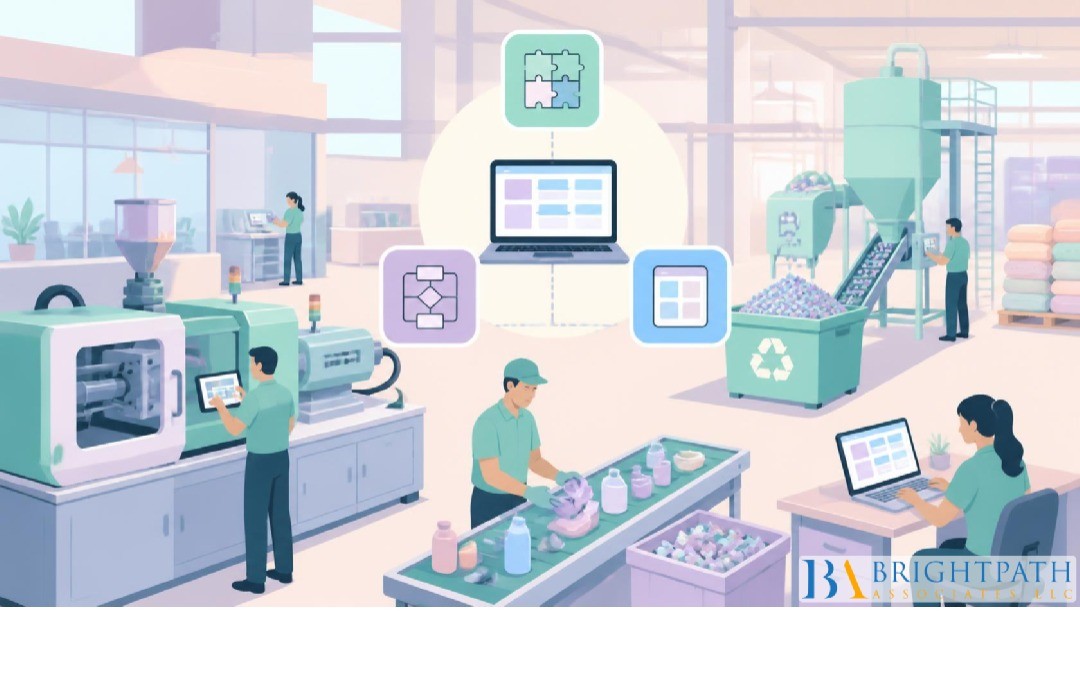
Three low-code tools can deliver immediate value: digital scrap tracking and dashboards, automated quality and corrective-action workflows, and production monitoring with real-time alerts. When implemented strategically, these tools can improve visibility, accelerate decision-making, and create measurable returns without requiring massive technology investments.
The plastics manufacturing environment involves numerous variables that can influence product quality. Temperature, pressure, cycle time, material composition, tooling conditions, machine settings, cooling performance, and operator practices can all contribute to defects.
A small variation may produce a significant quantity of rejected material if the problem remains undetected. This is particularly challenging when production teams discover defects only during final inspection.
The objective should therefore be to identify patterns earlier. Manufacturers need visibility into where scrap occurs, why it occurs, how frequently it occurs, and which production conditions are associated with it.
Effective scrap management can support broader Plastics industry supply chain management because reducing waste improves material utilization and makes production planning more predictable.
The Business Case for Low-Code Manufacturing Tools
Traditional manufacturing software projects can require substantial investment in development, integration, testing, and implementation. For smaller manufacturers, this can make digital improvement projects difficult to justify.
Low-code applications offer a different approach. Teams can create targeted solutions around specific operational problems and deploy them relatively quickly.
The technology is particularly useful when existing enterprise systems contain important information but do not provide the specific workflow or visibility required by production teams.
Instead of replacing existing systems, low-code tools can act as a practical layer between employees, machines, quality processes, and management.
This approach allows organizations to begin with a narrow problem, measure the result, and expand successful solutions across the operation.
Tool One: Digital Scrap Tracking and Root-Cause Dashboards
The first low-code tool should focus on capturing scrap data consistently. Many manufacturing operations record rejected material using spreadsheets, paper forms, or disconnected systems. Although these methods can capture information, they often make it difficult to identify trends quickly.
A low-code scrap-tracking application can provide operators with a standardized interface for recording production date, machine, product, material, batch, shift, defect type, quantity, and other relevant information.
The goal is not to collect excessive data. The system should capture the information necessary to identify recurring patterns.
Once the information is collected, dashboards can provide managers with an immediate view of scrap by machine, product, shift, material, or defect category.
The real value of digital scrap tracking comes from analysis. A manufacturer may discover, for example, that a particular defect occurs primarily on one machine during specific production conditions.
Instead of treating every rejected product as an isolated event, management can identify recurring patterns.
This supports #PlasticsIndustry competitive analysis at the operational level because manufacturers can compare their internal performance across plants, product lines, and production cells.
The system can also establish baseline scrap rates. Once baseline performance is known, improvement teams can determine whether process changes are actually producing measurable results.
The return on investment from digital scrap tracking does not necessarily depend on sophisticated artificial intelligence. Simply reducing the time required to identify recurring scrap patterns can create substantial value.
If a production team discovers a recurring problem several days earlier, it may prevent hundreds or thousands of defective units from being produced.
A dashboard also creates accountability. Managers can identify whether scrap is improving after maintenance, process adjustments, operator training, or material changes.
Tool Two: Automated Quality and Corrective-Action Workflows
Identifying scrap is only the first step. Manufacturers also need a reliable method for responding to quality problems.
A second low-code tool can automate the corrective-action process. When scrap exceeds a defined threshold, the system can automatically create a quality event and assign it to the appropriate person.
Instead of relying on emails or informal conversations, the workflow can establish clear responsibilities and deadlines.
The system can collect information about the problem, potential causes, immediate containment measures, corrective actions, verification results, and final approval.
Speed matters when dealing with manufacturing defects. The longer a problem remains unresolved, the more material may be affected.
Automated workflows can reduce delays by notifying responsible employees as soon as a predefined condition is triggered.
For example, if a defect rate exceeds an established threshold, the quality manager and production supervisor can receive an immediate notification. The system can then guide the team through the appropriate investigation process.
This creates a structured connection between production and quality departments.
Corrective-action workflows also contribute to Plastics industry risk management. Manufacturing risks are easier to manage when organizations have documented responses to recurring problems.
Historical corrective-action records can help identify whether the same issue has occurred repeatedly. If a problem continues despite previous interventions, management may need to reconsider equipment, materials, process parameters, or supplier relationships.
This information can also support strategic decisions about Plastics manufacturing technology investment.
If a particular machine consistently generates excessive scrap, the business can evaluate whether continued maintenance is financially justified or whether replacement technology would provide better long-term value.
Tool Three: Real-Time Production Monitoring and Alerts
The third low-code tool focuses on real-time production monitoring. Scrap reduction becomes significantly more effective when manufacturers can identify process deviations before they result in large quantities of defective products.
Low-code dashboards can connect operational data from machines, sensors, quality systems, or production databases and display relevant information to supervisors.
The objective is to provide a #PracticalOperational view rather than overwhelm employees with data.
Automated alerts can notify employees when production conditions move outside acceptable ranges.
For example, a system may monitor cycle times, temperature readings, production quantities, downtime, or quality indicators. If a parameter moves beyond an established threshold, the platform can send an alert to the appropriate team.
This allows operators to investigate the problem before it creates a significant volume of scrap.
The system can also record when the alert occurred, what action was taken, and whether the intervention resolved the issue. Over time, this creates valuable operational intelligence.
Real-time monitoring can transform manufacturing from a reactive model to a proactive one. Instead of discovering problems after a production batch is complete, teams can intervene while the process is still running.
This capability can be especially valuable in high-volume plastics production, where small process deviations can quickly translate into significant material losses.
Real-time monitoring also supports continuous improvement. Management can analyze recurring alerts to identify processes that require equipment upgrades, operator training, maintenance, or redesigned procedures.
Integrating the Three Low-Code Tools
The three tools become more valuable when they are connected.
Digital scrap tracking identifies what is going wrong. Corrective-action workflows establish how the organization responds. Real-time monitoring helps prevent the problem from continuing.
Together, they create a closed-loop improvement system.
A production deviation can trigger an alert. If defective material is produced, the operator records the scrap through the digital tracking system. If the quantity exceeds a predefined threshold, a corrective-action workflow is automatically created.
Management can then review the historical data to determine whether the issue is isolated or part of a larger trend.
The benefits of these tools extend beyond individual production lines. Scrap data can influence procurement, product design, maintenance, supplier management, and capital planning.
For example, if scrap consistently increases when a particular material is used, the company may need to evaluate supplier performance. If defects are concentrated around aging equipment, capital investment may become a priority.
This demonstrates how operational data can support broader Plastics market expansion strategies. A manufacturer with efficient processes and predictable production performance may be better positioned to enter new markets because it can offer competitive pricing without sacrificing margins.
Supporting the Plastics Industry Supply Chain
Reducing scrap directly improves material utilization. This has implications throughout the supply chain.
Lower scrap means manufacturers need fewer raw materials to produce the same volume of finished products. This can reduce purchasing requirements and exposure to fluctuations in resin and other input costs.
Better production predictability also improves inventory planning.
For companies managing complex supplier networks, scrap information can help distinguish between internal process problems and material-related quality issues.
Data can provide a stronger basis for #SupplierDiscussions. Instead of making general claims about material performance, manufacturers can show specific production trends and defect patterns.
This can support Plastics industry strategic partnerships by encouraging suppliers to collaborate on material quality, process optimization, and technical support.
Strategic suppliers may also become sources of innovation rather than simply providers of raw materials.
Low-Code Technology and Plastics Industry Innovation
Digital transformation does not always require large enterprise platforms. Low-code tools allow manufacturers to experiment with practical applications using relatively limited resources.
This can contribute to the development of a Plastics industry innovation ecosystem in which production teams, engineers, IT professionals, quality managers, and suppliers collaborate around measurable operational problems.
Employees who understand the manufacturing process can often identify useful applications that external software developers might overlook.
Low-code platforms give these employees greater ability to turn process ideas into working digital solutions.
Low-code tools should not be viewed as substitutes for advanced manufacturing systems. Instead, they can provide a foundation for identifying where larger investments are justified.
If a low-code monitoring application demonstrates that a particular production process generates recurring problems, management has stronger evidence for investing in advanced automation, machine vision, equipment upgrades, or predictive maintenance.
This makes Plastics manufacturing technology investment more data-driven.
Economic Trends and the Pressure to Improve Efficiency
#PlasticsEconomicTrends are influenced by raw-material costs, energy prices, regulatory developments, global demand, sustainability expectations, and changing customer requirements.
Manufacturers cannot control all of these external variables, but they can improve internal efficiency.
Scrap reduction provides a direct opportunity to strengthen margins. Even modest improvements can become financially meaningful when applied across high-volume production.
Low-code tools can help organizations achieve these improvements without waiting for major technology transformation programs.
The Human Factor in Digital Scrap Reduction
Technology only creates value when employees use it effectively. Operators should understand why data is being collected and how it will be used.
If workers view digital tracking as an additional administrative burden, adoption may suffer. Management should therefore design interfaces around actual production workflows and minimize unnecessary data entry.
Employees should also be encouraged to contribute ideas for improving the systems.
The success of digital manufacturing initiatives depends heavily on leadership. Organizations need managers who understand production, technology, data, and workforce development.
Plastics industry global leadership increasingly requires executives capable of connecting operational performance with technology strategy and market objectives.
Plastics industry recruiters can help organizations identify professionals with specialized experience in manufacturing operations, technology implementation, supply chain management, and digital transformation.
#ExecutiveSearchRecruitment can further support the appointment of senior leaders capable of developing long-term technology strategies rather than pursuing disconnected digital projects.
Measuring the ROI of Low-Code Scrap Reduction
Manufacturers should establish measurable targets before implementing low-code tools. Scrap percentage, material utilization, defect frequency, corrective-action response time, downtime, and production yield can provide useful performance indicators.
The baseline should be documented before implementation so that improvements can be measured accurately.
Financial analysis should also consider the value of recovered production capacity and reduced labor associated with rework.
Once a low-code application demonstrates measurable value, organizations can expand it to other production lines or facilities.
This creates a scalable transformation model. Rather than making a large investment upfront, businesses can develop a series of smaller applications, evaluate their performance, and scale those that deliver results.
This approach reduces technology risk while encouraging continuous improvement.
Conclusion: Making Scrap Reduction a Competitive Advantage
Reducing scrap is more than a production efficiency exercise. It can influence profitability, material consumption, #CustomerSatisfaction, supply chain resilience, technology investment, and competitive positioning.
Three low-code tools can provide a practical starting point. Digital scrap tracking creates visibility into where waste occurs. Automated quality and corrective-action workflows ensure that problems receive timely attention. Real-time production monitoring helps teams identify process deviations before they create significant quantities of defective material.
Together, these tools create a connected approach to manufacturing improvement.
For organizations navigating changing Plastics economic trends, these capabilities can strengthen operational resilience without requiring immediate large-scale technology spending. Better data can support Plastics industry risk management, while improved material utilization can strengthen supply chain performance and support Plastics market expansion strategies.
The broader lesson is that digital transformation does not always need to begin with a massive technology program. Low-code applications can provide immediate, measurable improvements while creating the data foundation for future Plastics manufacturing technology investment.
With effective Plastics industry strategic partnerships, strong leadership, capable technical teams, and the right talent supported by Executive Search Recruitment, manufacturers can turn scrap reduction into a long-term competitive advantage. The goal is not simply to produce less waste. It is to build a manufacturing operation that learns faster, responds sooner, uses materials more efficiently, and continuously improves its economic performance.
Find your next leadership role in Plastics Industry today!
Stay informed with the latest insights on Plastics Industry!