
Introduction
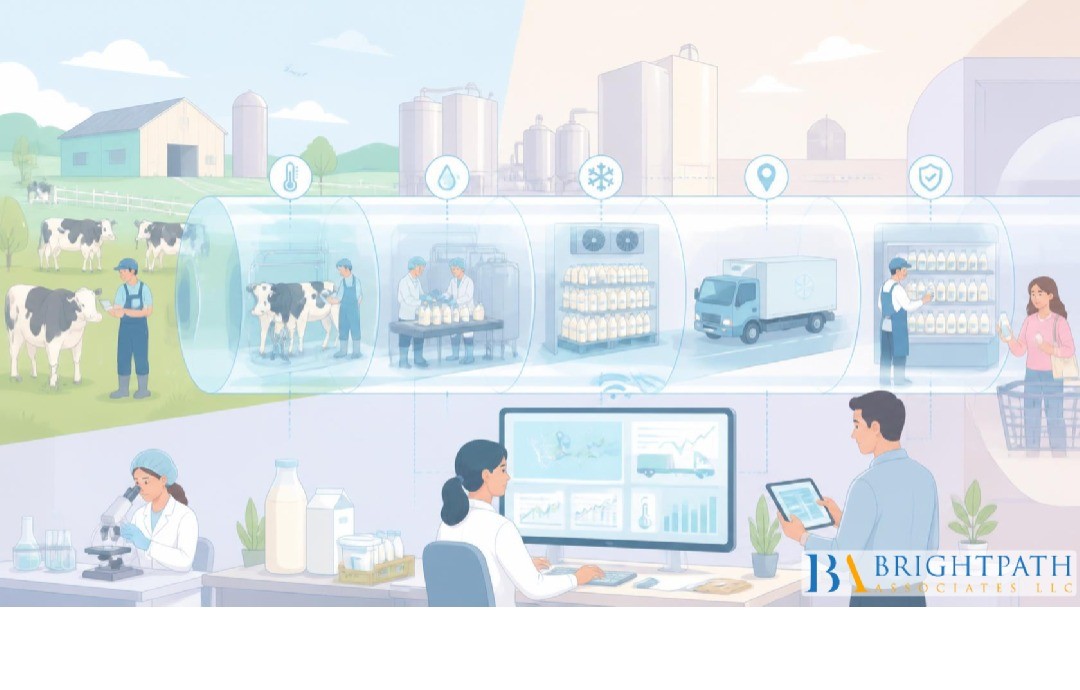
#ColdChain performance used to be a back-room operational metric: keep product within temperature bands, ship on time, and deal with exceptions as they appear. That mindset is becoming a liability. In today’s dairy market, trust is increasingly built on proof, and proof comes from data that is timely, continuous, and easy to audit. When a retailer questions a pallet’s exposure history or a consumer raises concerns about the integrity of Dairy products purchased through Dairy e-commerce, “we think it was fine” is no longer an acceptable answer.
Real-time visibility has shifted from a “nice-to-have” to a core capability of Dairy supply chain management. The same Food technology that is modernizing production lines and distribution centers is also redefining what quality assurance looks like after goods leave the plant. This article explains what cold chain transparency really means, why it is central to brand trust and margin protection, and how milk and dairy organizations can use connected data to strengthen compliance, reduce waste, and support long-term Dairy industry growth strategies without slowing operations.
Cold Chain Transparency Is a Business System, Not a Sensor Project
Cold chain transparency is often described as “having temperature trackers,” but the practical definition is broader and more industrial: the ability to reconstruct product condition and handling events across custody transfers, lanes, dwell times, and last-mile delivery, using data that is consistent enough to support decisions. In dairy, where product risk rises quickly with time-temperature abuse, transparency is the difference between targeted intervention and blunt, expensive actions like broad holds or mass disposal. It also shapes how confidently teams can defend quality outcomes when something goes wrong.
The category is under pressure from multiple directions. Retailers want fewer disputes and faster resolution. Regulators expect documented controls and traceable corrective actions. Insurers look for evidence that risk is managed systematically, not informally. Meanwhile, consumers have raised expectations for freshness and integrity, especially as Dairy e-commerce expands and product travels through more nodes, including micro-fulfillment and third-party couriers. In this environment, transparency becomes an operating model that aligns quality, logistics, and commercial commitments around the same source of truth.
Milk production technologies and Sustainable dairy farming practices add another layer to the story. The “cold chain” begins earlier than many organizations admit, because on-farm cooling, bulk tank performance, and pickup timing influence downstream stability. As farms adopt more instrumentation and processors invest in tighter process controls, the visibility gap often widens in transit and distribution, exactly where disputes occur. Closing that gap requires a full-chain perspective that treats data continuity as part of product design and route design, not just a transportation add-on.
Why Real-Time Data Builds Trust Faster Than Certifications
Certifications, audits, and standard operating procedures matter, but they are snapshots. Real-time data is different because it can demonstrate performance under real operating conditions: peak demand, traffic delays, dock congestion, equipment variability, and weather swings. For buyers and retail partners, that capability reduces perceived risk. When quality teams can show an unbroken record of temperature compliance, door openings, and exception handling, negotiations shift from blame to facts, and from delays to resolution.
Internally, transparency changes behavior. Operations teams make better trade-offs when they can quantify exposure and predict remaining shelf life rather than treating every deviation as equal. Distribution teams can prioritize actions that protect the highest-risk loads. #CustomerService can respond with confidence instead of escalating blindly. Over time, these micro-decisions compound into improved fill rates, fewer credits, and more stable relationships—outcomes that sit at the heart of Dairy industry growth strategies, especially for brands trying to differentiate on quality in crowded dairy cases.
There is also a strategic trust dimension tied to Food technology adoption. Many dairy processors and logistics partners are implementing digital tools at different speeds, leading to fragmented data and mismatched expectations. Real-time cold chain visibility can act as a bridge technology, because it produces a shared record across companies without forcing everyone onto the same internal systems. When implemented thoughtfully, it supports collaboration while respecting operational realities, which is essential in complex Dairy supply chain management networks with multiple carriers, co-packers, and distribution centers.
From “Tracked” to “Transparent”: The Data Foundation You Actually Need
The difference between tracking and transparency is integration. A tracker that produces a temperature curve is useful, but it becomes operationally powerful when that curve can be mapped to shipment milestones, equipment status, and ownership changes. In practice, transparency requires a coherent data model that ties together product identity, lot attributes, route plans, custody events, and sensor telemetry. Without that structure, teams drown in alerts while still lacking confidence about what the data means and what to do next.
For dairy, the data should be interpreted in context of perishability. Temperature is not a single pass/fail threshold; time at temperature matters, as do repeated micro-excursions that may not trigger alarms but can accelerate spoilage. Real-time analytics can translate raw signals into actionable indicators such as exposure minutes above threshold, estimated shelf-life impact, and risk scoring by lane, carrier, or facility. That is where Food technology becomes a profit lever, because it allows quality to be managed with precision rather than conservatism, reducing unnecessary waste while strengthening safety posture.
The same logic applies upstream and inside plants. As Dairy automation technologies expand across processing lines—improving consistency in pasteurization, filling, and packaging—variance shifts downstream to handling and transport. The organizations that benefit most from transparency are those that connect plant release decisions to distribution realities, using the same data backbone to understand how product leaves the site, how it is staged, and how it experiences the network. This end-to-end view also supports sustainability, because it pinpoints where energy use and product loss occur, complementing Sustainable dairy farming practices with equally disciplined post-farm controls.
Modern #MilkProductionTechnologies can generate rich quality signals, from compositional metrics to microbial indicators. When those signals are associated with batches and linked to cold chain conditions, they can help teams understand which products are most sensitive and which routes are most risky. Over time, that feedback loop informs packaging choices, pallet configurations, and dispatch sequencing. Transparency, in other words, is not only about monitoring; it is about learning at industrial scale and turning the supply chain into a continuous improvement engine.
Making Transparency Stick: Governance, Incentives, and the Right Leadership
The biggest barrier to cold chain transparency is rarely hardware. It is organizational alignment. If quality, logistics, sales, and external partners do not share definitions for excursions, evidence, and accountability, the same dataset can trigger conflicting conclusions. Strong governance establishes common thresholds, exception workflows, and documentation standards so that data becomes a decision tool rather than a dispute generator. It also clarifies who owns corrective actions at each node and how actions are verified, which is critical when distribution is shared across multiple third parties.
Partner management is equally important. In Dairy supply chain management, transparency depends on collaboration with carriers, warehouses, and last-mile providers that may operate different systems and service levels. The most effective programs treat visibility requirements as part of commercial agreements and performance management, with expectations defined around data availability, response times, and root-cause participation. As Dairy e-commerce grows, the partner perimeter expands, and so does the need for standardized evidence that can travel with the product, especially when delivery windows tighten and customer tolerance for quality variation drops.
None of this works without the right talent. Dairy industry digital transformation requires leaders who can translate operational needs into scalable data programs while protecting regulatory and brand requirements. Many organizations find that their limiting factor is not commitment, but capability depth in digital operations, data governance, and cross-functional change management. This is where Executive Search Recruitment can be a strategic accelerator rather than a back-office function, especially when the business is trying to modernize quickly without destabilizing production or service levels.
In particular, #DairyIndustry executive search is increasingly focused on executives who can blend operational credibility with modern Food technology literacy. These leaders understand automation, quality systems, and logistics, but they also know how to build partnerships with IT, analytics teams, and external providers. When boards and CEOs use #ExecutiveSearchRecruitment to fill these roles, they are not only hiring for execution; they are hiring for trust-building across the network, because transparency changes how partners negotiate, how teams escalate issues, and how the organization presents itself to customers.
Transparency programs also benefit from a deliberate approach to change. A cold chain visibility rollout that overwhelms teams with alarms can backfire, creating alert fatigue and workarounds. Successful implementations tune exceptions, define tiered responses, and train frontline operators on what matters and why. Over time, this disciplined approach supports broader Dairy industry growth strategies by allowing the business to scale lanes, add channels, and enter new geographies with confidence that product integrity is measurable, defendable, and continuously improving.
The Payoff: Fewer Losses, Faster Resolution, and Credible Sustainability
Cold chain transparency delivers tangible operational benefits, but its deeper value is commercial. When you can quantify where and why exposure occurs, you can redesign routes, reduce dwell times, and hold partners to measurable standards. That reduces spoilage, protects margins, and stabilizes service. It also changes how you handle claims. Instead of debating whether a load was compromised, teams can pinpoint the event, assess impact, and resolve quickly. In industries moving as fast as dairy, speed of resolution is a competitive advantage because it protects retailer relationships and prevents small issues from becoming recurring disputes.
Transparency also supports sustainability in a practical way. Sustainable dairy farming practices address upstream emissions and resource use, but the environmental cost of wasted product is equally real. Real-time condition data reduces waste by enabling targeted holds and smarter disposition decisions, and by preventing recurring failures through root-cause clarity. When sustainability claims are backed by measurable reductions in product loss and improved network efficiency, they become more credible to customers and internal stakeholders alike.
Finally, transparency is a readiness capability. As Dairy automation technologies and Milk production technologies continue to improve consistency inside the plant, competitive advantage will shift to how confidently brands can deliver that quality through complex distribution and emerging channels like Dairy e-commerce. Organizations that treat Dairy industry digital transformation as a cold chain strategy—not merely a software agenda—are better positioned to expand, innovate, and defend trust at scale.
Conclusion: Transparency Turns the Cold Chain into a Trust Engine
If your cold chain cannot explain itself in real time, it will eventually be judged by its worst day rather than its average performance. Transparency replaces assumptions with evidence, enabling faster decisions, fewer losses, and stronger relationships across the network. For #DairyLeaders, the path forward is clear: build a connected data foundation, integrate it into daily operations, and invest in the leadership and governance that make it sustainable. In a market where Dairy products compete on freshness, reliability, and credibility, real-time data is not just operational visibility—it is trust, engineered.
Find your next leadership role in Dairy industry today!