
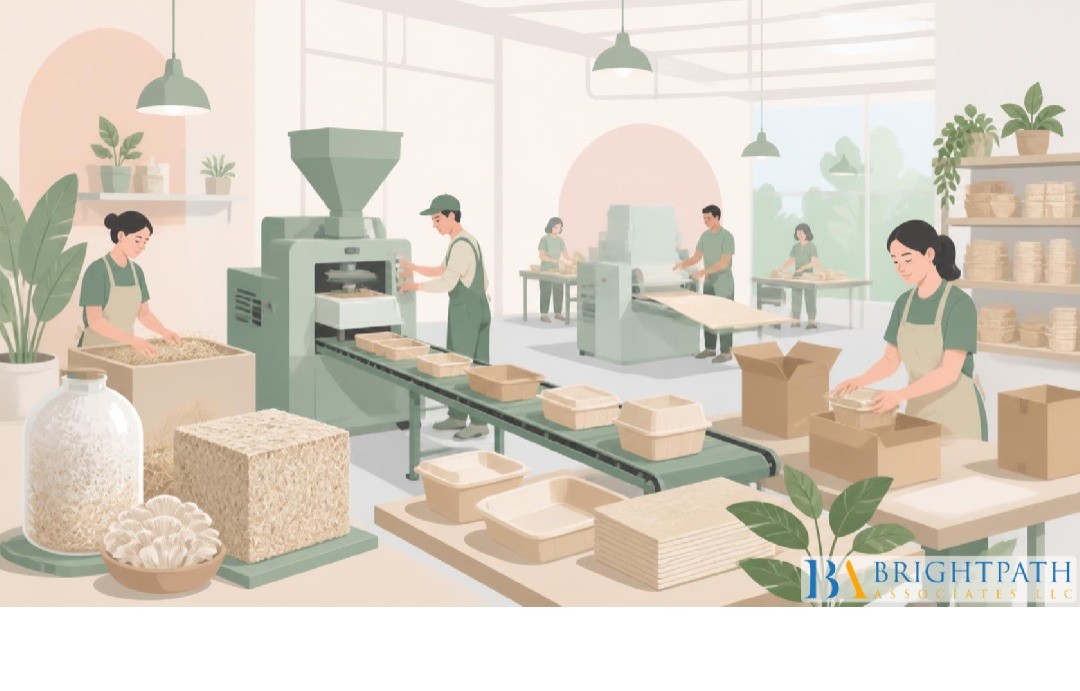
[Bethany, Connecticut – 11 August 2026] – BrightPath Associates has released a new industry insight examining how small and mid-sized enterprises (SMEs) in the Paper & Forest Industry can integrate mycelium composites and bio-based fibers into existing packaging lines without sacrificing production stability, quality, or cost control. The analysis outlines a practical approach for C-suite executives evaluating Sustainable materials, Forest product innovation, Paper recycling solutions, and Automation in Paper industry operations. The report emphasizes that successful packaging modernization requires material qualification, equipment compatibility, compliance planning, cost analysis, and the right technical leadership.
Sustainable Materials Move From Concept to Production
Growing customer expectations, retailer packaging requirements, and increased regulatory scrutiny are encouraging manufacturers to reconsider traditional packaging materials. For SMEs, however, replacing conventional plastics or foams is not simply a sustainability decision. New materials must work reliably within existing production environments while protecting uptime, product quality, and margins.
BrightPath Associates’ new analysis, Integrating Bio-Based Fibers into SME Packaging Lines, explains how mycelium composites and bio-based fiber formats can become practical alternatives for protective packaging, trays, separators, and molded forms.
The article notes that the key question for SMEs is how to “select them, qualify them, run them on existing equipment, and manage cost and compliance without introducing instability.”
The report recommends starting with measurable performance requirements rather than choosing materials solely because they appear environmentally preferable. Compression strength, cushioning, humidity tolerance, temperature exposure, shelf life, printability, and barrier performance can all influence whether a material is suitable for a particular packaging application.
Recycling, Compliance and Paper Industry Economics
The shift toward bio-based packaging also creates opportunities for manufacturers to strengthen Paper recycling solutions. Offcuts, misfeeds, and rejected fiber components may be routed into established recycling streams when material composition and coatings allow. However, the report cautions that coatings, adhesives, and barrier layers can affect recyclability, making end-to-end evaluation essential.
Compliance is another major consideration for C-suite executives. Packaging changes can involve recyclability standards, composability requirements, chemical restrictions, food-contact rules, transport-performance testing, and customer documentation. Forestry regulations and sourcing requirements can also become important when materials are marketed as forest-based. Businesses need reliable documentation covering fiber origin, recycled content, processing, and relevant environmental claims.
These considerations connect directly with broader Paper industry economics. The lowest material purchase price does not always produce the lowest total cost. Executives must also evaluate tooling, line trials, warehouse requirements, quality inspection, humidity control, scrap, energy consumption, logistics, and supplier reliability. A material that costs more per unit could still create value if it reduces product damage, improves pack-out efficiency, lowers disposal expenses, or supports customer sustainability requirements.
Connecting Packaging Innovation With Forest Products
The development of bio-based packaging is closely linked with wider changes across the Paper and Forest Industry. Advances in Paper and pulp technology, changing Lumber industry trends, evolving Timber harvesting practices, and stronger sustainability expectations are influencing how companies evaluate fiber-based materials and their supply chains.
For organizations seeking to strengthen their capabilities in this changing environment, BrightPath Associates provides executive search recruitment support for leadership and specialized positions across the Paper & Forest Industry. Strong leadership can help companies connect material science, manufacturing, procurement, quality, sustainability, and customer requirements into one practical strategy.
The report also highlights the importance of developing internal expertise during packaging transitions. SMEs may need professionals with experience in process engineering, supplier quality, compliance documentation, automation, and sustainable materials. The right leaders can help organizations move beyond isolated pilot projects and establish repeatable processes that continue working across shifts, seasons, suppliers, and product lines.
About BrightPath Associates
BrightPath Associates is an executive search recruitment firm helping organizations identify experienced leaders and specialized professionals across multiple industries. The company works with businesses in the Paper & Forest Industry and other sectors to strengthen leadership teams, support workforce growth, and address evolving technical and operational requirements. Its mission is to connect organizations with the right talent while helping businesses build strong teams, improve performance, and achieve long-term growth.
Media Contact:
Name: Corporate Communications Team
Company: BrightPath Associates
Email: media@brightpathassociates.com
Website: https://brightpathassociates.com