
Introduction
#LegacyEquipment still drives a surprising share of modern production, even as sensors, software, and robotics reshape the factory floor. If you run a plant built on decades-old assets, you already know the tension: the machines are rugged and paid for, but downtime feels costlier every year, skilled labor is harder to find, and customers expect faster lead times with tighter tolerances.
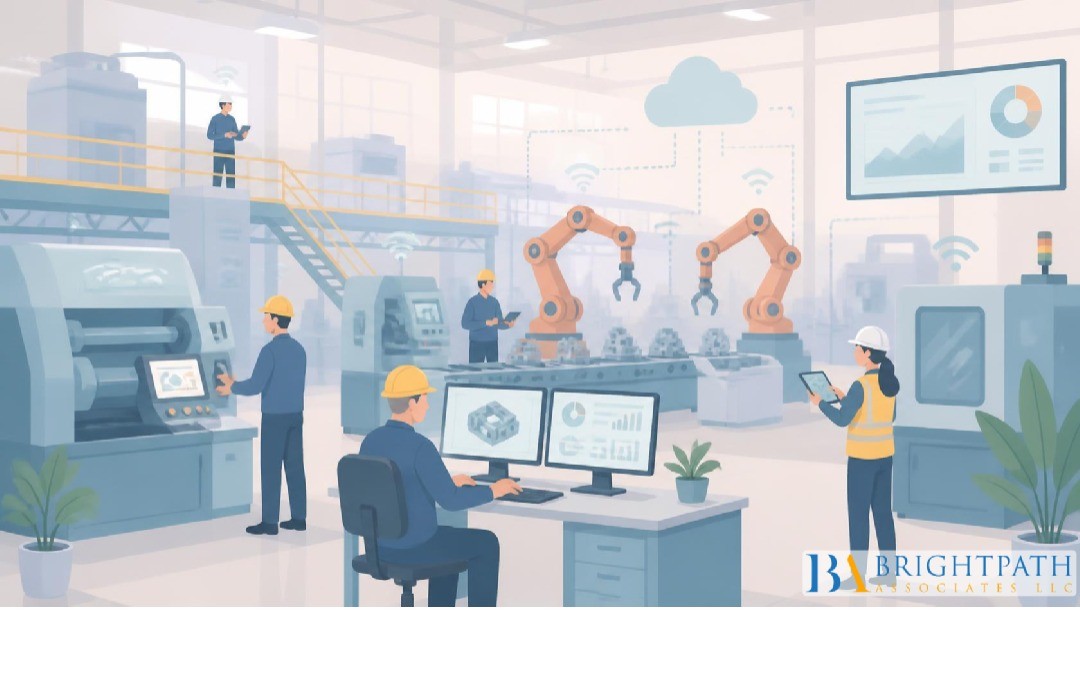
The good news is that you don’t have to scrap your past to build your future. By combining Industrial automation solutions with smarter Machinery maintenance, practical Machinery financing, and deliberate workforce and leadership upgrades, legacy operations can become tech-enabled powerhouses. This article explores how Industrial machinery environments can modernize in place—lifting Manufacturing efficiency, protecting throughput, and strengthening competitiveness across the machinery industry.
Modernizing Industrial Machinery Without Starting Over
Retrofitting is often the fastest path to modernization because it targets the constraints that hold legacy lines back: unpredictable stoppages, manual setup variation, and limited production visibility. Rather than treating older assets as “fixed,” high-performing plants treat them as platforms that can be instrumented, measured, and improved. That mindset is especially important for US Machinery manufacturers and their supplier networks, where installed bases can be extensive and capital replacement cycles can span years.
In practical terms, tech-enabled operations connect machines, people, and planning systems so decisions are made with evidence instead of intuition. A retrofit might start with simple condition monitoring and evolve into closed-loop process control. It can also include digital work instructions, standardized setup verification, and automatic capture of downtime reasons. The aim is not to overwhelm operators with dashboards; it is to make every hour of machine time more predictable and more productive.
Automation does not always mean full robotics. Many organizations see immediate gains by automating what slows them down the most: material handling at the point of constraint, in-process gauging for critical dimensions, or tool management for high-mix work. When paired with basic machine connectivity, these steps reduce the hidden “micro-stoppages” that erode capacity and inflate overtime, while also improving traceability for regulated or high-liability components.
In #PrecisionMachiningEnvironments, legacy machines can still hold tight tolerances, but they often rely on the judgment of a few expert operators and the tribal knowledge of “what works.” Modernization captures that expertise and turns it into repeatable control. Adding probes, automatic offset adjustments, and real-time measurement feedback can stabilize quality while decreasing scrap and rework. Over time, the process window becomes clearer: you can see which tool paths, speeds, and coolant practices produce the best outcomes for specific alloys and geometries.
This matters because customers increasingly demand both precision and speed. When your machining cell can prove capability with data, you improve quoting confidence, shorten first-article cycles, and increase responsiveness. The result is a plant that competes on reliable performance rather than heroic interventions—an essential shift as experienced workers retire and demand volatility rises.
Smarter Machinery Maintenance: From Reactive Fixes to Reliability Engineering
Modernization efforts often stall when maintenance is treated as a cost center instead of an operational strategy. In legacy operations, downtime can be normalized because “that’s how the machines are.” Yet the most valuable gains frequently come from preventing stoppages rather than accelerating repair. A smarter approach to Machinery maintenance builds reliability into daily work, uses data to prioritize action, and aligns maintenance goals with production realities.
Many plants already track work orders, parts usage, and breakdown notes, but the information is rarely structured well enough to guide decisions. The first improvement is consistency: standard failure codes, clear symptom descriptions, and disciplined closeout practices. Once maintenance history becomes credible, you can identify repeat offenders, chronic wear points, and “failure chains” where one component’s degradation triggers another’s failure.
From there, condition-based monitoring can be layered onto the assets that create the biggest disruption. Vibration, temperature, current draw, lubrication quality, and simple cycle counters can reveal early indicators of failure. Even older machines can benefit from external sensors when internal diagnostics are limited. The goal is not to predict every breakdown; it is to shift the balance away from emergency response and toward planned intervention with parts and labor ready.
#IndustrialAutomation solutions increase output only if the underlying assets are stable. If a bottleneck press, mill, or lathe fails unpredictably, the most advanced scheduling software will still produce missed shipments. Reliability engineering focuses on reducing variation at the source: improving lubrication routes, adding guarding that reduces contamination, upgrading bearings or seals, and standardizing alignment and calibration routines. These changes may sound unglamorous, but they often create the foundation for sustained Manufacturing efficiency gains.
Smarter maintenance also strengthens safety and quality. When machines run within intended parameters, operators face fewer risky interventions, and processes remain closer to validated conditions. Over time, reliability becomes a competitive advantage because it protects both output and reputation. In the machinery industry, trust is earned not just by capability, but by consistent delivery under pressure.
Machinery Financing and Used Machinery: Building a Modernization Roadmap That Cash Flow Can Support
Technology upgrades can fail for a simple reason: they are planned as a single, massive capital event. Legacy operations often need a staged modernization roadmap that matches cash flow, risk tolerance, and market demand. This is where Machinery financing becomes a strategic tool rather than a last resort. With the right structure, financing can accelerate payback by enabling targeted investments that remove constraints quickly.
Instead of asking whether to replace an entire line, leading operations evaluate which investments change the economics of throughput, quality, or labor dependence. A retrofit that reduces setup time might free capacity without buying a new machine. A vision system might eliminate a manual inspection loop that delays shipments. Financing allows these focused moves to happen earlier, so savings compound rather than arriving “someday” after budgets loosen.
Staging also reduces implementation risk. Piloting connectivity on one cell, validating its uptime impact, and then expanding is often more effective than rolling out plantwide systems in one sweep. A roadmap can include quick-win retrofits, medium-term automation, and long-term replacement of assets that are truly at end-of-life. The key is that each stage should be justified by measurable Manufacturing efficiency improvements, not by vague promises of “digital transformation.”
Used machinery can be a powerful lever, especially when demand spikes or when a plant needs redundancy at a critical step. Buying used does not mean accepting outdated capability; it can mean acquiring a proven platform at a lower cost and then upgrading it with sensors, controls, guarding, or tooling. For many US #MachineryManufacturers and job shops, the secondary market supports expansion without waiting for long lead-time builds.
The strategic question is how the used asset integrates with the modernization vision. If it extends a capability gap while preserving floor space and utility constraints, it can be a smart bridge. If it adds another maintenance headache without improving stability or control, it may dilute progress. Evaluating used equipment through the lens of reliability, parts availability, and retrofit potential keeps the decision anchored in operational outcomes rather than sticker price.
Financing and used purchases also influence resilience. Modern plants plan not only for average demand but for volatility, supplier disruptions, and skilled labor constraints. A capital strategy that blends retrofits, selective new equipment, and well-chosen used assets can expand capacity while preserving flexibility.
Workforce Development and Leadership: The Human Side of a Tech-Enabled Plant
Even the best automation investment will underperform if the workforce is not prepared to operate, troubleshoot, and improve it. Modernization changes daily work: operators become process owners, maintenance teams become reliability partners, and supervisors become coaches who manage by metrics and standards. Done well, this evolution strengthens Manufacturing jobs by making them safer, more skilled, and more stable—while also making the business less dependent on a handful of “only ones” who know how to keep the line running.
Legacy operations often assume that automation reduces headcount, but in practice it shifts skill demand. Plants need people who can interpret alarms, understand basic networking, verify sensor health, and adjust processes without bypassing safeguards. Training programs that tie learning directly to the machines on the floor are the most effective because they turn abstract concepts into practical competence. As confidence grows, teams stop fearing automation and start using it as a tool for better quality and uptime.
This shift also supports recruitment and retention. When roles emphasize skill development and problem-solving, they appeal to a broader range of candidates. Clear advancement paths—operator to lead, technician to reliability specialist, supervisor to operations manager—help build a pipeline that can withstand retirements and labor market swings. In the machinery industry, where the competition for talent is persistent, a visible commitment to training becomes part of the employer brand.
Modernization is not just a technology project; it is an operational transformation. That requires leadership that can balance production pressure with long-term change. Many plants benefit from adding or upgrading roles such as plant manager, operations director, maintenance and reliability leader, controls engineer manager, or continuous improvement head. When internal candidates are limited, #ExecutiveSearchRecruitment becomes a practical way to bring in leaders who have implemented similar transformations in other Industrial machinery environments.
The value of the right leader is not in slogans or presentations. It is in aligning priorities, building cross-functional routines, and making tough tradeoffs visible and fair. A strong operations leader will translate modernization into expectations that people can execute: what metrics matter, what standards define “good,” and how teams will respond when performance drifts. A strong maintenance leader will shift the culture from reactive heroics to planned reliability. And a strong engineering leader will ensure that automation is maintainable, documented, and scalable—rather than a collection of one-off fixes that only a contractor understands.
The most sustainable gains come when modernization is framed as a shared win: better throughput, higher quality, fewer urgent breakdowns, and more predictable schedules. When teams see that technology reduces chaos rather than adding surveillance, adoption improves. Over time, the plant becomes a learning system where problems are surfaced early, addressed systematically, and prevented from recurring. That is how legacy operations become tech-enabled powerhouses—not through one dramatic upgrade, but through a disciplined pattern of improvement.
Conclusion
Transforming legacy operations is less about replacing every asset and more about upgrading how the operation thinks, measures, and improves. By applying Industrial automation solutions thoughtfully, strengthening Machinery maintenance with reliability practices, using Machinery financing and Used machinery strategically, and investing in Manufacturing jobs and Executive Search Recruitment, plants can modernize in place while protecting production. The result is Industrial machinery that is not merely older and still running, but smarter, more stable, and capable of competing as a true tech-enabled powerhouse within the machinery industry.
Find your next leadership role in Machinery Industry today!
Stay informed with the latest insights on Machinery Industry!