
Introduction
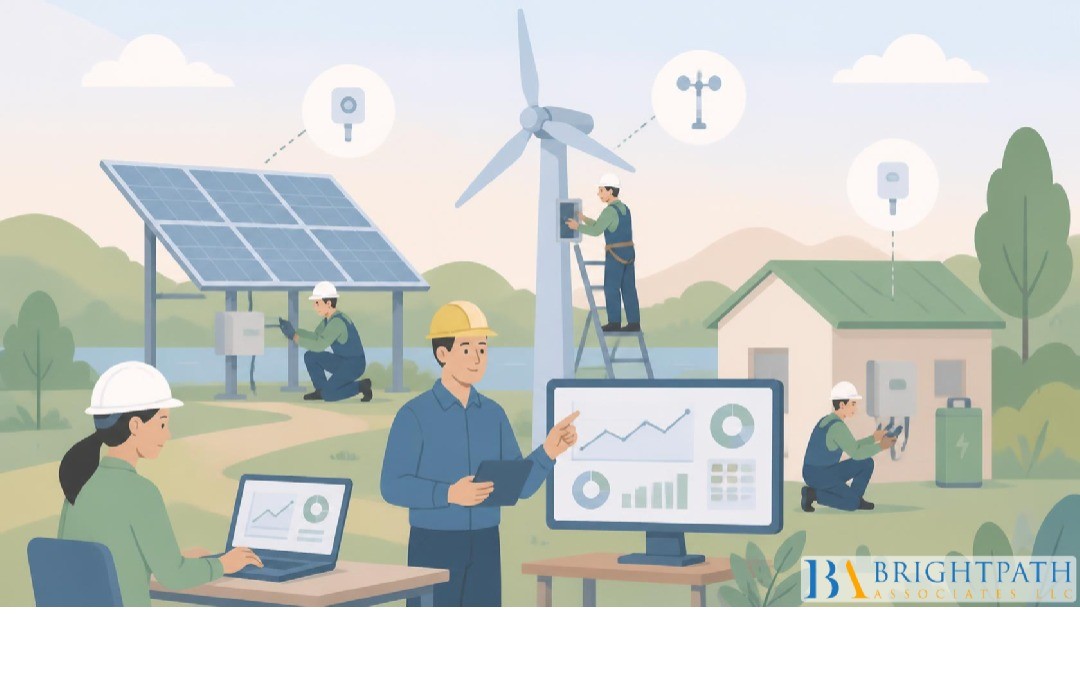
Small-scale #RenewableAssets are often sold as “set-and-forget” infrastructure, but operators know the reality is more industrial. A single failed inverter fan can idle a rooftop solar array. A yaw misalignment can quietly cut output on a community wind turbine for weeks. A clogged intake screen can turn a reliable micro-hydro site into an unpredictable one. When every kilowatt-hour matters, downtime is not a nuisance; it is an economic and reputational event in the Clean energy value chain.
Predictive maintenance reframes that operating risk. Instead of waiting for a fault code, a safety trip, or a monthly inspection to reveal a problem, you use condition signals and models to anticipate failure modes early enough to plan the response. Done well, it improves uptime, reduces total maintenance cost, supports compliance with Environmental regulations, and strengthens day-to-day reliability. It is also a practical form of Renewable energy innovation: not a new turbine design or novel chemistry, but a better operating system for Renewable energy technology deployed at scale across thousands of distributed sites.
Why “Small-Scale” Does Not Mean “Simple”
Small-scale systems are defined by unit size, not by operational complexity. A portfolio of fifty rooftop arrays, ten commercial behind-the-meter batteries, and a handful of small wind turbines can be harder to run consistently than a single large plant because variability multiplies. Sites differ in weather exposure, electrical configuration, installation quality, and access constraints. Maintenance teams face long travel times, limited spares storage, and contractor coordination, which makes reactive work expensive and slow.
This is where predictive maintenance changes the economics of reliability. In traditional time-based maintenance, you replace parts on a schedule or respond after a failure. In predictive maintenance, you use leading indicators to decide what to inspect, what to defer, and what to fix immediately. That difference is central to Renewable energy economics for distributed owners: fewer emergency callouts, fewer secondary damages, better planning of labor, and fewer production losses during peak price periods or contracted delivery windows.
The Wind energy industry offers a clear example. Even at small turbine sizes, unaddressed vibration, bearing wear, pitch control drift, and brake issues can escalate quickly if the asset runs through turbulent wind regimes. For solar and storage, thermal stress and power electronics aging are common pathways to faults. For all of these assets, predictive maintenance is not about adding complexity; it is about converting scattered operational signals into decisions that protect revenue and reduce variance in performance.
From Reactive Repairs to Condition Intelligence
#PredictiveMaintenance starts with a disciplined view of failure modes and the signals that precede them. Inverters rarely fail without warning; they heat up, derate, cycle fans, log minor over-temperature events, and show subtle changes in efficiency or harmonic distortion. Small wind turbines often show early mechanical symptoms through vibration spectra, generator temperature drift, or changes in power curve behavior under similar wind speeds. Batteries reveal risk through cell imbalance, increasing internal resistance, and abnormal temperature gradients, even when headline state-of-charge looks normal.
The operational shift is that you stop treating alarms as the beginning of diagnosis and instead treat them as one data source among many. Condition monitoring data, supervisory control logs, electrical measurements, weather inputs, and maintenance history become a coherent narrative of asset health. When that narrative is translated into actionable thresholds and predictions, the plant team gains time: time to schedule downtime in a low-impact window, time to pre-stage parts, and time to avoid cascading failures that turn a small repair into a major event.
This is also where Green technology becomes operational rather than aspirational. Sustainability is not only about installing Sustainable energy solutions; it is also about running them with industrial discipline so they deliver the output and lifetime promised in financing models, customer contracts, and carbon accounting assumptions.
Data That Predicts: What You Need (and What You Don’t)
Small-scale renewables are already instrumented, but the data is not always prepared for predictive use. Many sites rely on basic SCADA, inverter portals, or gateway devices that were designed for visibility rather than diagnosis. Tags can be inconsistent across installations, timestamps may drift, and component metadata can be missing. Predictive maintenance requires a stronger foundation: clear asset hierarchies, standardized naming, trustworthy time synchronization, and a maintenance log that captures what actually happened on site rather than what was planned.
The goal is not to create a perfect digital twin for every rooftop. The goal is to establish enough data quality and context that models can distinguish normal variation from meaningful drift. In practice, many programs begin with a handful of high-value signals: temperatures, run hours, starts and stops, DC/AC power ratios, curtailment states, fault resets, vibration or acoustic summaries where available, and local weather reference data. These inputs can support health indicators that are understandable to technicians and credible to operations leadership.
As portfolios mature, analytics can become more sophisticated without becoming opaque. Simple statistical baselines can flag when a site’s performance deviates from peers under comparable conditions. More advanced approaches can estimate remaining useful life for consumables such as fans and filters, or classify fault signatures to guide troubleshooting. What matters is maintainability. Models must be monitored, recalibrated when equipment firmware changes, and audited against real outcomes so the team can trust that alerts represent genuine risk rather than noise.
Turning Predictions into Uptime
Predictive maintenance creates value only when it fits how work is actually executed. A useful prediction answers three operational questions: what is likely to fail, how soon, and what the team should do next. If the output is only a risk score, it will be ignored during a busy week. If it produces dozens of low-confidence notifications, it will be muted. Industrial reliability comes from tight coupling between prediction and response, with clarity about ownership and escalation.
High-performing teams integrate predictive signals into the same systems that manage dispatch, inventory, and contractor work. A forecasted inverter overheating risk should automatically translate into a prioritized inspection task with recommended checks, not a standalone dashboard widget. A small wind turbine vibration anomaly should trigger a defined verification step, a parts check for bearings or fasteners, and a decision rule for whether to curtail operation until inspection. These are operational routines, not analytics features, and they are how Renewable energy technology becomes dependable in the field.
Over time, the organization gains compounding benefits. Fewer urgent jobs reduce travel churn and overtime. Better scheduling improves safety because work happens in daylight and good weather, with the right isolation procedures and tools. Standardized responses reduce variability across technicians and contractors, which improves quality of work and reduces repeat failures. This is reliability engineering applied to #CleanEnergyAssets that are widely distributed and often lightly staffed.
Compliance and Environmental Performance Are Operational Outcomes
Predictive maintenance is often sold as a cost and uptime lever, but it is also a compliance and risk-management tool. Environmental regulations increasingly focus on documented operational control, safe handling of hazardous materials, and proof that organizations can detect and manage abnormal conditions. For small-scale renewables, the specifics vary by region and asset type, but the pattern is consistent: regulators and insurers expect systems to be operated responsibly, incidents to be minimized, and records to be auditable.
#EnvironmentalManagement systems provide a structured way to meet those expectations. When predictive maintenance is aligned with Environmental management systems, condition monitoring and maintenance actions become evidence of control, not just internal best practice. A battery site that tracks abnormal temperature trends and initiates preventive interventions can demonstrate disciplined hazard management. A wind turbine owner that identifies early mechanical issues can reduce the likelihood of lubrication leaks, component damage, or safety shutdown events that might trigger reporting, claims, or community concerns.
There is a broader sustainability benefit as well. Reducing unplanned failures reduces waste through fewer damaged components, fewer emergency replacements, and better use of consumables. It also reduces the hidden carbon of repeated travel to sites and the inefficiencies of operating degraded equipment. In this way, predictive maintenance supports Sustainable energy solutions not only by enabling more renewable generation, but by making that generation more resource-efficient over its lifecycle.
The Talent Layer: Reliability Skills in the Renewable Transition
As predictive maintenance becomes standard practice, it changes workforce demand. The sector needs technicians who can interpret condition data, troubleshoot power electronics, and follow rigorous safety procedures in distributed environments. It needs engineers who can translate field failure modes into monitoring strategies and who can collaborate across IT and operations without losing the practical realities of access, weather, and grid interconnection. These requirements are reshaping Renewable energy jobs from purely installation-focused roles into long-term operations roles with a reliability mindset.
For many organizations, the challenge is not intent but capacity. Distributed portfolios can grow faster than the ability to standardize processes and leadership. This is one reason #ExecutiveSearchRecruitment has become more prominent in the Clean energy and Green technology landscape. Leaders with experience in industrial maintenance, asset management, and operational analytics can establish governance, define performance metrics, and ensure predictive programs survive beyond pilots. The best outcomes come when this leadership is paired with field training that respects craft knowledge and makes analytics a tool technicians trust, not an external judgment.
That cultural integration is a competitive advantage. A portfolio with predictable output and controlled maintenance cost is easier to finance, easier to insure, and easier to scale. In practical Renewable energy economics, operational reliability lowers risk premiums and strengthens the credibility of production forecasts that underpin contracts and investment models.
Conclusion: Reliability Is the Differentiator in Small-Scale Clean Energy
Predictive maintenance turns small-scale renewables into dependable industrial assets. By identifying early signs of failure, it improves uptime, reduces emergency maintenance, and protects the performance that revenue models assume. It also supports stronger compliance by aligning maintenance evidence and operational control with Environmental regulations and Environmental management systems, reducing the probability and impact of safety or environmental incidents.
As Renewable energy innovation continues to expand deployment, the winners will be the operators who treat reliability as a core capability. Predictive maintenance is one of the most practical Sustainable energy solutions available today because it strengthens operational rhythm, stabilizes cost, and builds confidence in Clean energy supply across the sites and communities that increasingly rely on it.
Find your next leadership role in Renewable Energy and Environment Industry today!
Stay informed with the latest insights on Renewable Energy Environment Industry!