
Introduction
The #TextileManufacturingIndustry in the United States has seen significant evolution, particularly as we advance into 2026. The landscape is characterized by technological advancements, strategic business planning, and a shifting geopolitical environment. This analysis provides a comprehensive overview of the key components shaping the industry, from advanced manufacturing technologies to global geopolitical risks.
The Textile Supply Chain and Advanced Manufacturing Technologies
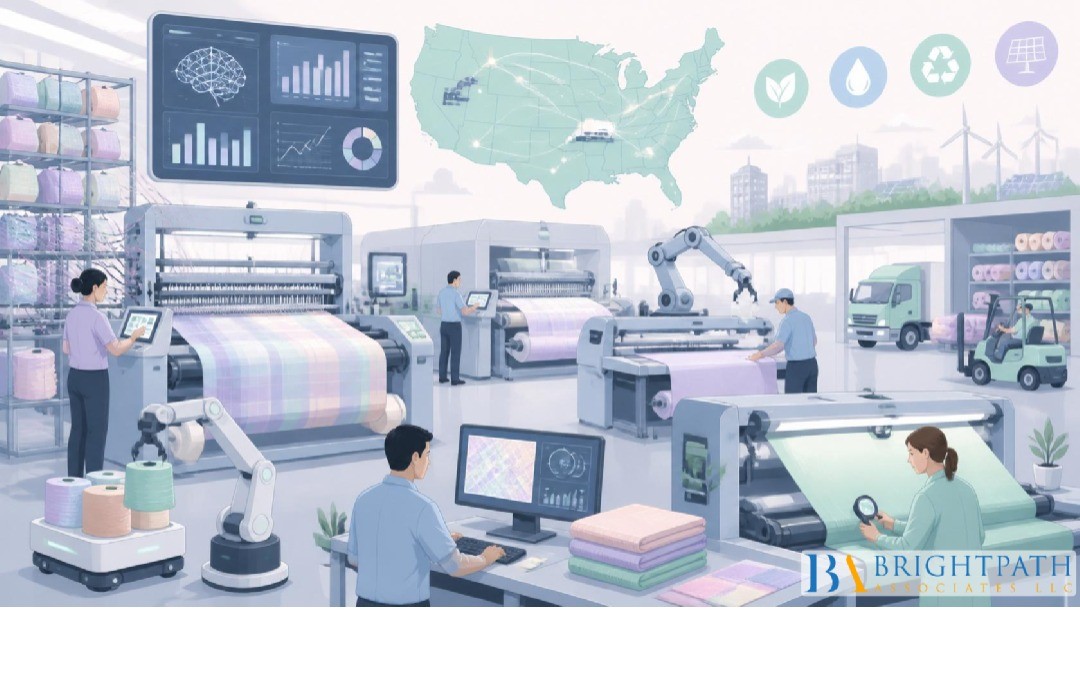
The textile supply chain has undergone remarkable transformation, primarily driven by advanced textile manufacturing technologies. These technologies have enabled greater efficiency, precision, and sustainability in production processes. Innovations such as 3D weaving, automation, and advanced material engineering have allowed manufacturers to improve product quality while reducing waste. These advancements have not only enhanced productivity but also supported the industry’s shift towards more environmentally responsible practices.
Furthermore, the integration of cognitive automation in textile logistics has streamlined operations, from procurement to distribution. This technology enables real-time tracking and optimization of the supply chain, reducing lead times and improving overall responsiveness to market demands. As companies continue to invest in these technologies, the US textile manufacturing sector is poised to maintain its competitive edge on the global stage.
Effective executive leadership in textiles is crucial for navigating the complexities of the industry. Leaders must be adept in textile business strategic planning, ensuring that their companies can adapt to rapidly changing market conditions and technological advancements. A strategic approach involves not only managing day-to-day operations but also envisioning long-term growth and sustainability.
Executive teams are increasingly focusing on innovation and diversification to remain competitive. This requires a deep understanding of market trends, consumer preferences, and emerging technologies. By fostering a culture of innovation, textile executives can drive their organizations towards greater resilience and profitability.
Investment Trends and Data Analytics
Investment trends in the textile industry have shown a significant shift towards technology-driven growth. Companies are allocating substantial resources towards research and development, aiming to harness the potential of new technologies. This includes investments in sustainable materials, smart textiles, and eco-friendly production methods.
#DataAnalytics plays a pivotal role in these investment decisions. By leveraging textile industry data analytics, companies can gain insights into consumer trends, operational efficiencies, and potential areas for growth. Data-driven decision-making enables businesses to optimize their strategies, improve customer experiences, and enhance overall operational performance.
Blockchain technology is increasingly being recognized for its potential to revolutionize the textile industry. Textile industry blockchain applications offer enhanced transparency and traceability across the supply chain. By providing a secure and immutable record of transactions, blockchain ensures that every step of the manufacturing process is documented and verifiable.
This transparency is particularly valuable for addressing concerns related to ethical sourcing and sustainability. Consumers are increasingly demanding products that are manufactured responsibly, and blockchain technology provides an effective solution for verifying the authenticity and ethical standards of textile products.
Geopolitical Risks in the Global Textile Industry
The global textile industry is not immune to geopolitical risks, which can have significant implications for US manufacturers. Trade tensions, tariffs, and political instability in key manufacturing regions can disrupt supply chains and affect market dynamics. Understanding and mitigating these risks is essential for maintaining stability and competitiveness.
Companies must engage in proactive #RiskManagement, employing strategies such as diversifying their supplier base and exploring new markets. Additionally, staying informed about global political developments and their potential impacts on the textile industry is crucial for making informed strategic decisions.
A growing focus on sustainability has led to the adoption of closed-loop systems within the textile industry. These systems aim to minimize waste by recycling and reusing materials throughout the production process. By implementing closed-loop systems, manufacturers can reduce their environmental footprint and contribute to a more sustainable industry.
The benefits of closed-loop systems extend beyond environmental impact. They also offer cost savings by reducing material waste and improving resource efficiency. As consumers become more eco-conscious, the demand for sustainably produced textiles is expected to grow, further incentivizing companies to adopt these practices.
The Role of Executive Search Recruitment
The rapid evolution of the textile industry has created a demand for skilled professionals who can drive innovation and strategic growth. #ExecutiveSearchRecruitment plays a vital role in identifying and attracting top talent to lead companies through this transformative period.
Organizations are seeking leaders with a diverse skill set, including expertise in technology, sustainability, and global market dynamics. By securing the right leadership, companies can better position themselves to capitalize on emerging opportunities and navigate the challenges of the modern textile landscape.
Conclusion
The US textile manufacturing landscape in 2026 is defined by technological innovation, strategic planning, and a commitment to sustainability. Advanced textile manufacturing technologies, coupled with cognitive automation in logistics, are reshaping the supply chain and enhancing efficiency. Executive leadership and strategic planning remain crucial for navigating industry complexities, while investment trends and data analytics drive informed decision-making.
Blockchain applications offer unprecedented transparency, addressing consumer demands for ethical production, while geopolitical risks necessitate proactive risk management. Closed-loop systems highlight the industry’s shift towards sustainability, and executive search recruitment ensures that the right talent is in place to lead this evolution. As the industry continues to adapt, these factors will play a pivotal role in shaping its future trajectory.
Find your next leadership role in Textile Industry today!