
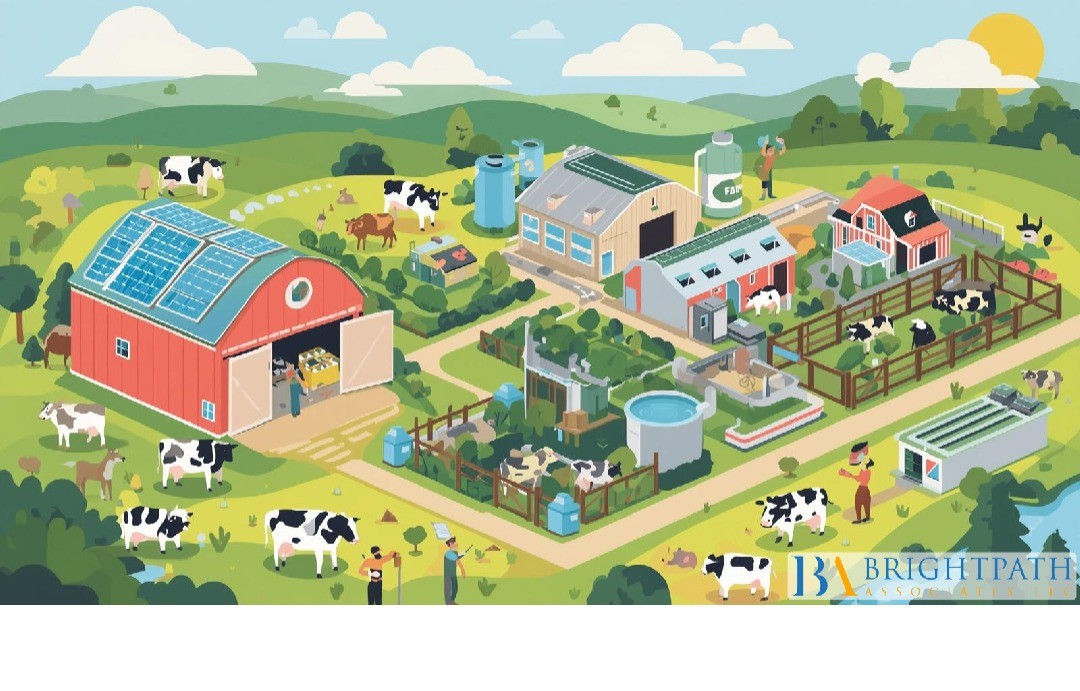
Introduction: From Footprint to Leadership in the Dairy Industry
The modern #DairyIndustry operates at the confluence of nutrition security, rural livelihoods, and climate action. As consumers demand trustworthy Dairy products with transparent origins and lower environmental impacts, producers and processors are reshaping systems from barns to bottling lines. Sustainability is no longer a marketing add-on; it is a performance discipline that spans Milk production, Dairy automation, Food technology, procurement, energy, logistics, and data. By focusing on the biggest emission sources and operational inefficiencies while unlocking circular value, the industry can demonstrate measurable progress on climate, water, soil health, and biodiversity, and simultaneously strengthen resilience and profitability.
The Environmental Footprint of Milk Production
Understanding the footprint begins with a life cycle perspective. Most greenhouse gas emissions in Milk production arise on farms through enteric methane from cows, methane from manure storage and handling, and nitrous oxide associated with soils and feed. Off-farm, energy for processing and refrigeration, packaging, and distribution add to the total, though typically at a smaller share per kilogram of fat- and protein-corrected milk. The path to environmental responsibility, therefore, prioritizes interventions that address enteric and manure methane while improving feed efficiency, nutrient cycling, water stewardship, and energy management. As production systems modernize and yields rise through genetics and herd management, the emissions intensity per unit of milk generally decreases, illustrating how productivity and sustainability can advance together when guided by science and operational discipline.
Farm-Level Transformation: Sustainable Dairy Farming Practices
#PracticalSustainability on farms blends agronomy, animal science, engineering, and economics. Sustainable dairy farming practices target the primary hotspots while safeguarding animal welfare and farm viability. The first pillar is enteric methane mitigation through tailored feeding strategies and validated additives that safely suppress methanogenesis in the rumen without compromising milk yield or animal health. The second pillar is manure methane control, which prevents methane formation or captures it for beneficial use. The third pillar is precision nutrient and soil management that reduces nitrous oxide and nutrient losses while building soil function. The fourth pillar is sustained gains in productivity via genetics, reproduction, health, and comfort, which distribute maintenance emissions over more Milk production and reduce emissions intensity.
Enteric Methane Mitigation: Feed, Additives, and Rumen Efficiency
Rapid, material emissions reductions depend on enteric methane solutions that integrate seamlessly into daily routines. Ration optimization increases dietary energy capture and can shift fermentation away from methane toward more efficient volatile fatty acid profiles. Where housing and feed systems enable accurate dosing, feed additives that inhibit the final steps of methanogenesis offer immediate, scalable abatement. Their adoption requires robust on-farm protocols, veterinarian and nutritionist oversight, and data capture to verify outcomes. Complementary approaches such as selective breeding for lower residual methane emissions, improved forage digestibility, and precision feeding technologies deepen gains. When combined, these measures can lower enteric emissions intensity without sacrificing the quality and consistency expected in premium Dairy products.
Manure Methane Control and Circular Energy
Methane from uncovered lagoons represents both a climate risk and a missed energy opportunity. Covered #AnaerobicDigestion converts volatile solids into biogas, which can be dispatched as electricity, heat, or upgraded renewable natural gas. This transforms a waste liability into an asset, reduces odors and pathogens, and can generate new revenue streams under low-carbon fuel or environmental markets. Where digesters are not feasible, alternative manure management systems such as solids separation, drier scraping, covered storage, and strategic manure application timelines reduce methane formation and improve nutrient utilization. The most effective programs pair engineering solutions with nutrient recovery and precise field application, closing loops between barns and cropland and improving water quality outcomes.
Feed, Soil, and Water: The Agronomic Backbone of Sustainability
Sustainability in the field underpins sustainability in the barn. Precision agronomy minimizes fertilizer demand through soil testing, split applications, stabilized nitrogen sources where appropriate, and variable-rate technology. Crop rotations, cover crops, reduced tillage, and managed grazing improve soil structure, water infiltration, and resilience to heat and drought. Thoughtful irrigation scheduling and efficient delivery technologies reduce withdrawals and protect aquifers. Integrated nutrient management aligns manure nutrient content with crop uptake windows, reducing runoff and nitrous oxide emissions. Together, these practices stabilize feed supply chains, reduce upstream emissions, and contribute to measurable improvements in watershed health.
Productivity, Animal Health, and Genetics
#EnvironmentalResponsibility and animal welfare reinforce each other. Healthier cows with better reproductive performance, reduced mastitis incidence, and improved heat abatement convert feed into milk more efficiently, thereby reducing emissions per liter. Genomic selection for traits linked to feed efficiency and resilience accelerates progress, while precision-livestock technologies provide early warnings on health and behavior. Comfort-focused barn design, ventilation, cooling, and bedding management reduce stress, lower disease pressure, and support consistent Milk production. Strategically, these animal-centered improvements are among the most cost-effective sustainability investments because they simultaneously boost output, reduce waste, and mitigate environmental risk.
Processing Decarbonization: Dairy Automation and Clean Thermal Energy
Beyond the farm gate, processors wield powerful levers to reduce energy, water, and waste. Dairy automation enables consistent, precise control of thermal cycles, clean-in-place routines, and line speeds, cutting resource use without compromising quality or food safety. The most significant structural shift is electrifying low-temperature heat in pasteurization, hot water generation, and cleaning. Industrial heat pumps and high-efficiency electric boilers can supply the majority of low- to mid-temperature needs, particularly when paired with heat recovery and thermal storage. As grids decarbonize and on-site renewables expand, electrification sharply reduces Scope 1 and 2 emissions. Where biogas from farm digesters is available, cogeneration at plants can offset fossil fuels, creating circular energy partnerships across the Dairy supply chain management ecosystem.
Water Stewardship and Waste Minimization in Processing
#WaterMaps of processing plants often reveal large opportunities in hot water generation, cleaning cycles, cooling towers, and leaks. Automation and advanced controls shorten clean-in-place cycles, optimize chemical dosing, and recover condensate and rinse water safely for reuse. These measures reduce freshwater intake and wastewater volumes, lowering both cost and environmental footprint. Simultaneously, process analytics identify yield losses and product giveaway, allowing operators to fine-tune separators, homogenizers, and fillers. Waste heat recovery and by-product valorization—such as whey fractionation into higher-value Food technology ingredients—turn previously underutilized streams into revenue and reduce disposal impacts.
Packaging and Cold Chain Optimization
Sustainability continues beyond the plant walls. Lighter packaging, increased recycled content, and design for circularity reduce embodied emissions while maintaining product protection and shelf life. Refrigeration upgrades, low-global-warming-potential refrigerants, and real-time temperature monitoring reduce energy use and product loss along the cold chain. Logistics optimization and modal shifts cut transport emissions without jeopardizing delivery windows critical to fresh Dairy products. In aggregate, these downstream improvements complement farm and plant decarbonization and contribute to credible, product-level environmental claims.
Data, Traceability, and Dairy Supply Chain Management
#DigitalTraceability is the nervous system of sustainable Dairy supply chain management. Farm-level measurement platforms capture methane, energy, and nutrient metrics; plant-level systems log thermal loads, water, and waste; and enterprise platforms connect these datasets to financial and compliance reporting. Standardized product carbon footprints aligned to recognized methodologies enable consistent hotspot analysis and target-setting. Supplier engagement programs convert insight into action through premiums for low-intensity milk, co-investment in digesters or additives, and shared savings agreements for verified performance. As chain-of-custody models for low-carbon attributes mature, they unlock transparent differentiation for Dairy products across retail and foodservice channels.
Dairy E‑Commerce and Industry Digital Transformation
Consumer behavior is shifting toward digital channels where sustainability information influences purchasing decisions. Dairy e‑commerce platforms can surface product-level footprints, farm stories, and certifications with unprecedented granularity, deepening trust and brand affinity. The broader Dairy industry digital transformation integrates predictive maintenance, automated quality assurance, and demand forecasting that reduces waste across planning and fulfillment. Real-time inventory visibility, dynamic routing, and data-driven merchandising reduce overproduction and markdowns while preserving freshness. These capabilities not only lower environmental impacts but also improve margins and service levels in a highly competitive category.
Standards, Targets, and Assurance
#CredibleLeadership rests on clear standards, measurable targets, and third-party assurance. Companies are setting science-aligned goals that cover direct operations and major value-chain sources, reflecting the reality that most emissions occur upstream in Milk production. Land-sector accounting frameworks guide how soil carbon, manure management, and feed emissions are measured, while corporate governance embeds sustainability into capital allocation and risk management. Independent audits of footprint methods, data quality, and reported reductions underpin claims and sustain stakeholder confidence. Sector frameworks help harmonize metrics and accelerate the diffusion of best practices across diverse geographies and farm sizes.
Talent and Organization: Executive Search Recruitment for Sustainability
Delivering on sustainability ambitions requires specialized leadership and cross-functional fluency. #ExecutiveSearchRecruitment increasingly targets hybrid profiles who bridge agronomy, animal science, energy systems, Food technology, finance, and data. On the farm side, talent is needed to operate anaerobic digesters, deploy feed additive programs, and manage precision-nutrient applications. In processing, engineers versed in heat pump design, electrification roadmapping, and Dairy automation bring projects from concept to commissioning. At the enterprise level, sustainability strategists and supply chain leaders translate targets into supplier incentives, product architectures, and market narratives. Building these capabilities—and rewarding delivery against environmental and commercial KPIs—turns sustainability from aspiration into daily execution.
Dairy Industry Growth Strategies in a Decarbonizing Economy
Growth and decarbonization can reinforce one another when strategies focus on value creation rather than volume alone. Premiumization around higher-protein and functional Dairy products, advanced ingredients, and ready-to-drink formats can lift revenue per liter while leveraging efficient processing. Geographical expansion paired with localized sourcing reduces transport emissions and currency exposure. Partnerships that integrate farm renewable energy into plant operations create differentiated cost and emissions profiles. Investment in low-carbon manufacturing hubs, modular plants, and digital fulfillment supports agile responses to demand while minimizing stranded assets. Clear sustainability claims, verified by robust data, attract mission-aligned capital and de-risk long-term investments.
The Strategic Case for Environmental Responsibility
#EnvironmentalResponsibility in dairy aligns with operational excellence, risk mitigation, and brand growth. Targeting enteric and manure methane delivers the fastest climate wins; electrifying low-temperature heat and tightening water use yield predictable cost savings; and data-rich supply chains enable transparent claims that resonate with consumers and customers alike. As regulations, retailer scorecards, and investor expectations evolve, those who embed sustainability into design, procurement, and operations will hold a durable competitive edge. The industry’s progress to date proves that measured, technology-enabled interventions can lower footprints while raising performance—a blueprint for responsible growth.
Conclusion: From Best Practice to Standard Practice
Sustainable dairy is the outcome of coordinated action across farms, plants, and markets. The playbook is clear: deploy feed additives and precision nutrition to curb enteric methane; capture or avoid manure methane through engineered and management solutions; modernize agronomy to protect soils and water; electrify low-temperature heat with Dairy automation and advanced Food technology; integrate circular energy and by-products; and hardwire data, incentives, and governance into Dairy supply chain management. As Dairy e‑commerce and the broader Dairy industry digital transformation bring unprecedented transparency, leadership will be defined by companies that convert credible measurement into verifiable, scalable results. With focused execution and the right talent through effective Executive Search Recruitment, the sector can turn best practice into standard practice—delivering resilient Dairy industry growth strategies that safeguard climate, water, and nature while elevating the value and trust in Dairy products worldwide.
Find your next leadership role in Dairy Industry today!