
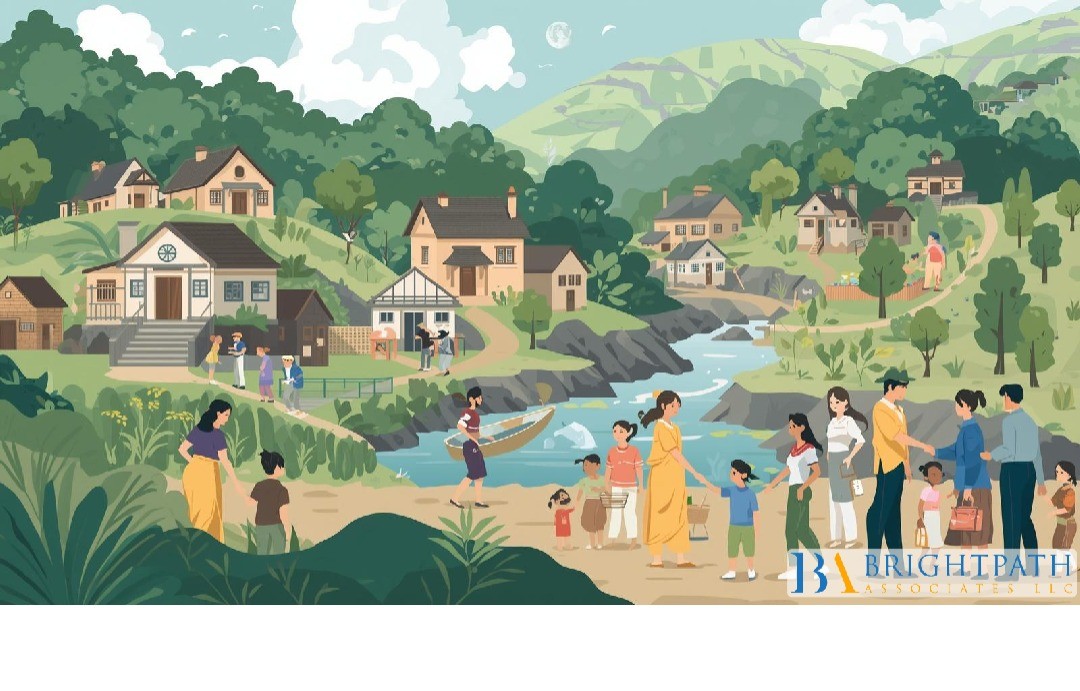
#MiningCompanies increasingly operate at the intersection of national economic agendas, local livelihoods, and global expectations for responsible resource development. In this context, mine community relations must be treated as an operational discipline equal in rigor to geology, metallurgy, and finance. Building strong partnerships is not a philanthropic afterthought; it is a strategic capability that underpins continuity, cost control, and long-term value creation. By aligning technical imperatives in ore extraction, metal processing, and metallurgy with community-defined priorities, companies can achieve durable legitimacy, reduce non-technical risks, and contribute to sustainable mining outcomes that endure beyond closure.
From Compliance to Competitive Advantage
The traditional approach to community relations framed social performance as risk mitigation or regulatory compliance. Contemporary practice recognizes it as a source of competitive advantage that supports access to land, water, talent, and capital. Investors and lenders track metals industry trends through the lens of Environmental, Social, and Governance performance, rewarding firms that integrate community engagement into operating systems. Effective partnerships reduce disruptions that raise unit costs, while strengthening productivity by stabilizing labor relations and supply chains. They also enhance brand equity across the mining and metals value chain, positioning companies favorably in markets where buyers care about sustainable mining, responsible sourcing, and traceability.
Legitimacy, Inclusion, and Accountability as Foundations
Legitimacy is earned when companies demonstrate ethical conduct, #RegulatoryCompliance, and cultural respect in every phase from exploration to closure. Inclusion requires recognizing that communities are diverse and dynamic, with different groups experiencing impacts asymmetrically. Women, youth, Indigenous communities, migrants, and informal workers must be meaningfully engaged so that benefits and burdens are distributed fairly. Accountability transforms commitments into measurable performance, with clear targets, transparent reporting, and independent oversight. In mining technology or processing decisions, legitimacy comes from showing how choices reflect community input, respect for heritage, and mitigation of adverse impacts.
Early Engagement and Social Baselines
Strong partnerships start early, ideally during exploration and feasibility. Early engagement clarifies community expectations and identifies sensitive receptors such as livelihoods dependent on grazing, fishing, or small-scale agriculture. Social baseline studies build an evidence-based picture of local economies, health, education, gender dynamics, and cultural heritage. These baselines guide impact assessments and help calibrate benefit-sharing programs. Cultural competence within teams is essential, including language capacity and contextual knowledge. In parallel with technical studies on ore extraction, mine planning, and metallurgy, social studies must be integrated so that engineering choices reflect social realities, not just technical optima.
Impact Assessment and Mitigation Integrated with Operations
Social impact assessment should be conducted alongside environmental and technical assessments, with findings embedded into operational procedures. Using a hierarchy that prioritizes avoidance before minimization and mitigation ensures that sensitive sites, cultural assets, and critical ecosystem services are protected. Management plans need clear responsibilities, budgets, and timelines so that mitigation measures survive leadership transitions. When mining technology choices are being evaluated—such as tailings design, water recycling, or dust control—community health and safety implications should be explicit criteria. Continuous monitoring then validates whether predicted outcomes match real-world experience and informs #AdaptiveManagement.
Indigenous Partnerships and the Imperative of Consent
Where Indigenous Peoples are present, meaningful partnership requires respect for their governance structures and decision-making timelines. Consent is a process that unfolds through dialogue, disclosure, and negotiation, not a one-time transaction. Incorporating Indigenous knowledge can improve mine design, biodiversity strategies, and cultural heritage management. This approach strengthens trust and lowers the probability of disputes that can cascade into delays or reputational damage. When combined with transparent benefit-sharing and governance mechanisms, it creates a durable foundation for cooperation across commodity cycles and market volatility.
Designing Benefit-Sharing for Long-Term Value
Communities support mines when benefits are tangible, fair, and resilient to external shocks. Local employment pipelines aligned with real role profiles help reduce friction and perceived favoritism. Supplier development programs that unbundle contracts allow small and medium enterprises to compete, particularly in services related to construction, transport, catering, and equipment maintenance. Investments in education, health, and infrastructure should be planned jointly with communities and authorities to ensure alignment with regional development strategies. Revenue-sharing mechanisms, where permitted by #MiningPolicy, can be designed with safeguards to prevent elite capture and to channel funds into intergenerational assets. Livelihood restoration for those economically or physically displaced must go beyond compensation to deliver demonstrable improvements in income stability and quality of life.
Grievance Resolution as an Operational System
No partnership is free of disputes. An operational-level grievance mechanism must be accessible, predictable, and safe for users, with clear timelines and escalation paths. Its purpose is to resolve issues early and fairly, preventing escalation that leads to operational disruption. Analysis of grievances can reveal systemic issues in contractor conduct, traffic safety, dust control, or procurement practices. Effective resolution enhances credibility and feeds a culture of continuous improvement, reinforcing trust and reducing the likelihood of protests or legal conflicts.
Cultural Heritage and Resettlement with Dignity
Mining can intersect with landscapes and sites of historical, archaeological, or spiritual significance. Putting dignity at the center means designing chance-find procedures, engaging community custodians, and co-curating protection and interpretation where appropriate. Resettlement, if unavoidable, should meet rigorous standards that improve, not merely restore, livelihoods. This requires participatory planning, fair and timely compensation, secure land tenure in new locations, and sustained post-move support. When handled with care and transparency, these sensitive processes preserve social cohesion and strengthen the company’s moral legitimacy.
Artisanal and Small-Scale Mining: Pathways to Coexistence
In many jurisdictions, artisanal and small-scale mining pre-dates industrial concessions and provides vital income. Constructive engagement recognizes ASM as part of local economies. Formalization efforts, capacity building in health and safety, and access to fair markets can lift incomes and reduce environmental harm. When coexistence is not feasible, transition programs must offer viable alternatives backed by social protection. Such approaches reduce conflict risk, enhance security outcomes, and support national mining policy objectives for orderly, responsible #ResourceDevelopment.
Governance and Embedding Community Relations in the Business
Community relations must be embedded across functions, not siloed. Executive ownership is essential, with social performance integrated into management systems and reflected in incentives. Contractor management should align with community standards, including training on human rights and safety. Security practices must be proportionate and rights-respecting. Multi-stakeholder forums that include community representatives, local government, civil society, and traditional authorities can provide platforms for joint planning and problem-solving. Data systems should track commitments, budgets, progress, and outcomes, ensuring that community promises carry the same weight as production targets or metallurgical recovery metrics.
Data, Transparency, and Adaptive Management
What gets measured gets managed, and transparency builds credibility. Companies should monitor both process metrics, such as the number of local hires or procurement spend, and outcome metrics, such as changes in household income, health indicators, or perceptions of trust. Early warning signals, including rumor tracking, absenteeism, or #SocialMedia sentiment, can signal emerging tensions. Public reporting in plain language and regular town-hall dialogues convert data into shared understanding. Adaptive management means that programs are adjusted as evidence accumulates, improving cost-effectiveness and impact. The same discipline applied to improving mining innovation, processing yields, or energy efficiency should guide social program optimization.
Risk Management and Community Resilience
External shocks—commodity price swings, extreme weather, pandemics, or political instability—test the resilience of partnerships. Scenario planning developed with communities, clear protocols for communication during curtailments or layoffs, and investments in local health, water security, and emergency response can maintain stability. Ethical security management reduces escalation risk and protects people and property. Seeing communities as co-stewards in crisis readiness strengthens bonds and demonstrates that partnership is more than a slogan; it is a practiced capability that sustains operations and livelihoods alike.
Closure and Post-Closure as Proof of Partnership
Closure planning should begin at feasibility and be revisited regularly with community participation. Social transition plans need to address future land uses, retraining, enterprise incubation, and the handover or management of community infrastructure. Financial provisions must be transparent and sufficient to honor commitments. #EnvironmentalRehabilitation can be designed to deliver co-benefits, whether through grazing, agroforestry, or conservation-linked enterprises. Credible closure reinforces trust across the mine life cycle and can ease future permitting by demonstrating a proven record of responsible custodianship.
Avoiding Common Pitfalls
Several recurring pitfalls undermine mine community relations. Overpromising and underdelivering erodes trust quickly; commitments should be aligned with budgets and actual influence, with clear distinctions drawn between company responsibilities and those of government, while supporting coordination where appropriate. Elite capture can be mitigated with transparent selection processes, rotating representation, and community oversight of funds. Tokenistic engagement that stages meetings without transferring real decision-making power is quickly recognized and resented; co-design and genuine responsiveness must replace performative consultation. One-size-fits-all programs ignore local contexts and evolving demographics; tailored and adaptive approaches are essential. Neglecting contractor conduct creates a gap between corporate commitments and on-the-ground behavior; robust onboarding, monitoring, and consequences for non-compliance are vital.
Talent, Leadership, and the Role of Executive Search
Delivering on these ambitions requires leadership and specialized talent. Mining executive search plays a pivotal role in identifying leaders who can integrate social performance with operational excellence. The most effective executives understand how metallurgy, ore extraction, and metal processing interact with environmental and social constraints, and they can translate this understanding into pragmatic strategies. As metals industry trends evolve—driven by energy transition demand, recycling, and digitalization—boards increasingly look for leaders who can guide sustainable mining transformations while maintaining cost discipline and safety performance. In this context, #ExecutiveSearchRecruitment partners with companies to build teams that possess technical depth, stakeholder acumen, and change leadership capabilities. Experienced mining and metals recruiters are attuned to the competencies needed to navigate complex permitting, community expectations, and shifting mining policy landscapes, ensuring that organizations have the right people to deliver both production and partnership outcomes.
Technology, Innovation, and Community Value
Mining technology and mining innovation can materially improve community outcomes when thoughtfully applied. Water-efficient processing, dry stack tailings, real-time dust and noise monitoring, and predictive maintenance reduce environmental footprints and health risks. Digital engagement platforms can supplement in-person forums, expanding access to information and enabling two-way communication. Precision blasting and autonomous equipment can reduce safety incidents, but they must be accompanied by local workforce development so that productivity gains translate into high-quality jobs. Linking innovation agendas to local education and training creates pathways into skilled roles and builds a talent pipeline that outlives the mine itself.
Policy Alignment and the Enabling Environment
Strong partnerships are easier to build within coherent regulatory frameworks. Clear, stable mining policy reduces uncertainty and aligns company incentives with #NationalDevelopmentGoals. Where policy supports community development agreements, revenue-sharing, or local procurement targets, companies can plan investments with confidence and communities can hold all parties accountable. Constructive public–private collaboration is essential, especially in remote regions where infrastructure deficits are acute. Transparent coordination helps avoid duplication, stretch resources, and ensure that public goods like roads, clinics, and water systems are maintained for the long term.
Conclusion: Partnership as Core Performance
Mine community relations is a disciplined practice that binds together technical excellence, commercial performance, and social legitimacy. By embedding legitimacy, inclusion, and accountability into the core of operations; by aligning benefit-sharing with local development; by resolving grievances early; and by planning for closure from the outset, companies convert finite mineral wealth into lasting human and natural capital. Integrating insights from metallurgy, metal processing, and ore extraction with advances in mining technology and innovation, and guided by stable mining policy, elevates performance across the board. As the sector adapts to new metals industry trends and the imperatives of sustainable mining, leadership becomes decisive. Through Mining executive search and specialized mining and metals recruiters within the broader field of Executive Search Recruitment, companies can secure the capabilities required to deliver both production targets and trusted partnerships. In an industry where social license is earned daily, the mines that invest in genuine, data-informed, and values-driven partnerships will be the ones that endure, prosper, and leave a legacy worthy of their communities.
Find your next leadership role in Metal and Mining Industry today!
Stay informed with the latest insights on Metal and Mining Industry!