
Introduction
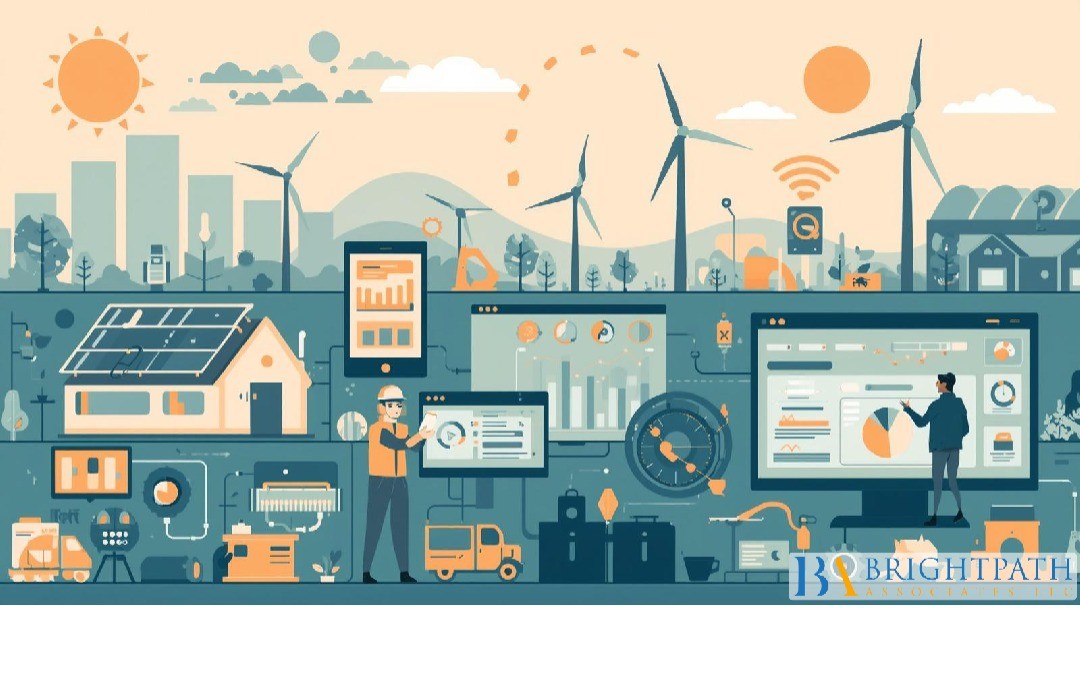
#EnvironmentalProjects are under mounting pressure to deliver measurable, verifiable reductions in energy use and emissions while maintaining reliability and cost control. The rise of connected sensing and automation—commonly termed the Internet of Things—has transformed how organizations plan, operate, and optimize energy systems. By unifying meters, sensors, controllers, edge gateways, and analytics platforms, IoT turns raw operational data into precise interventions that reduce waste, flatten peaks, and improve asset performance. Within this context, renewable energy innovation, green technology adoption, and the design of environmental management systems converge into a single operational discipline: real-time, data-driven efficiency. This essay presents an industrially grounded framework for applying IoT to environmental projects, showing how continuous telemetry and closed-loop control enable sustainable energy solutions that are credible, scalable, and financially resilient.
The Business Rationale for IoT-Driven Efficiency
#EnergyEfficiency is often described as the first fuel of the clean energy transition because it lowers demand before supply-side investments are made. IoT strengthens this proposition by delivering continuous visibility into where, when, and why energy is consumed. Rather than relying on periodic audits or spot measurements, organizations can observe granular consumption patterns, identify anomalies, quantify savings potential, and implement automated setpoint adjustments. In practice, this approach integrates seamlessly with renewable energy technology by coordinating flexible loads with distributed generation and storage. When integrated with environmental management systems, the same data pipelines that inform day-to-day operations also support governance, compliance reporting, and continuous improvement processes. The result is an enterprise capability that unites clean energy adoption with persistent reductions in operational waste.
Architectural Foundations and Interoperability
Industrial-grade results require an architecture that is layered, interoperable, and secure by design. The sensing layer includes power submeters for electrical distribution, environmental sensors for temperature and humidity, process sensors for flow and pressure, and equipment controllers for motors, pumps, chillers, and boilers. The edge layer aggregates and normalizes data, executes low-latency control, and provides resilience when cloud connectivity is intermittent. The platform layer stores time-series data, maintains digital twins, and hosts analytics and machine learning models that diagnose faults and optimize control strategies. The application layer delivers operator-facing tools for energy optimization, fault detection and diagnostics, demand response, and measurement and verification. Interoperability is essential to avoid lock-in, accelerate deployment, and integrate renewable energy technology assets such as inverters, battery systems, and building automation controllers. Standard protocols and well-documented APIs enable the cross-system orchestration that is necessary for whole-site optimization rather than piecemeal gains.
Connectivity, Sensing, and Data Quality
#ReliableOptimization depends on trustworthy data. In industrial environments, electrically noisy conditions and harsh operating contexts make link-layer choices and physical installation practices as important as analytics. A hierarchical submetering strategy begins at the whole-facility level and progresses down to distribution panels and end uses, making it possible to pinpoint energy-intensive processes and after-hours anomalies. The network fabric may blend wired connections for critical controls with wireless or low-power wide-area options for dispersed assets. Sensor calibration plans, device health monitoring, and data completeness checks ensure analytics rest on a solid foundation. When data quality routines are designed upfront, environmental projects avoid the common pitfall of over-collecting but under-using data, and they accelerate the path from insight to verified savings.
Analytics, Control, and Closed-Loop Optimization
IoT makes efficiency actionable by translating data into control. Time-series analytics detect trends such as drift in chilled-water delta T or simultaneous heating and cooling that can quietly undermine performance. Physics-informed and machine learning models forecast loads, inform sequencing strategies, and support model predictive control that balances comfort and process constraints with energy objectives. Closed-loop control allows systems to autonomously adjust setpoints, shift loads in anticipation of renewable output, and participate in demand response programs without manual intervention. Fault detection and diagnostics automate the identification of economizer failures, sensor bias, valve leakage, and compressor short cycling, ranking issues by energy impact and operational risk. These capabilities extend the value of renewable energy innovation by ensuring flexible consumption patterns align with on-site generation and favorable tariff windows.
Sector Applications in Buildings, Industry, Water, and Agriculture
#CommercialBuildings and campuses benefit immediately from IoT-enabled schedules, occupancy-driven ventilation, and continuous commissioning that detects and resolves subtle control failures. Advanced sequences for air-handling systems, condenser water loops, and variable frequency drives improve part-load efficiency and thermal comfort while enabling buildings to act as grid-interactive efficient assets that complement clean energy resources. In industrial manufacturing, IoT identifies compressed-air leaks, tunes pressure and flow controls, and synchronizes motor-driven systems to production needs. Predictive maintenance based on vibration, temperature, and electrical signatures prevents failures and reduces unplanned downtime, thereby tying energy efficiency to core operational performance.
Water and wastewater utilities use IoT to optimize pump curves, stage variable-speed assets, and manage aeration processes where even small control improvements yield outsized energy reductions. Distribution systems gain from leak detection and pressure management that reduce losses and the associated pumping energy. In agriculture and controlled environment operations, integrated control of irrigation, lighting, HVAC, and CO2 balances yield with kilowatt-hour intensity, demonstrating how sustainable energy solutions can align production and resource stewardship. Across these sectors, renewable energy technology—particularly solar photovoltaics and storage—can be orchestrated with flexible loads to minimize peak demand and integrate variable generation. Even in the wind energy industry, where supply-side assets dominate, IoT-enabled condition monitoring, predictive maintenance, and grid-aware dispatch support higher availability and smoother integration with demand-side flexibility.
Governance, Standards, and Environmental Regulations
Environmental projects operate within a fabric of policies, reporting expectations, and market incentives. IoT strengthens compliance with environmental regulations by producing auditable, high-resolution datasets on energy use, emissions, and operational controls. When paired with environmental management systems, organizations can institutionalize target-setting, risk assessment, operational controls, and corrective actions. The same telemetry that optimizes performance in real time supports transparent reporting for regulators, investors, and internal governance bodies. Aligning device security and process controls with industrial standards builds stakeholder confidence and reduces risk during audits. The outcome is a governance posture where renewable energy innovation and efficiency gains are documented, repeatable, and resilient under scrutiny.
Cybersecurity and Operational Safety
#ConnectedEnergySystems merge information technology and operational technology in ways that demand careful segmentation, least-privilege access, and continuous monitoring. Defense-in-depth practices ensure that devices use secure boot and signed firmware, gateways authenticate via certificates, and networks are partitioned so that critical controls remain safeguarded. Security is inseparable from safety; resilient edge control, watchdog functions, and defined failover modes are essential to avoid process upsets. An accurate asset inventory and baselined network behavior enable anomaly detection that can surface threats before they propagate. For environmental projects seeking long-term credibility, cybersecurity is not an add-on but a prerequisite for sustained operation and trust.
Measurement, Verification, and Renewable Energy Economics
The credibility of energy savings hinges on robust baselines, appropriate normalization, and transparent methods. IoT facilitates continuous measurement and verification by capturing the right variables—weather, occupancy, production throughput, and power quality—so that realized savings can be distinguished from exogenous effects. Confidence intervals and cross-checks against utility bills turn analytics into decision-grade evidence. This rigor directly supports renewable energy economics. Verified load reductions enhance the business case for storage and distributed generation by right-sizing capacity and improving the value of exported or stored kilowatt-hours. Demand charge mitigation, tariff optimization, avoided maintenance, and reduced downtime compound the return on investment. When projects harvest multiple value streams and document them with high fidelity, financing options expand and cost of capital declines, reinforcing the cycle of clean energy investment.
Workforce, Operations, and Renewable Energy Jobs
IoT-enabled efficiency reshapes roles across operations, maintenance, and engineering, creating a demand for professionals who are conversant in controls, data analytics, and sustainability. This evolution expands renewable energy jobs beyond installation and generation into ongoing optimization, M&V, and digital operations. Organizations turn to #ExecutiveSearchRecruitment partners to identify talent that can bridge process engineering, cybersecurity, and energy management. Upskilling existing staff is equally important, as success hinges on translating analytics into practical workflows, preventive actions, and capital planning. Clear standard operating procedures, training curricula, and operator-friendly interfaces ensure that insights move off dashboards and onto the plant floor.
Implementation Roadmap and Change Management
A pragmatic roadmap begins by defining objectives across energy, emissions, comfort or quality, and resilience, followed by a structured asset and data inventory that documents meters, controls, and protocol landscapes. A reference architecture defines the roles of edge and cloud, data models, and security baselines, creating a blueprint for repeatable deployments. Purpose-built pilots target known energy-intensive systems with explicit hypotheses and measurement plans, reducing uncertainty and demonstrating rapid value. Scaling then converts pilot learnings into standardized bills of material, configuration templates, control sequences, and operator training. Change management embeds the new capabilities into business rhythms, linking insights with maintenance tickets, budgets, and executive reporting. Over time, the organization transitions from episodic projects to a continuous improvement cycle where models are refreshed, systems are re-commissioned seasonally, and performance reviews drive incremental gains.
Integration with Renewable and Grid-Interactive Assets
As portfolios add on-site solar, storage, and controllable loads, IoT provides the orchestration necessary to realize system-level benefits. Load shifting can be synchronized with renewable generation profiles so that building and plant operations consume a higher fraction of on-site clean energy. Storage can be charged during renewable generation peaks or off-peak tariff windows and discharged to shave demand charges without compromising process constraints. Even where the wind energy industry supplies grid power remotely, on-premise flexibility enhances overall system stability by absorbing variability and responding to price signals. This coupling of demand-side flexibility with supply-side assets exemplifies #RenewableEnergy innovation, moving beyond static installations to dynamic, responsive systems.
Future Outlook: Digital Twins, Edge AI, and Green Technology
The next wave of green technology will fuse high-fidelity digital twins with edge AI to create autonomous optimization layers that operate within defined safety envelopes. Digital twins will allow teams to test control strategies, commissioning plans, and retrofit options virtually, reducing risk and accelerating deployment. Edge AI will enable privacy-preserving, low-latency decision-making close to the equipment, minimizing bandwidth requirements and enhancing resilience. Lifecycle analytics will expand beyond operational energy to account for embodied carbon in materials and equipment, enabling procurement choices that align with long-term sustainability goals. Together, these trends will deepen the integration of sustainable energy solutions with everyday operations, converting efficiency from a project mindset into an organizational capability.
Conclusion
IoT is the connective tissue that aligns renewable energy technology, efficiency measures, and operational discipline into a single, coherent system. By instrumenting assets, enforcing interoperable standards, and embedding analytics into control loops, environmental projects deliver persistent savings that are measurable and verifiable. Strong cybersecurity and clear governance ensure compliance with #EnvironmentalRegulations while providing the transparency needed for financing and stakeholder trust. With credible measurement, attractive renewable energy economics, and a workforce equipped through targeted hiring and Executive Search Recruitment, organizations can scale clean energy and efficiency together. In doing so, they transform energy management from a compliance obligation into a strategic advantage, advancing renewable energy innovation while delivering the practical, industrial results demanded by modern operations.
ind your next leadership role in Renewable Energy and Environment Industry today!
Stay informed with the latest insights on Renewable Energy Environment Industry!