
Introduction: Reframing Productivity for a Resource-Constrained Century
The global #FoodSystem faces a decisive moment. It must deliver reliable food production to a growing population while restoring the ecological foundations on which agriculture depends. Sustainable farming is no longer a boutique concept or a public relations exercise; it is an industrial transformation built on data, science, and operational excellence. As climate volatility, soil degradation, water scarcity, and input price swings reshape risk, producers and agribusinesses are turning to Agricultural technology, systems thinking, and verifiable outcomes to ensure both profitability and resilience. This essay outlines the operating principles, technology stack, economic incentives, governance mechanisms, and workforce enablers that define the new era of Agricultural sustainability, offering a practical, insight-driven roadmap for stakeholders across the value chain.
Defining Sustainable Farming as an Operating System
Sustainable farming integrates ecological integrity, economic viability, and social responsibility into a unified operating system for modern agriculture. Rather than prescribing rigid methods, it uses performance goals to guide local decisions. At farm level, this approach prioritizes soil health, water stewardship, nutrient efficiency, biodiversity support, energy decarbonization, and animal welfare. The emphasis is on outcomes such as stable yields under stress, lower emissions intensity per unit of output, reduced runoff, and enhanced profitability through input efficiency and risk mitigation. In this model, Sustainable farming functions as the backbone of strategic Food production, aligning field practices with market requirements and community expectations while maintaining the capacity of land to produce over the long term.
Industrial-Strength Practices that Scale
Modern sustainability succeeds at industrial scale when it translates ecological principles into repeatable, measurable practices. Regenerative #SoilManagement, including reduced tillage and year-round ground cover, protects structure, moderates temperature and moisture, and improves the biological processes that drive nutrient cycling. The inclusion of Organic farming techniques—such as composting, biological amendments, and diversified rotations—can complement conventional tools, though the defining feature is not the label but the evidence of improved performance. Precision agriculture connects inputs with need in both space and time, reducing waste and protecting water bodies by aligning fertilizer strategies with in-field variability and phenological stages. Water stewardship modernizes irrigation through drip systems, soil moisture sensing, and weather-informed scheduling, converting every unit of water into more predictable yield. Diversification through intercropping, agroforestry, and crop–livestock integration spreads risk, closes nutrient loops, and expands revenue options while strengthening ecological functions. In controlled-environment systems, protected cultivation, greenhouses, and vertical farms intensify production per square meter and reduce volatility, provided they pair with low-carbon energy and optimized crop choices.
The Technology Stack: From Raw Data to Adaptive Decisions
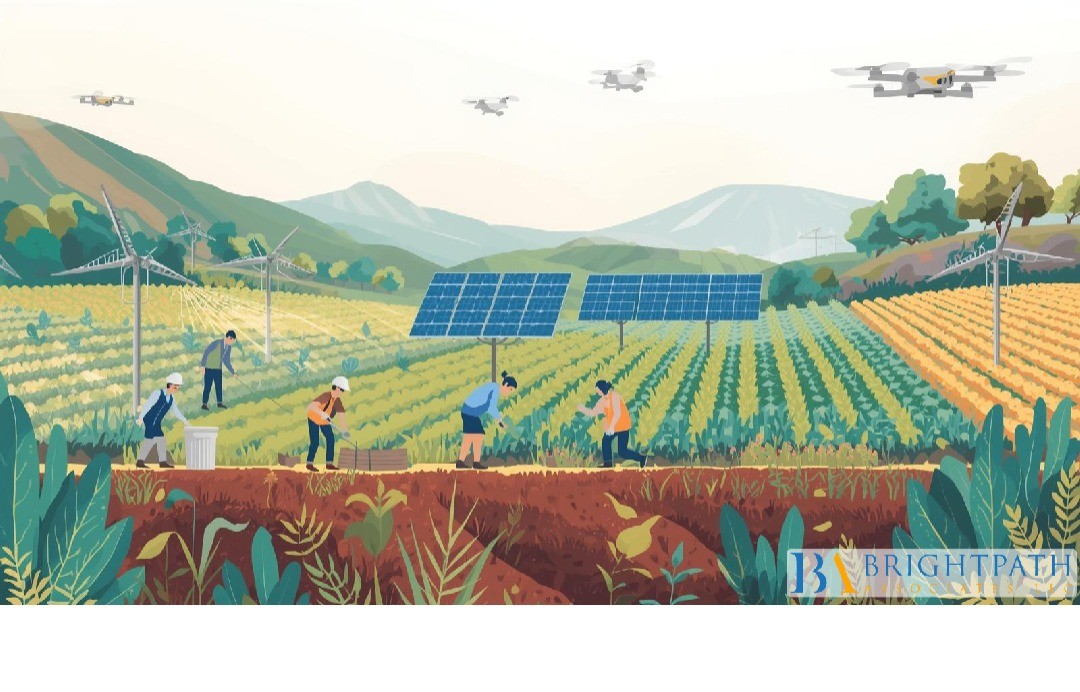
Agricultural technology enables sustainable intensification by turning complex field signals into actionable decisions. At the base are sensors and telemetry that continuously monitor soil moisture, nutrient status, weather, canopy temperature, and machinery performance. Remote sensing through satellites and unmanned aerial platforms adds high-resolution spatial layers that reveal vigor, stress, and emergence in near real time. Digital Farming platforms synthesize these data streams, using analytics and artificial intelligence to recommend seeding windows, hybrid selection, irrigation timing, and integrated pest thresholds. Farm management software then operationalizes these recommendations, linking field prescriptions to machinery, inventories, budgets, and sustainability reporting. Robotics and automation reduce labor bottlenecks and increase precision through targeted weeding, variable-rate application, and autonomous navigation. Seed innovation and biologicals extend the stack by embedding resilience to drought, heat, pests, and nutrient stress directly into genetics and microbe–plant interactions. Finally, traceability and measurement, reporting, and verification systems document practice adoption and outcomes—enabling market access, sustainability-linked finance, and participation in ecosystem service programs.
Economics and Risk: Why Sustainability Must Pencil Out
Producers adopt new systems when they improve risk-adjusted returns. Precision agriculture supports profitability by delivering the right input to the right place at the right time, converting guesswork into measured efficiency. Better soil function stabilizes yields under drought or heavy rain, dampening downside volatility and improving a farm’s ability to service debt through variable seasons. Verified sustainability can open doors to premiums, long-term offtakes, or preferred supplier status for brands seeking lower-footprint supply. Policy incentives and cost-share programs reduce the burden of initial equipment conversions, such as adopting drip irrigation or no-till planters. Financing instruments tailored to Agricultural sustainability—including sustainability-linked loans that tie interest rates to outcomes—align capital costs with environmental performance. Despite these advantages, transitions entail real frictions: upfront capital, learning curves, adjustments to rotations, and sometimes temporary yield dips as biological systems rebalance. Successful strategies manage these risks through staged implementation, strong advisory support, and financial buffers that absorb early variability.
Metrics that Matter: Aligning Practices with Outcomes
The maturation of #SustainableAgriculture hinges on shifting from practice checklists to outcome-based metrics. Soil organic matter, infiltration rates, and aggregate stability provide tangible indicators of long-term fertility and water-holding capacity. Nitrogen use efficiency, nitrate leaching risk, and phosphorus loss indices connect nutrient strategies to water quality. Water-use efficiency, measured as yield per unit of applied water, translates irrigation improvements into concrete productivity gains. Emissions intensity per kilogram of product, alongside modeled soil carbon trajectories and energy mixes, captures climate performance. Biodiversity outcomes—habitat area, pollinator activity, and landscape connectivity—signal ecological resilience. On the business side, cost per unit output, yield variability, and resilience under stress are the financial metrics that matter to lenders, insurers, and buyers. Progress requires standardized protocols, credible baselines, and continuous monitoring with strong data privacy, interoperability, and farmer ownership to build trust and reduce reporting burdens.
Supply Chains, Governance, and Market Pull
Sustainability cannot rest solely on individual farms; it is a system-level challenge that requires aligned incentives across the value chain. Input providers are reengineering portfolios toward lower-impact products and decision support services, embedding agronomy and financing into integrated offerings. Aggregators, processors, and brands are transitioning procurement models from volume-based criteria to contracts that reward verified outcomes. Retailers translate these improvements into brand promises, provided they avoid greenwashing through standardized claims and transparent reporting. Insurers recognize risk-reducing practices in underwriting, while public policy shifts subsidies and technical assistance toward watershed planning, soil conservation, and climate resilience. For producers, these market signals convert stewardship into competitive advantage by securing stable markets and facilitating access to capital. Agricultural innovation ecosystems—universities, startups, accelerator programs, and cooperative networks—turn research into field-ready tools, scaling adoption at the pace industry requires.
Digital Transformation: The New Nerve Center of the Farm
#DigitalFarming is redefining operational control, enabling adaptive management in a context of rising complexity. The integration of Farm management software with machinery telemetry and remote sensing creates a single source of truth for agronomic, financial, and sustainability data. This unified architecture permits rapid scenario testing, tighter cost control, and timelier interventions. Data-driven nutrient plans cut waste and emissions while maintaining yields. Weather-linked irrigation decisions optimize both water and energy. Automated logs of field activities support audits and unlock market opportunities tied to verifiable performance. As connectivity improves, especially in rural regions, edge computing and cloud analytics enable near real-time decision loops that were previously impractical. The result is not merely incremental efficiency but a new operating cadence, where continuous sensing and feedback elevate the precision and reliability of Food production outcomes.
Financing the Transition: Capital for Resilience and Growth
Unlocking widespread adoption requires fit-for-purpose capital structures. Sustainable agriculture investment channels funds toward equipment conversion, water infrastructure, renewable energy, and biological solutions that reduce dependency on volatile inputs. Blended finance, guarantees, and first-loss capital can de-risk early adoption for small- and medium-sized producers. Sustainability-linked instruments align repayment terms or interest rates with quantifiable milestones, translating environmental performance into financial advantage. Where robust measurement is available, ecosystem service payments for carbon sequestration and water quality improvements create stackable revenue streams, though care must be taken to ensure permanence, additionality, and low transaction costs. For investors, diversified portfolios across geographies, crops, and technologies can balance the inevitable variability inherent in agriculture while delivering exposure to long-term trends toward decarbonization and resource efficiency.
Workforce and Leadership: Talent as a Strategic Differentiator
The success of sustainability strategies depends on human capital that can integrate agronomy, data science, engineering, and finance. Organizations are increasingly turning to #ExecutiveSearchRecruitment to identify leaders capable of bridging field realities with digital transformation and market strategy. On-farm roles now demand fluency in analytics and systems thinking alongside traditional agronomic expertise. In the broader value chain, sustainability officers, product managers for Farm management software, and specialists in measurement and verification are becoming core hires. Continuous training programs and peer networks accelerate learning, while cooperative models help smallholders access expertise and shared infrastructure. Talent development is thus not a peripheral function but a catalyst for Agricultural innovation and durable competitive advantage.
Navigating Trade-Offs with Transparency and Adaptive Management
Sustainable farming is a portfolio of context-specific strategies rather than a universal recipe. No-till may reduce erosion and fuel use but demands vigilant weed management and diversified rotations to prevent herbicide dependency. Pressurized irrigation enhances uniformity yet increases energy consumption, making renewable integration advantageous. Moderate fertilizer reductions combined with better timing and placement can maintain yields; aggressive cuts risk productivity without supportive biology and soil function. Decisions about carbon sequestration need to respect local food security and biodiversity priorities, with agroforestry and silvopasture offering more balanced pathways than single-focus tree planting on prime cropland. Access to advanced technology must be addressed through cooperative models, equipment-as-a-service, and advisory ecosystems so that benefits reach smallholders as well as large enterprises. The thread that unites these complexities is adaptive management grounded in transparent metrics and continuous learning.
A Practical Roadmap for Producers and Partners
A credible transition begins with baselining: comprehensive soil testing, water assessments, and energy audits establish the point of departure and guide goal setting. Producers can target early wins by calibrating equipment, improving nutrient timing, and piloting cover crops or reduced tillage on limited acreage to manage risk. The introduction of moisture sensing and weather-linked irrigation schedules often delivers immediate savings and more consistent growth. As confidence builds, diversification through rotations, hedgerows, or managed grazing deepens ecological function while opening new markets. The adoption of Digital Farming and integrated #FarmManagement software consolidates data across operations, enabling more precise decisions and easier verification of outcomes. Capital strategies that tap cost-share programs, sustainability-linked loans, or verified ecosystem payments help finance larger changes, including renewable energy systems and advanced irrigation. Finally, documenting practices and outcomes in standardized formats secures access to premium markets and strengthens relationships with buyers and lenders seeking reliable, low-footprint supply.
The Role of Food Companies and Investors in Scaling Impact
Food companies, retailers, and investors can accelerate change by setting region-specific sourcing targets, standardizing metrics to reduce reporting burdens, and structuring multi-year contracts that share transition risks. Pre-competitive collaboration among peers amplifies learning and avoids fragmented demands on producers. Investment in R&D for stress-tolerant genetics, biologicals, and low-impact chemistries is essential, as is support for next-generation sensing, robotics, and software. Capital vehicles dedicated to sustainable agriculture investment can blend return expectations to crowd in private capital while protecting early adopters. Across these efforts, governance must remain vigilant against superficial claims, maintaining the credibility of Agricultural sustainability through transparent, third-party-verified reporting.
Conclusion: Stewardship as Core Industrial Strategy
Sustainable farming is redefining competitiveness in global agriculture by making efficiency, resilience, and environmental stewardship inseparable from growth. With Precision agriculture, #DigitalFarming, and robust Farm management software, producers translate data into disciplined execution. With diversified systems and regenerative practices, they build soils that buffer climate shocks and deliver consistent yields. With targeted capital and standardized metrics, they transform stewardship into market access and lower financing costs. And with strong leadership pipelines supported by Executive Search Recruitment, they sustain the organizational capability to integrate agronomy, technology, and strategy. This is not a retreat from productivity but a smarter, more durable pathway to Food production at scale—one that aligns Agricultural innovation with the demands of a hot, crowded, and resource-constrained world. In this future, Sustainable farming is not a niche; it is the operating system for an industry committed to performance and the planet.
Find your next leadership role in Farming Industry today!