
Introduction: From Digital Intent to Physical Reality
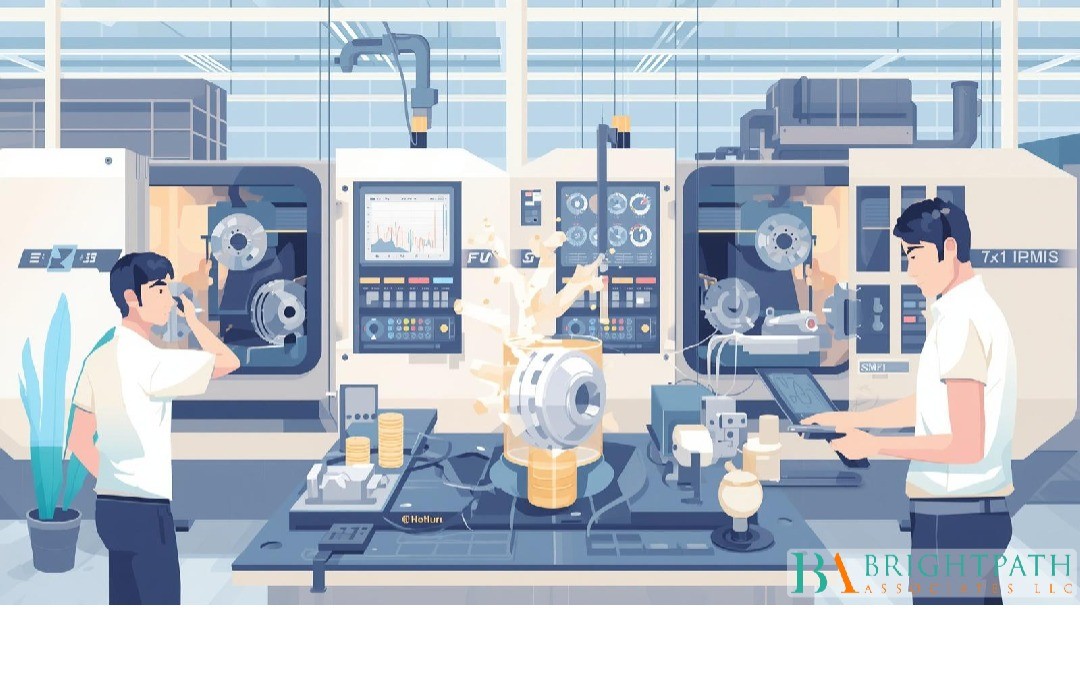
Precision machining has become the central conduit through which digital designs are transformed into tangible, high-performance components across the spectrum of #IndustrialMachinery. In a manufacturing landscape defined by tighter tolerances, faster product cycles, and rising sustainability expectations, the ability to produce consistent, micron-level accuracy is not a luxury but a prerequisite for competitiveness. Machinery manufacturers depend on precision not only to ensure fit and function but also to achieve the repeatability and reliability that enable global supply chains to run on schedule. This essay examines how precision machining integrates advanced machine tools, metrology, and data-driven control to elevate Manufacturing efficiency, how it intersects with the Industrial automation industry and sustainability, and why it continues to define quality, cost, and delivery in modern production.
Defining Precision: Tolerances, Capability, and System Thinking
In manufacturing practice, precision is expressed in tolerances, the allowable deviation from nominal dimensions that still ensures assembly performance. The significance of a tolerance is context dependent: a general-purpose bracket may accept variations that would be unacceptable in an aircraft actuator or an implantable medical device. Precision machining compresses these tolerance bands down to the realm of microns by orchestrating a system that includes rigid machines, thermally stable environments, calibrated tooling, robust fixturing, and disciplined process control. This system-level perspective is essential, because a dimensional outcome is rarely the product of a single element; it is the accumulated effect of material behavior, machine accuracy, thermal conditions, tool geometry, and human decision-making. The engineering of that cumulative effect is what distinguishes true precision programs from ad hoc machining.
The Machine as a Metrology-Aware Platform
A modern #CNCMachining center is both a cutting platform and, increasingly, a measurement device. High stiffness structures, precision guideways, and thermally symmetric designs reduce error sources before any software compensation is applied. Embedded feedback systems, including high-resolution encoders and dynamic spindle control, allow real-time corrections for backlash or deflection. Thermal compensation models monitor temperature drift and make micro-adjustments as conditions evolve over a shift. In ultra-precision contexts, controlled environments around 20 degrees Celsius with narrow allowable variation preserve geometric fidelity in long cycles and multi-setup work. These capabilities are not cosmetic additions; they are the baseline enablers that let CNC machining hold ±0.001 inches routinely and much tighter on critical features when the full system is optimized.
Tooling, Workholding, and the Geometry of Stability
Cutting tools and workholding establish the immediate mechanical boundary conditions that determine surface generation and dimensional consistency. Low runout, edge-prepped tools with appropriate coatings maintain sharpness and reduce built-up edge, while toolpath strategies that control engagement lessen cutting forces and heat. In parallel, rigid, repeatable fixturing locks datum references in place so they are preserved across operations and inspection. For micro-features and thin-walled components, minimizing overhangs, using balanced tool assemblies, and managing stepovers become decisive. A precision plan does not simply select a tool diameter; it choreographs clamping positions, cut sequences, and approach vectors to keep the workpiece within its elastic limits and avoid spring-back that would otherwise push dimensions out of spec. The combination of correct tool geometry and disciplined workholding is therefore a principal engine of Precision machining success.
Process Selection: Matching Method to Material and Feature
Not every feature can or should be made by a single process. Milling and turning carry a majority of workload in Industrial machinery, but high-end tolerances on hardened steels may require grinding to achieve roundness and finish beyond the reach of conventional cutting. Wire and sinker EDM unlock sharp internal corners and delicate cavities in conductive materials without imposing #MechanicalCutting forces that could distort the geometry. Swiss-type CNC machining excels at long, slender parts by cutting near a guide bushing, enabling micrometer-level concentricity. Five-axis machining consolidates multiple faces into one setup, reducing stack-up error and dramatically improving Manufacturing efficiency. Choosing the right process is a hallmark of an industrially mature precision strategy: it prevents over-engineering, mitigates risk in difficult materials, and ensures the shortest path to conforming parts.
Metrology as a Closed-Loop Driver of Quality
Inspection is often imagined as a final gate, but in contemporary precision environments, metrology is integrated directly into production. Coordinate measuring machines verify geometric dimensioning and tolerancing with high confidence, while optical systems and scanning complement them on small or freeform features. On-machine probing embeds measurement within the CNC cycle, detecting deviations from thermal drift, tool wear, or deflection and feeding corrections back before the part is unclamped. This cut–measure–cut loop tightens variability, boosts first-pass yield, and reduces the need for costly rework. The data harvested in-process cascades into Statistical Process Control dashboards, where Cp and Cpk reveal stability over time and signal when intervention is required. The result is a robust quality nervous system, where the CNC program, probe logic, and inspection plans operate as a coherent whole rather than as disconnected steps.
Digitalization: From CAM Toolpaths to Digital Twins
As the #IndustrialAutomation industry progresses, digital twins are emerging as powerful companions to physical machine tools. By fusing real-time sensor data with predictive models of machine behavior, a digital twin can forecast thermal drift, estimate tool wear state, or predict chatter onset and suggest parameter adjustments proactively. This virtual layer builds on the digital thread that already connects CAD intent to CAM toolpaths and postprocessed G-code. Closed-loop control becomes more agile as the twin shortens feedback latency between observation and correction. The payoff is fewer prove-outs, faster changeovers, better use of machine hours, and steadier conformance. For Machinery manufacturers balancing high-mix, low-volume portfolios against tight delivery windows, digital twin approaches turn unpredictability into manageable variance, translating directly into improved Manufacturing efficiency and customer satisfaction.
Sustainability and Precision: Aligning Quality with Responsibility
A common misconception is that higher precision inherently escalates resource consumption. In reality, smart strategies enable gains in both quality and environmental performance. Minimum Quantity Lubrication replaces flood coolant with atomized micro-lubrication, drastically cutting fluid consumption while often improving tool life and surface finish. Cryogenic cooling with liquid nitrogen, particularly on superalloys, reduces cutting temperature and tool wear without leaving residual contaminants, making it attractive for demanding aerospace and medical components. Hybrid methods such as ultrasonic-assisted turning further reduce energy use and stabilize chip formation. The broader equation also matters: on-machine probing that prevents scrap, five-axis consolidation that eliminates multiple setups, and right-first-time programming all translate precision into fewer rework loops and less material waste. In this way, Precision machining becomes a conduit for sustainable practices rather than an obstacle to them.
People, Skills, and the Changing Nature of Manufacturing Jobs
While automation deepens and measurement becomes more embedded, human expertise remains central. Programming multi-axis toolpaths, designing fixturing that resists deformation, interpreting Cp/Cpk trends, and tuning probe logic are skilled activities that define modern #ManufacturingJobs. The role of the machinist and manufacturing engineer is evolving toward data interpretation, process optimization, and systems integration. Training paths now combine hands-on machining with statistical methods, GD&T fluency, and CAM simulation. As a result, #ExecutiveSearchRecruitment for precision-focused organizations emphasizes cross-disciplinary capability, pairing traditional craftsmanship with digital acumen. Companies that invest in continuous learning not only execute tighter tolerances but also respond more nimbly to design changes and production surprises, turning skills into a durable competitive advantage.
The Asset Ecosystem: Used Machinery, Upgrades, and Financing
Precision capability does not solely arise from purchasing new equipment. The market for Used machinery, when paired with careful evaluation and retrofits, can deliver excellent value. Rebuilding spindles, re-scraping ways, installing high-resolution scales, and adding probing or modern controllers can elevate legacy platforms into capable contributors. Strategic Machinery financing enables shops to sequence capital investments in a way that balances cash flow with capability growth, for example upgrading a coordinate measuring machine before adding another machining center if inspection is the current bottleneck. The key is to treat assets as a portfolio, prioritizing the constraints that most limit Manufacturing efficiency—spindle uptime, fixturing flexibility, or metrology throughput—and targeting investments that unlock the next tier of process capability.
Maintenance, Reliability, and Process Uptime
Precision cannot be preserved without disciplined Machinery maintenance. Preventive and predictive routines safeguard spindle health, ball screw integrity, and thermal systems, while calibration schedules keep probes and fixtures traceable. Condition monitoring, using vibration analysis or thermal sensors, flags deviations before they cause nonconformance. Tool life management, grounded in data from load meters or acoustic emission, paces insert changes to the real behavior of the cut rather than to arbitrary intervals. These practices reduce unplanned downtime, protect surface integrity, and stabilize cycle times. In a precision context, maintenance is not a background function; it is a primary lever for keeping the process within its natural capability window and ensuring that #StatisticalProcessControl reflects true process performance rather than hidden mechanical drift.
Supply Chains, Standards, and the Cost of Quality
A mature precision enterprise aligns internal capability with external expectations through clear standards and documentation. Clean drawings with unambiguous GD&T, thoughtfully specified datum schemes, and tolerance bands that reflect functional needs rather than blanket tightness reduce disputes and scrap. First Article Inspection protocols, calibration traceability, and capability metrics for critical features tighten the contract between buyer and supplier. For Machinery manufacturers operating global supply chains, this rigor compresses lead times, minimizes rework during incoming inspection, and supports smoother new product introductions. The cost of quality then shifts from firefighting to prevention, where every euro or dollar invested in metrology, training, and maintenance yields compounding returns in yield and delivery reliability.
The Road Ahead: Autonomy, Integration, and Resilience
The trajectory of Precision machining points toward deeper autonomy and tighter integration. Sensor-rich machines will infer tool wear and surface outcomes in real time and adjust feeds, speeds, and toolpaths without #OperatorIntervention. Digital twins will move from pilot projects to standard practice, underpinning resilient scheduling and rapid changeovers. Shop-floor metrology will be fully networked, with in-process data flowing automatically to dashboards that trigger actions rather than just reports. Sustainability metrics will sit beside Cp and Cpk on the same screen, unifying quality and environmental performance under one operational language. Through all of this, the focus remains constant: transforming CAD intent into conforming parts, faster, cleaner, and more predictably.
Conclusion: Why Precision Endures
Precision machining endures as the cornerstone of modern manufacturing because it converts complexity into confidence. It allows the Industrial automation industry to scale, gives Machinery manufacturers the means to hit ambitious performance targets, and anchors supply chains with predictable quality. It elevates Manufacturing jobs by blending practical skills with data literacy, and it aligns quality with sustainability by reducing waste at its source. Whether the investment takes the form of a new five-axis platform, a retrofit of a capable piece of Used machinery, a smart Machinery financing plan, or the recruitment of cross-trained talent through Executive Search Recruitment, the objective is the same: a system that holds tolerance, holds schedule, and holds trust. In that system, Precision machining is not just a process; it is the discipline that turns design into durable value.
Find your next leadership role in Machinery Industry today!
Stay informed with the latest insights on Machinery Industry!