
Introduction: A New Industrial Logic for Metals
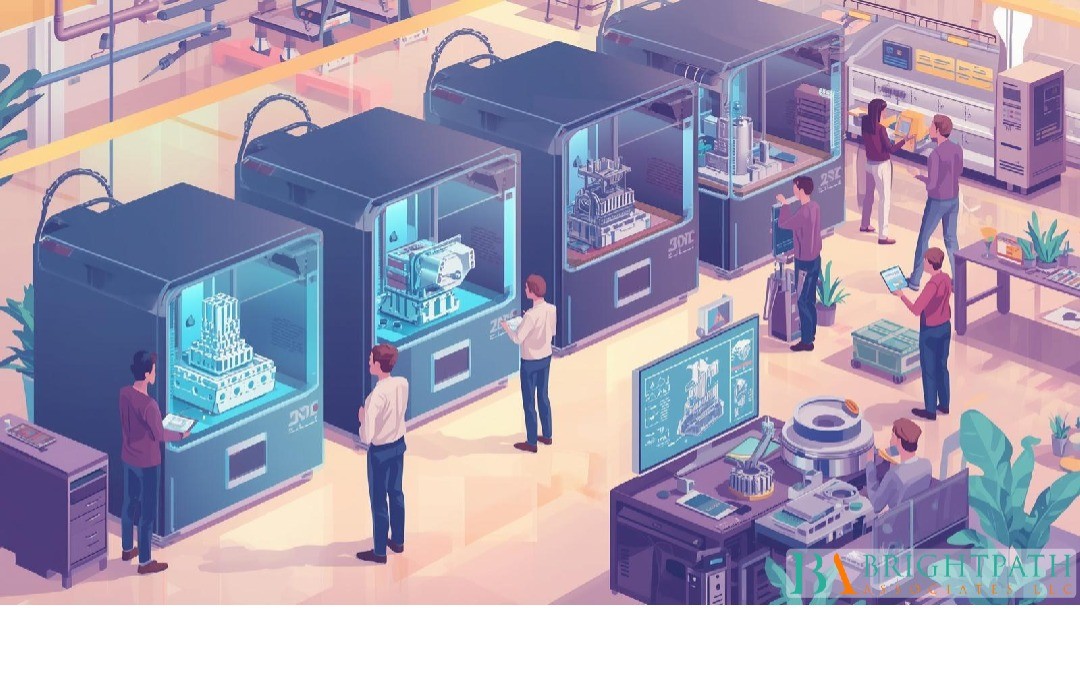
Metal additive manufacturing commonly known as metal #3DPrinting is redefining how high‑value components are conceived, produced, and qualified. By building parts layer by layer from digital designs, manufacturers are compressing lead times, consolidating assemblies, and unlocking geometries that were previously impossible to machine or cast. This industrial transformation is not happening in isolation. It is propelled by advances in Metallurgy, guided by rigorous standards, and embedded in a broader ecosystem that spans Sustainable mining, Mining technology, Metal processing, design engineering, and specialized talent pipelines supported by Mining and metals recruiters and Executive Search Recruitment. As Metals industry trends converge on decarbonization, resilience, and digital operations, metal additive manufacturing (AM) is emerging as a cornerstone technology shaping the future of production.
The Foundations: Processes, Materials, and Standards
At the core of metal AM are standardized process families that provide a common language for qualification and quality. Powder Bed Fusion uses a laser or electron beam to selectively melt metal powders, achieving high density and fine features suitable for aerospace, medical, and energy components. Directed Energy Deposition feeds wire or powder into a focused energy source to build or repair larger structures and features, enabling on‑machine restoration and design modifications. Binder Jetting prints a binder into a powder bed and then sinters the part to near‑full density, emphasizing high throughput for small to medium components where sintering distortion is well controlled. This shared vocabulary, formalized in international standards such as ISO/ASTM 52900, allows engineers, auditors, and customers to reference materials, parameters, and inspection regimes with clarity, accelerating adoption across regulated industries.
Materials science underpins these processes. Titanium alloys like Ti‑6Al‑4V, nickel superalloys such as Inconel 718 and 625, stainless steels including 316L and 17‑4PH, and aluminum systems like AlSi10Mg are mainstays for their specific strength, corrosion resistance, and high‑temperature performance. Emerging alloys designed for printability—ranging from crack‑resistant aluminums to high‑conductivity coppers and refractory systems—expand the design envelope. Rapid solidification in AM often yields fine microstructures with high strength; post‑processing via heat treatment and hot isostatic pressing stabilizes properties and closes internal porosity. The result is a maturing capability to meet or exceed conventional baselines in qualified applications, provided that process parameters, part orientation, and shielding conditions are disciplined and repeatable.
Industrial Proof: From Prototyping to Serial Production
The industrialization of metal AM is most visible in aerospace, where the stakes for performance and reliability are highest. A defining example is the additively manufactured fuel nozzle in the #LEAPEngine, which consolidated roughly twenty brazed or welded components into a single printed part. This consolidation eliminated joints, reduced weight by about a quarter, and improved durability, helping the platform achieve a significant fuel‑efficiency improvement over the previous generation. By 2021, GE’s Auburn facility had shipped more than one hundred thousand of these nozzles, demonstrating that metal AM can scale beyond the prototype bay into serial production with rigorous quality control.
Another benchmark was set in 2017 when Airbus installed a laser powder bed–fused titanium bracket on a series‑production A350 XWB. This was a pivot from cabin trial parts to structural hardware on the airframe, with all the attendant qualification demands. These milestones, together with expanding use in satellites, launch vehicles, energy turbines, precision tooling, and medical implants, show that metal AM has crossed the credibility threshold necessary for critical service environments.
Economics Reimagined: The Value Where AM Wins
Metal AM does not seek to replace castings, forgings, and machining for all parts. Instead, it wins decisively in scenarios where the economics of complexity favor additive methods. When a design contains intricate internal channels, conformal cooling, lattice infill, or biomimetic features that are impossible or impractical with subtractive methods, AM dramatically simplifies the production route. Part consolidation converts multi‑piece assemblies into monolithic structures, shortening supply chains and reducing inspection burden by removing welds and brazes. In high‑value alloys, the buy‑to‑fly ratio collapses toward unity, limiting expensive scrap versus the heavy stock removal typical in machining titanium or nickel. Tool‑less production shrinks lead times, which is particularly powerful for spares, late‑stage engineering changes, and volatile demand patterns.
The calculus extends beyond unit price. Lightweighting reduces operational energy—crucial in aerospace and e‑mobility—while performance enhancements like fatigue resistance and thermal management reduce maintenance and extend life. Digital inventories cut obsolescence and logistics exposure. As machines, materials, and post‑processing improve, the production break‑even point is inching upward from prototypes and short runs to thousands of parts, and in specific binder‑jet applications, potentially into the hundreds of thousands for small geometries with moderate tolerances. These shifts are among the most consequential Metals industry trends now influencing capital planning and product strategy.
Quality and Qualification: Building Trust at Scale
The pivot to production relies on a robust quality infrastructure. Design for Additive Manufacturing must be embedded at the earliest stages, combining #TopologyOptimization, lattice design, and part consolidation with knowledge of support strategies, thermal management, and downstream machining. Process qualification requires controlled trials to lock parameters, define accepted build orientations, and set inspection plans. Post‑processing—encompassing heat treatment, hot isostatic pressing, precision machining, and surface finishing—translates “as‑printed” parts into “as‑finished” products that meet GD&T requirements.
Inspection regimes integrate in‑situ monitoring of melt pool signatures, thermal fields, and optical data with ex‑situ methods like CT scanning, dye penetrant testing, and ultrasonic inspection. Statistical process control and complete traceability from powder lot to final inspection reports are essential for regulated industries. The normalization provided by ISO/ASTM terminology, alongside company‑ and sector‑specific specifications, has shortened the path to qualification for metals, creating a repeatable blueprint for certification across programs and plants.
Sustainability and Supply Chain Resilience
Sustainability imperatives align naturally with metal AM’s strengths. Building near‑net shapes reduces scrap dramatically, particularly in titanium where conventional machining can waste the majority of starting stock. Lightweight designs achieved with lattices and topology optimization cut in‑service energy consumption, multiplying emissions benefits across fleet lifetimes. #DigitalInventories and distributed production models support Sustainable mining and Metal processing strategies by curbing overproduction, minimizing logistics miles, and accommodating Ore extraction variability with more agile demand signals.
Resilience is equally strategic. Additive routes circumvent tooling constraints and foundry bottlenecks, enabling near‑source production of critical spares and mitigating geopolitical and supply disruptions. In energy and heavy industry, Directed Energy Deposition enables on‑site repair and feature augmentation, extending asset life and reducing the need for new material. As Mining policy and climate regulation evolve, the ability to link responsible sourcing with efficient, localized manufacturing via AM will be an asset in corporate disclosures and stakeholder engagement.
Technology Trajectories: Throughput, Alloys, and Intelligence
Several trajectories are propelling metal AM deeper into production. Multi‑laser systems, better gas‑flow architectures, and advanced scan strategies are raising the throughput of Powder Bed Fusion while preserving metallurgical quality. Binder Jetting is maturing fast, bridging to conventional powder supply chains and offering compelling economics for small components once sintering behavior is tightly managed. Wire‑fed Directed Energy Deposition is becoming a first‑choice method for large structures and high‑rate deposition with simplified material logistics.
Materials innovation continues apace. Alloys tailored for AM’s thermal cycles mitigate cracking and porosity risks while enabling properties that rival or exceed wrought baselines. High‑conductivity coppers expand opportunities in electrification and thermal management, and refractory alloys are beginning to address extreme temperature environments. At the same time, machine intelligence is trending from traceability to control. Real‑time sensing paired with machine learning promises to reduce defect rates, tune microstructures, and shorten qualification timelines. Integrated digital threads that connect CAD/CAE, build preparation, MES/QMS, and inspection data are establishing verifiable “as‑built” digital twins, streamlining audits and accelerating change management.
Sector Perspectives: Aerospace, Energy, Medical, and Automotive
In aerospace and defense, production has moved beyond showcase parts to system‑critical components. Fuel systems, combustors, heat exchangers, brackets, and complex housings are now qualified in serial use, with design consolidation delivering both performance and supply chain simplicity. The discipline applied here sets a template for other sectors.
In energy and industrial markets, hot‑section components and burners are leveraging nickel superalloys and complex internal cooling achievable only with AM. Repair and refurbishment using #DirectedEnergyDeposition are becoming best practice, especially for high‑value rotating equipment. In medical devices, patient‑specific implants and porous structures for osseointegration in titanium are well established, reflecting the sector’s familiarity with materials like Ti‑6Al‑4V and the repeatable sterilization and validation pathways. Automotive adoption is growing in high‑performance segments and, increasingly, in tooling. Conformal‑cooled inserts cut cycle times, and Binder Jetting offers a pathway to economic production for small metal parts when sintered tolerances align with platform requirements.
Talent, Policy, and the Mining–Manufacturing Nexus
Industrial scaling is not purely technological; it is also organizational and policy‑driven. The cross‑disciplinary nature of AM demands expertise in Metallurgy, computational design, quality engineering, and production operations. This skills matrix is driving demand for Mining and metals recruiters and specialized #ExecutiveSearchRecruitment partners who can source leaders and practitioners fluent in both legacy Metal processing and emerging digital methods. As Mining innovation technology advances—from autonomous Ore extraction to sensor‑rich beneficiation—materials traceability, powder quality, and decarbonized inputs become strategic levers that tie upstream Sustainable mining to downstream additive manufacturing performance.
Public and private standards, incentives, and certification frameworks are evolving in parallel. Mining policy that emphasizes low‑carbon extraction, responsible sourcing, and transparent supply chains complements the AM promise of material efficiency and localized production. Industrial policy that supports workforce development, equipment investment, and qualification infrastructure will accelerate regional adoption and the realization of digital inventories and distributed manufacturing networks.
Implementation Roadmap: From Pilot to Production Readiness
For manufacturers entering or expanding metal AM, success depends on selecting the right parts and industrializing the workflow end to end. Candidate parts should exhibit high design complexity, #ConsolidationPotential, long or variable lead times, or severe performance constraints unlikely to be met by conventional routes. Design for Additive Manufacturing should begin at concept, integrating topology optimization and lattice strategies with realistic post‑processing plans and inspection intent. A rigorous data package—encompassing materials allowables, machine parameters, thermal histories, and inspection records—must be established and maintained under change control. Partnerships with powder suppliers, service bureaus, and machine OEMs can accelerate learning curves, but long‑term advantage lies in codifying process knowledge and closing the loop between in‑situ data and final properties.
Just as importantly, organizations should measure total lifecycle value. Unit price is only one input. Weight reduction, fuel or energy savings, maintenance avoidance, and spare‑part agility frequently tip the balance in favor of AM. In boardrooms and design reviews alike, the question is shifting from “Can we print this?” to “What is the highest‑value version of this product if we embrace additive logic and qualify it for production?”
Risks and Realities: Clear‑Eyed Adoption
Metal AM’s strengths are substantial, but a clear‑eyed view of limitations is essential. For simple, high‑volume parts, casting and forging with machining remain more economical. Surface finish and tight tolerances often require secondary machining and finishing, adding time and cost. Qualification for critical applications is nontrivial and demands sustained investment in testing and documentation. Powder handling introduces safety and environmental considerations that must be addressed with robust procedures. Finally, the talent challenge is real; organizations need to invest in training and selectively partner with external experts, including mining and metals recruiters, to build durable in‑house capabilities.
Conclusion: A Hybrid Future Shaped by Additive Thinking
The future of metal manufacturing will be hybrid. Additive will dominate where complexity, consolidation, and performance justify its economics, while subtractive and formative methods will continue to anchor simple, high‑volume parts. The frontier lies in mastering the interfaces—designing with additive first principles, printing near‑net shapes, and finishing with precision machining under a unified digital thread. With maturing standards, rising throughput, alloy innovation, and smarter quality control, metal AM has already proven itself in serial production for the most demanding industries.
As #MetalsIndustry trends continue to emphasize decarbonization, resilience, and digitalization, the alignment between upstream Sustainable mining and downstream additive production will tighten. Mining technology and Mining innovation technology will shape the powders and wires that feed printers; Mining policy will influence supply stability and carbon intensity; and the specialized talent pipelines orchestrated by mining and metals recruiters will determine how quickly organizations can capitalize on this transformation. The manufacturers that embrace this integrated vision—anchored in Metallurgy, validated by data, and executed with industrial discipline—will define the next era of production.
Find your next leadership role in Metal and Mining Industry today!
Stay informed with the latest insights on Metal and Mining Industry!