
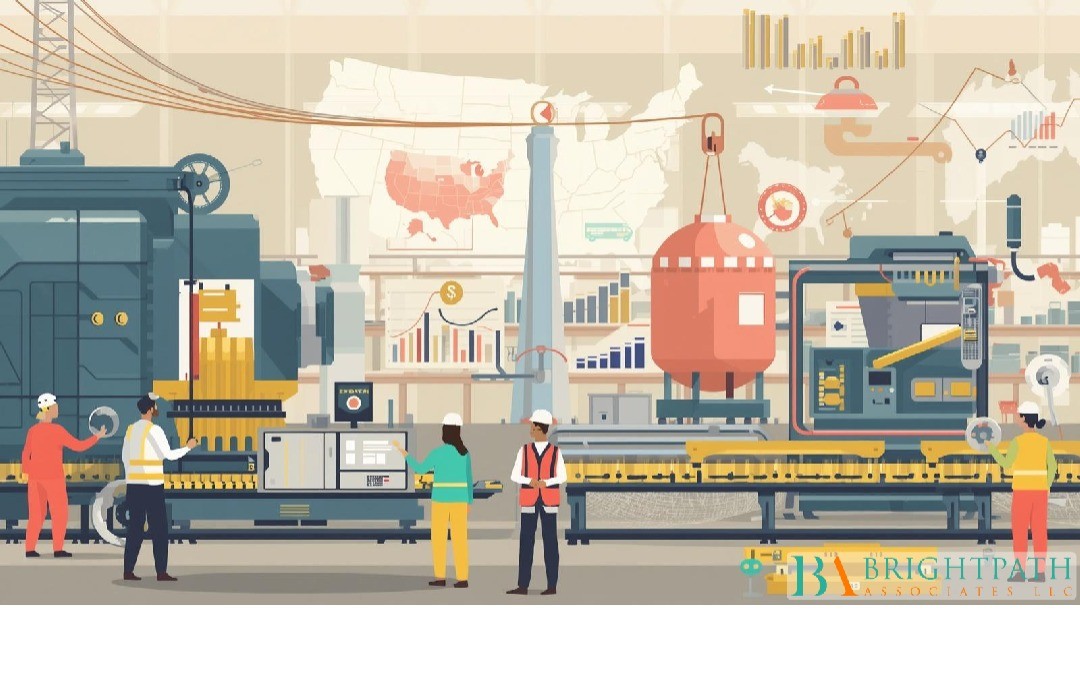
Introduction to the Machinery Manufacturing Landscape
#MachineryManufacturers form the backbone of the United States industrial economy, enabling productivity, infrastructure development, and technological advancement across multiple sectors. The U.S. machinery manufacturing sector contributes over $400 billion annually to GDP and supports millions of jobs directly and indirectly through its extensive value chain. From construction equipment and agricultural machinery to aerospace systems and energy infrastructure, this sector plays a critical role in driving national competitiveness and economic resilience.
For C-suite executives and founders of small to mid-sized machinery companies, the landscape is becoming increasingly complex. Rapid technological evolution, rising global competition, and shifting trade dynamics are reshaping how companies operate and compete. The focus is no longer limited to production output or cost control; it now extends to integrating advanced technologies, improving operational agility, and aligning business strategies with long-term industrial trends.
The Economic Impact of Machinery Manufacturers
Machinery manufacturers are central to economic expansion, acting as enablers of productivity across industries such as construction, mining, agriculture, and transportation. Capital investment in machinery directly correlates with industrial output, as businesses rely on advanced equipment to increase efficiency and scale operations. In the United States, machinery exports exceed $200 billion annually, highlighting the sector’s importance in global trade and its contribution to the country’s balance of payments.
The sector also generates a significant multiplier effect across the economy. Each dollar invested in machinery manufacturing supports additional economic activity in related industries, including raw materials, logistics, maintenance services, and financial services such as leasing and equipment financing. This interconnected ecosystem amplifies the sector’s overall economic impact, reinforcing its strategic importance.
Precision machining and CNC machining are fundamental to this value chain, enabling the production of highly accurate and complex components required in high-performance industries such as aerospace and defense. These capabilities not only enhance product quality but also reduce material waste and improve production efficiency, contributing to both economic and environmental sustainability.
Technological Advancements and Industrial Automation
The rise of the #IndustrialAutomationindustry is transforming machinery manufacturing into a highly digitized and intelligent ecosystem. Smart manufacturing technologies, including robotics, artificial intelligence, and industrial IoT, are enabling companies to optimize production processes, improve product consistency, and reduce operational costs. Advanced automation systems can increase production efficiency by 20–30% while significantly reducing error rates and downtime.
Digital twins and predictive analytics are also playing an increasingly important role in modern manufacturing environments. By simulating production processes and equipment performance, companies can identify inefficiencies, predict maintenance needs, and optimize resource allocation. Predictive maintenance alone can reduce equipment downtime by up to 50%, leading to substantial cost savings and improved operational reliability.
However, the integration of these technologies requires a strategic approach. Companies must balance capital investment with expected returns, ensure system interoperability, and manage cybersecurity risks associated with connected manufacturing systems. Leaders are therefore expected to guide digital transformation initiatives while maintaining operational continuity and financial discipline.
Supply Chain Dynamics and Global Competitiveness
The machinery manufacturing supply chain is highly globalized and increasingly sensitive to geopolitical and economic disruptions. Trade policies, tariffs, and supply chain bottlenecks can significantly impact production timelines and costs. Recent disruptions in global logistics and raw material availability have highlighted the need for greater supply chain resilience and diversification.
In response, companies are investing in regional manufacturing capabilities and digital supply chain solutions to enhance visibility and responsiveness. Real-time tracking systems, AI-driven demand forecasting, and supplier risk assessment tools are enabling organizations to reduce lead times and improve decision-making. These technologies can enhance supply chain efficiency by 15–25%, allowing companies to respond more effectively to market fluctuations.
Maintaining global competitiveness also requires continuous innovation and cost optimization. U.S. machinery manufacturers must compete with international players that benefit from lower production costs, making efficiency, quality, and technological differentiation critical success factors.
Workforce Transformation and Skills Evolution
The machinery manufacturing workforce is undergoing a significant transformation as the industry becomes more technology-driven. Traditional manufacturing roles are being replaced or augmented by positions that require expertise in automation, data analytics, and advanced engineering. This shift is creating a demand for highly skilled professionals who can operate and manage sophisticated manufacturing systems.
At the same time, the industry is facing an aging workforce, with a significant portion of #ExperiencedWorkers approaching retirement. This demographic challenge is contributing to a widening skills gap, particularly in technical and leadership roles. The inability to address this gap can lead to reduced productivity, slower innovation, and increased operational risks.
Organizations must therefore invest in workforce development initiatives, including training programs, apprenticeships, and partnerships with educational institutions. Building a pipeline of skilled talent is essential for sustaining long-term growth and maintaining competitiveness in a rapidly evolving industry.
Innovation as a Driver of Industrial Growth
Innovation remains a key driver of growth and differentiation in the machinery manufacturing sector. Advances in materials science, additive manufacturing, and energy-efficient technologies are enabling companies to develop more efficient and sustainable machinery. For example, the adoption of lightweight materials and energy-efficient designs can reduce operating costs for end users while improving environmental performance.
Research and development investments are critical in this context, as companies seek to stay ahead of technological trends and meet evolving customer demands. Collaboration with technology providers, research institutions, and industry partners is also accelerating innovation cycles, enabling faster commercialization of new products and solutions.
Organizations that prioritize innovation are better positioned to capture emerging market opportunities, enhance customer value, and strengthen their competitive advantage.
Leadership and Strategic Capability in a Changing Industry
The increasing complexity of the machinery manufacturing landscape is redefining leadership requirements. #ExecutiveSearchRecruitment must now operate at the intersection of technology, operations, and strategy, balancing short-term performance with long-term transformation goals. This includes overseeing digital initiatives, managing global supply chains, and driving sustainability efforts.
Effective leadership is critical in navigating industry challenges such as economic volatility, regulatory changes, and technological disruption. Companies with strong leadership capabilities are more likely to achieve higher productivity, faster innovation cycles, and improved financial performance. As a result, leadership quality has become a key determinant of organizational success in the machinery sector.
Strategic Talent Acquisition in a Competitive Landscape
In this highly specialized environment, #ExecutiveSearchRecruitment has become an important mechanism for addressing leadership gaps. The increasing complexity of executive roles, combined with a limited pool of qualified candidates, makes traditional hiring methods less effective. Executive search enables organizations to access a broader and more targeted talent pool, including passive candidates with expertise in industrial automation, supply chain management, and digital transformation. By aligning leadership capabilities with strategic business objectives, companies can enhance decision-making, accelerate innovation, and strengthen their competitive position in a rapidly evolving market.
Aligning Talent Strategy with Industry Trends
Aligning #TalentStrategy with industry trends is essential for long-term success. As machinery manufacturing continues to evolve, organizations must ensure that their workforce capabilities match the demands of automation, digitalization, and global competition. This requires a proactive approach to talent management, including identifying future skill requirements, investing in employee development, and fostering a culture of continuous improvement.
Companies that successfully align their talent strategies with technological and market trends are better equipped to adapt to change and capitalize on new opportunities. This alignment also enhances organizational resilience, enabling companies to navigate uncertainty and maintain consistent performance.
Conclusion
Machinery manufacturers remain a cornerstone of the U.S. economy, driving industrial growth, innovation, and employment across multiple sectors. As the industry continues to evolve, the ability to integrate advanced technologies, optimize supply chains, and develop skilled workforces will determine long-term success.
While technological advancements will continue to reshape the manufacturing landscape, it is leadership that will ultimately define how effectively these changes are implemented. By prioritizing innovation, operational excellence, and strategic alignment, companies can position themselves for sustained growth and competitiveness.
In this dynamic environment, aligning leadership capabilities with business objectives and industry trends will be critical. Organizations that invest in strong leadership and forward-looking #TalentStrategy will be best positioned to thrive in the evolving world of #MachineryManufacturers.
Find your next leadership role in Machinery Industry today!
Stay informed with the latest insights on Machinery Industry!