
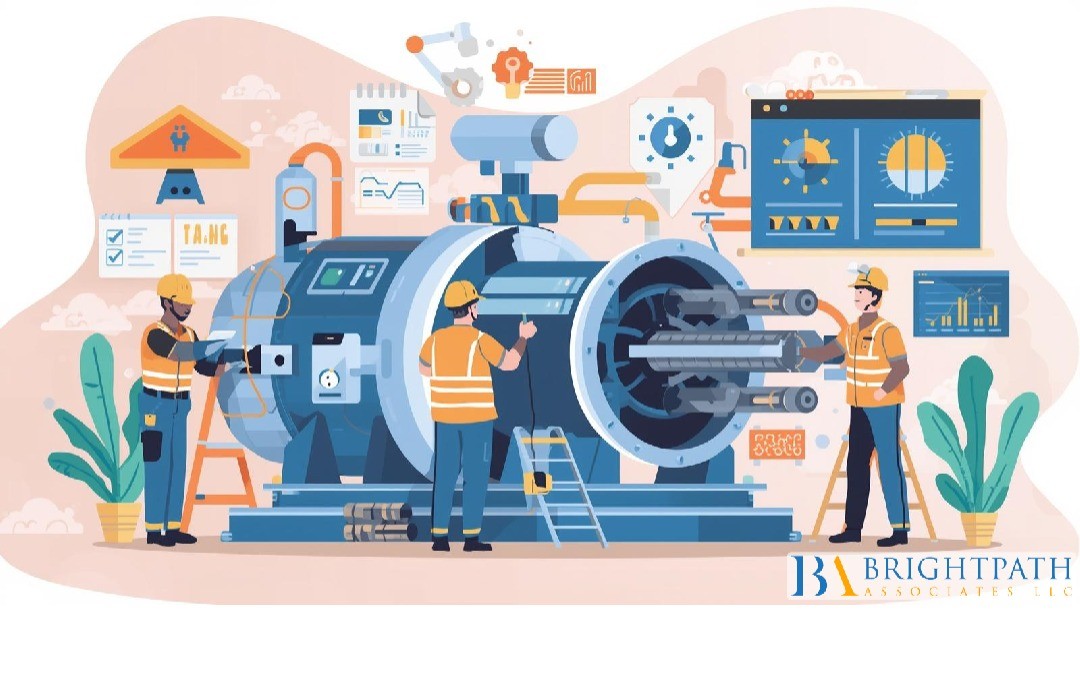
This section should establish #MachineryMaintenanceServices as a core driver of operational stability and profitability rather than a reactive cost center. It should explain how industrial machinery downtime directly affects production output, customer commitments, and revenue, particularly for machinery manufacturers operating in competitive global markets. The narrative should reference industry data showing that unplanned equipment downtime can account for a significant percentage of lost manufacturing productivity annually.
Industry Trends Redefining Machinery Maintenance Services
This section should explore the key trends shaping machinery maintenance, including the integration of industrial automation, predictive maintenance technologies, and data-driven diagnostics. It should explain how CNC machining environments and precision machining operations increasingly rely on advanced monitoring to prevent disruptions. The outline should also address how rising equipment costs, increased use of used machinery, and tighter production schedules have amplified the importance of proactive maintenance strategies in driving manufacturing efficiency.
The Expanding Scope of Maintenance in Modern Machinery Operations
This section should describe how machinery maintenance has evolved beyond basic servicing to encompass lifecycle asset management, performance optimization, and risk mitigation. It should explain that maintenance teams now support complex #MachineryEcosystems involving automation systems, robotics, and digitally controlled equipment. The narrative should connect this expanded scope to executive oversight, noting that maintenance decisions increasingly influence capital planning, machinery financing strategies, and long-term operational resilience.
Leadership Accountability for Equipment Reliability and Performance
This section should focus on how responsibility for #MachineryReliability has moved firmly into the executive domain. It should explain that CEOs, COOs, and plant leaders are now accountable for maintenance effectiveness, safety outcomes, and production continuity. The outline should emphasize that leadership decisions regarding maintenance investment, vendor partnerships, and workforce capability directly affect uptime and customer satisfaction. It should also note that failures in maintenance strategy often reflect leadership gaps rather than technical shortcomings.
Executive Talent Shortages in Machinery and Manufacturing Leadership
This section should analyze leadership shortages affecting machinery companies. It should reference workforce trends indicating difficulty filling senior roles in operations, maintenance leadership, and industrial automation management. The outline should explain how competition for experienced leaders with backgrounds in industrial machinery, CNC machining, and advanced manufacturing systems has intensified. It should also discuss how retirements and skills mismatches have reduced the availability of leaders capable of managing complex maintenance environments.
Shifting Executive Role Expectations in Machinery Organizations
This section should explain how executive roles have evolved in response to operational complexity and workforce challenges. It should describe how leaders are now expected to align maintenance strategies with broader #BusinessGoals, including productivity targets, cost control, and sustainability initiatives. The outline should emphasize that executives must understand the interplay between machinery maintenance, manufacturing jobs stability, and workforce engagement. These expanded expectations have narrowed the pool of qualified leadership talent.
Workforce Strategy and Maintenance Excellence
This section should explore the connection between workforce strategy and effective machinery maintenance. It should explain how skilled technicians, engineers, and supervisors are essential to maintaining precision machining and automated equipment. The outline should highlight how leadership gaps undermine training, safety compliance, and maintenance discipline, leading to increased breakdowns and operational risk. It should also discuss how maintenance performance is closely tied to employee retention and morale in manufacturing environments.
Recruitment Challenges in a Specialized Manufacturing Talent Market
This section should examine why traditional recruitment approaches often fail to meet the leadership needs of machinery companies. It should explain that generic #HiringMethods struggle to assess candidates’ experience with industrial automation, machinery maintenance strategy, and large-scale production systems. The outline should highlight the risks associated with executive mis-hires, including increased downtime, safety incidents, and inefficient use of machinery financing investments.
The Strategic Evolution of Executive Search Recruitment
This section should position executive search recruitment as a strategic response to leadership shortages in the machinery sector. It should explain how specialized executive search recruitment focuses on identifying leaders with proven experience in managing industrial machinery environments, optimizing maintenance operations, and leading workforce transformation. The outline should describe how this approach supports succession planning, confidential hiring, and growth-stage leadership alignment.
Executive Search Recruitment as an Operational Risk Mitigation Tool
This section should emphasize #ExecutiveSearchRecruitment as a proactive risk management strategy. It should explain how securing leaders with deep maintenance, automation, and operational expertise reduces the likelihood of costly disruptions. The outline should reference Brightpath Associates as a partner that aligns executive talent with machinery companies’ operational and strategic objectives, without including any links.
Aligning Leadership Strategy with Maintenance-Driven Efficiency
This section should explore how leadership alignment directly influences the success of machinery maintenance services. It should explain that executives establish performance standards, accountability frameworks, and investment priorities that determine maintenance outcomes. The outline should reinforce that companies with strong leadership alignment achieve higher manufacturing efficiency, longer equipment life cycles, and better returns on machinery investments.
Preparing for the Future of Machinery Maintenance and Leadership
Discussing how automation, #DataAnalytics, and evolving manufacturing models will further elevate the importance of leadership in maintenance strategy. It should conclude by reinforcing that machinery maintenance excellence is inseparable from leadership excellence. The outline should position executive search recruitment as a long-term investment that enables machinery companies to sustain performance, minimize disruptions, and remain competitive in an increasingly complex manufacturing landscape.
Find your next leadership role in Machinery Industry today!
Stay informed with the latest insights on Machinery Industry!