
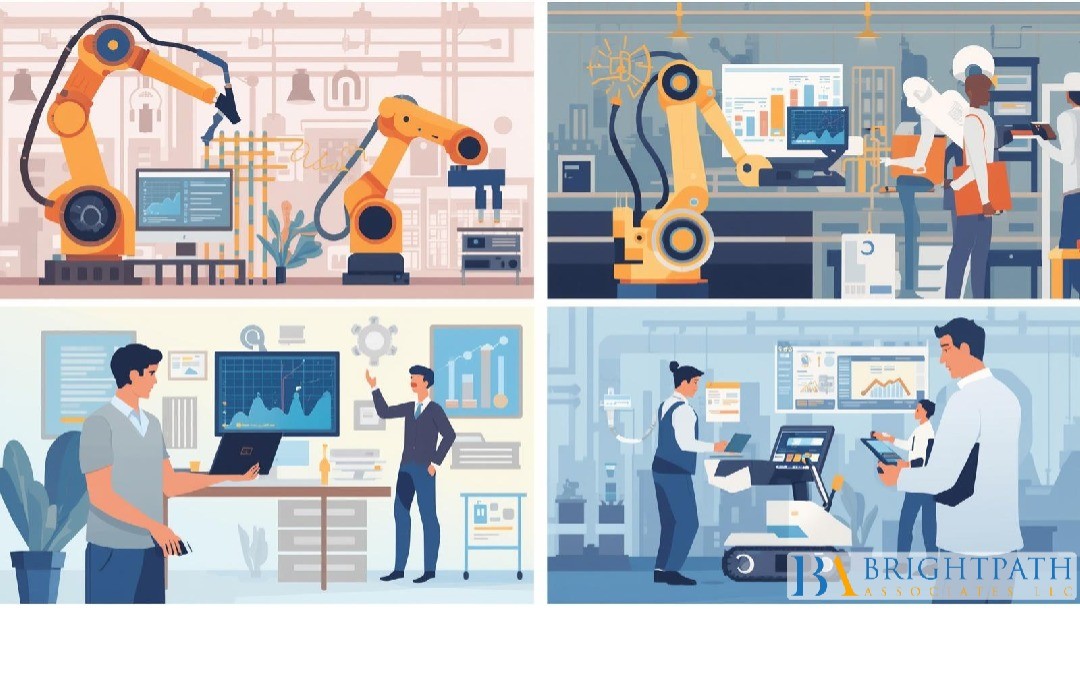
The Strategic Shift in Industrial Automation Leadership
The #IndustrialAutomation sector has undergone accelerated transformation driven by manufacturing robotics integration, advanced control systems, and intelligent automation solutions. Robotics integration services are no longer limited to automating repetitive tasks; they are redefining productivity, workforce models, and leadership expectations across industrial automation companies. For founders and C-suite leaders of small to mid-sized organizations, the challenge is no longer just adopting technology but securing the executive talent capable of leading this transition effectively.
As robotics, SCADA systems, machine vision, and PLC programming services converge, automation leaders are expected to balance operational efficiency with long-term innovation. This shift has intensified competition for senior leadership talent, particularly executives who understand both manufacturing automation integration and strategic workforce planning.
Robotics Integration as a Catalyst for Operational Transformation
Robotics integration services have emerged as a cornerstone of modern automation strategies. According to global manufacturing data, companies adopting robotics and automation solutions have reported productivity improvements ranging from 20% to 35%, particularly in high-volume, repetitive operations. Tasks once dependent on manual labor—material handling, assembly, inspection, and packaging—are increasingly managed by robotics paired with machine vision and control systems.
This transformation has reshaped internal organizational structures. Automation projects now require cross-functional collaboration between engineering, IT, operations, and executive leadership. The growing complexity of PLC programming service requirements, SCADA system oversight, and real-time data integration has elevated the role of leadership from operational oversight to strategic orchestration.
Leadership Talent Shortages in Industrial Automation
Despite rising investment in manufacturing robotics integration, leadership availability has not kept pace. Industry workforce studies indicate that nearly 60% of industrial automation companies report difficulty filling senior leadership roles related to automation, digital transformation, and systems integration. The demand for executives who understand automation jobs at both technical and strategic levels far exceeds supply.
This leadership gap is particularly pronounced in small to mid-sized firms that lack global brand visibility but are under pressure to compete with larger automation providers. As robotics integration services become mission-critical, companies require leaders who can scale automation solutions, manage distributed teams, and align capital investments with evolving #MarketDemands.
Evolving Executive Role Expectations from 2023 to 2025
The role of automation executives has evolved significantly over the past three years. Traditional leadership profiles focused heavily on engineering depth or operational experience. Today, executive expectations extend far beyond technical expertise. Leaders must possess a working understanding of manufacturing automation integration, data-driven decision-making, cybersecurity within control systems, and long-term workforce transformation.
Executives overseeing automation solutions are also expected to navigate labor shortages by redesigning job roles, reskilling teams, and aligning robotics integration with human capital strategies. This convergence of technology and talent strategy has made executive hiring more complex and risk-sensitive than ever before.
Robotics Integration and the Redefinition of Workforce Strategy
One of the most profound impacts of robotics integration services is their influence on workforce composition. Automation does not eliminate jobs outright; instead, it shifts demand toward higher-value roles involving system monitoring, analytics, and optimization. As a result, leaders must understand how automation jobs evolve alongside robotics adoption.
Organizations that fail to align #ExecutiveLeadership with these workforce dynamics often experience stalled automation initiatives or underutilized systems. Strong leadership ensures that PLC programming services, SCADA platforms, and machine vision technologies are deployed with clear productivity metrics and workforce engagement strategies in place.
Recruitment Challenges in a Highly Specialized Market
Executive hiring in industrial automation is uniquely challenging due to the hybrid nature of required skill sets. Candidates must demonstrate fluency in automation solutions while also possessing commercial acumen, change management expertise, and global market awareness. Generic recruitment approaches frequently fall short in identifying such profiles.
Data from executive hiring trends between 2023 and 2025 shows that automation-focused roles take up to 40% longer to fill compared to other manufacturing leadership positions. This delay directly impacts growth, project execution, and client confidence—especially for firms delivering manufacturing robotics integration and control systems services.
The Strategic Evolution of Executive Search Recruitment
In response to these challenges, executive search recruitment has become a strategic imperative rather than a transactional function. Specialized executive search industrial automation firms bring deep market intelligence, technical screening capabilities, and access to passive leadership talent that traditional hiring channels cannot reach.
Effective #ExecutiveSearchRecruitment aligns leadership selection with long-term automation roadmaps. Rather than focusing solely on immediate vacancies, it evaluates candidates based on their ability to scale automation platforms, lead digital transformation initiatives, and adapt to evolving industrial ecosystems.
Aligning Leadership with Automation-Driven Growth
For automation companies delivering PLC programming service offerings, machine vision systems, and integrated robotics solutions, leadership alignment directly influences market positioning. Executives play a central role in translating technical capabilities into client value propositions, operational excellence, and sustainable growth.
Companies that invest in leadership with deep domain expertise and strategic foresight consistently outperform peers in project delivery timelines, customer retention, and innovation velocity. This advantage becomes particularly critical as industrial clients demand more intelligent, connected, and scalable automation solutions.
Executive Search as a Competitive Advantage
Executive search recruitment offers more than candidate placement; it provides strategic advisory support during periods of transformation. By partnering with a specialized executive search firm experienced in industrial automation executive search, organizations gain access to leadership talent that understands both emerging technologies and business scalability.
Brightpath Associates has positioned itself as a trusted partner for automation companies navigating leadership transitions. By focusing on executive search recruitment tailored to industrial automation, the firm supports organizations in securing leaders capable of driving robotics integration, operational resilience, and workforce evolution.
Preparing for the Next Phase of Industrial Automation Leadership
Looking ahead, the convergence of robotics, control systems, and intelligent automation will continue to accelerate. From advanced SCADA systems to AI-enabled machine vision, automation solutions will demand leaders who can manage complexity while maintaining strategic clarity.
For founders and C-suite executives, addressing leadership gaps is no longer optional. Executive hiring decisions made today will shape operational performance, innovation capacity, and competitive positioning well beyond 2025. Organizations that proactively invest in executive search industrial automation strategies will be better equipped to harness robotics integration services as a driver of productivity, resilience, and long-term growth.
Find your next leadership role in Industrial Automation Industry today!
Stay informed with the latest insights on Industrial Automation Industry!