
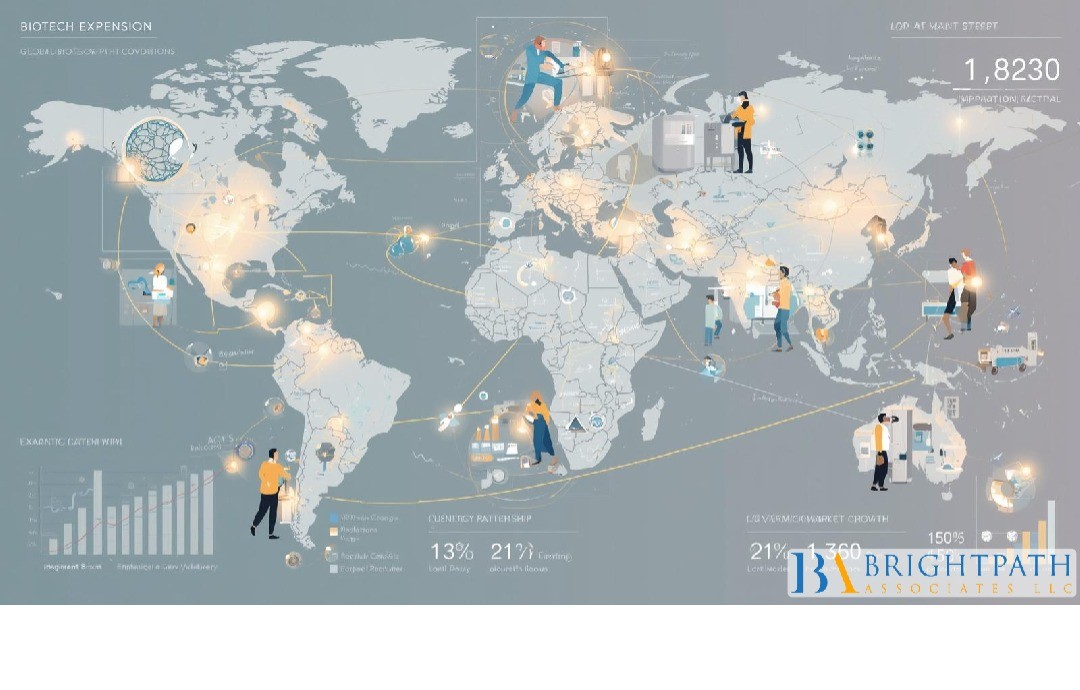
Introduction: Global Expansion as a Biotech Growth Imperative
The #BiotechnologyIndustry is entering a critical phase of global expansion driven by rapid scientific innovation, rising healthcare demand, and increasing cross-border investment. From gene therapy and cell therapy breakthroughs to AI-enabled drug discovery and advanced data analytics, biotech companies are scaling faster than ever before. For small to mid-sized biotechnology firms, international expansion represents both a significant opportunity and a complex challenge. Between 2023 and 2025, leadership capability has emerged as a decisive factor in determining whether biotech companies can successfully navigate regulatory diversity, capital constraints, and competitive global markets.
The Globalization of Biotech Innovation
Biotech innovation is no longer confined to a handful of established markets. Research hubs across North America, Europe, and Asia-Pacific are contributing to advancements in gene therapy, cell therapy, and precision medicine. Global biotech investment continues to grow, with venture capital funding increasingly flowing into companies that demonstrate international scalability. This globalization has intensified competition while raising the bar for operational and strategic leadership. Executives must now manage geographically distributed R&D teams, global clinical trials, and international commercialization strategies, requiring skills that extend far beyond traditional scientific leadership.
Regulatory Complexity Across International Markets
#BiotechInternationalExpansion introduces significant regulatory complexity. Each market presents distinct approval pathways, compliance standards, and data governance requirements. Navigating biotech regulatory frameworks across multiple jurisdictions requires executives who can align regulatory strategy with scientific development and commercialization timelines. Industry data suggests that regulatory misalignment remains one of the leading causes of delayed product launches in global biotech markets. As regulatory scrutiny increases, leadership teams must possess deep regulatory insight combined with strategic foresight to mitigate risk and maintain momentum.
Technology, AI, and Data Analytics as Expansion Enablers
Emerging technologies are reshaping how biotech companies approach global markets. Biotech AI, machine learning, and data analytics are accelerating drug discovery, improving clinical trial efficiency, and enabling better decision-making across international operations. However, these technologies also introduce complexity related to data integration, cybersecurity, and ethical governance. Executives must understand how to leverage advanced analytics while ensuring compliance with regional data protection laws. Companies with leadership teams experienced in digital transformation consistently demonstrate faster innovation cycles and stronger global positioning.
Leadership Talent Shortages in a Rapidly Scaling Industry
Despite strong growth, the #BiotechSector faces a persistent leadership talent shortage. A limited pool of executives possess experience spanning biotech innovation, global regulatory strategy, and international commercialization. Workforce studies indicate that demand for senior biotech leaders significantly outpaces supply, particularly in roles requiring cross-functional expertise. Small to mid-sized companies are especially impacted, as they compete with large pharmaceutical firms and global biotech leaders for the same executive talent. This shortage has elevated executive hiring from an operational concern to a strategic priority.
Evolving Expectations for Biotech Executives
From 2023 to 2025, executive role expectations in biotechnology have expanded dramatically. Leaders are no longer evaluated solely on scientific or technical excellence. Today’s biotech executives must manage venture capital relationships, guide global expansion strategies, oversee regulatory compliance, and build scalable organizations capable of sustaining innovation. Experience in biotech venture capital engagement and international partnerships has become increasingly valuable. These evolving expectations have narrowed the candidate pool, making traditional recruitment approaches less effective in identifying suitable leadership.
The Strategic Risk of Leadership Misalignment
Leadership misalignment poses significant risk during international expansion. Poor executive fit can result in regulatory delays, inefficient capital deployment, and weakened investor confidence. #IndustryAnalysis shows that leadership-related execution failures account for a substantial portion of stalled biotech expansion initiatives. In a sector where time-to-market directly impacts valuation and patient outcomes, leadership gaps can undermine even the most promising scientific pipelines. This reality underscores the need for a more strategic approach to executive hiring.
Executive Search Recruitment as a Strategic Growth Enabler
#ExecutiveSearchRecruitment has emerged as a critical solution for biotechnology companies pursuing international growth. Unlike conventional recruitment methods, executive search focuses on identifying passive candidates with proven experience in global biotech leadership, regulatory navigation, and commercialization strategy. Firms such as Brightpath Associates support biotech organizations by aligning executive talent with long-term business objectives, scientific direction, and cultural fit. This approach enables companies to secure leaders capable of managing complexity while driving sustainable expansion.
Building Leadership for Global Biotech Expansion
Future-ready leadership in biotechnology requires an integrated perspective that combines science, strategy, and global operations. Executives leading international expansion must understand how biotech innovation intersects with regulatory frameworks, capital markets, and emerging technologies. Companies that invest in executive search recruitment are better positioned to build leadership teams capable of scaling responsibly across borders. This alignment strengthens governance, accelerates decision-making, and enhances organizational resilience during periods of rapid growth.
Competitive Advantage Through Strategic Executive Hiring
#LeadershipQuality has become a defining differentiator in global biotech markets. Organizations with aligned executive teams are more likely to secure funding, attract strategic partners, and achieve regulatory milestones on schedule. Performance data across life sciences sectors indicates that companies with strong leadership alignment demonstrate higher success rates in international market entry and long-term value creation. For mid-sized biotech firms, strategic executive hiring can bridge the gap between domestic success and global impact.
Conclusion: Leadership as the Foundation of Global Biotech Success
Between 2023 and 2025, biotechnology companies face unprecedented opportunities for international expansion alongside intensifying complexity. Innovation alone is no longer sufficient to compete on the global stage. Leadership talent shortages, evolving executive expectations, and regulatory challenges demand a strategic approach to executive hiring. Executive search recruitment provides a proven pathway to securing leaders who can navigate global markets, manage risk, and drive sustainable growth. By prioritizing leadership readiness alongside scientific advancement, biotech companies can position themselves for long-term success in an increasingly competitive global landscape.
Find your next leadership role in Biotech Industry today!