
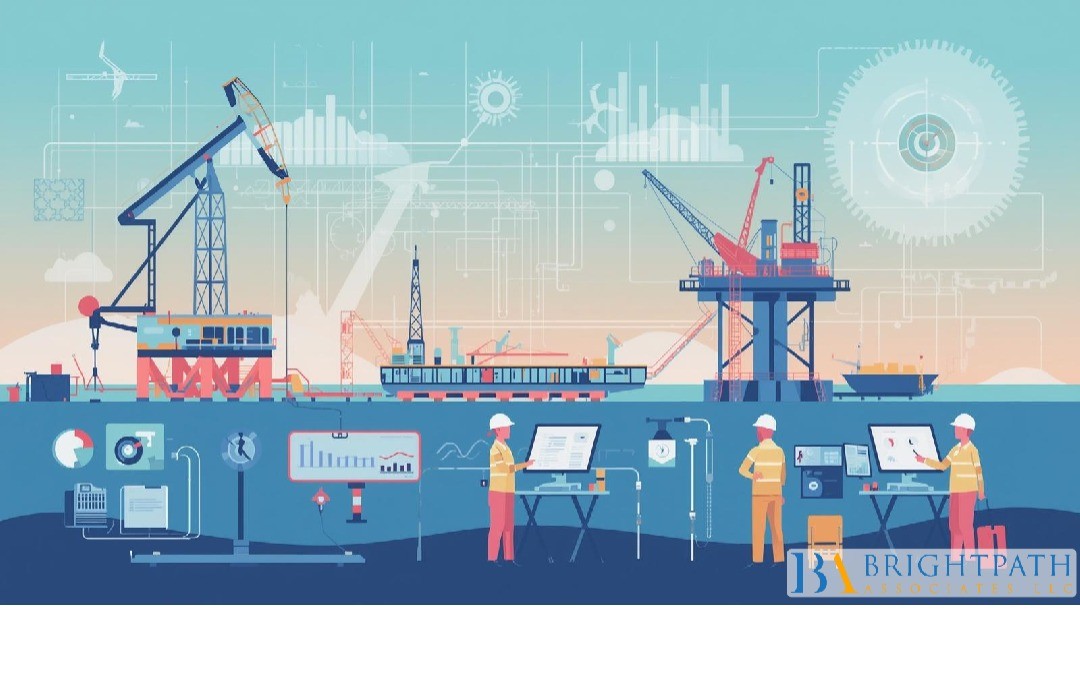
Oil Production at a Strategic Crossroads
From 2023 to 2025, the oil and #GasIndustry has operated at a strategic crossroads shaped by volatile commodity prices, intensifying regulatory scrutiny, rising capital discipline, and accelerating technological change. Petroleum engineering services have become central to maintaining production efficiency, extending asset life, and improving recovery rates in mature and unconventional fields. For small to mid-sized operators, the ability to compete increasingly depends on how effectively engineering expertise is integrated with leadership strategy.
Global oil demand has remained resilient despite energy transition narratives, placing pressure on producers to optimize output while managing costs and emissions. In this environment, petroleum engineering services are no longer confined to technical execution; they influence investment decisions, operational resilience, and long-term asset value. However, the effectiveness of these services is deeply tied to leadership capability at the executive level.
Technological Evolution in Petroleum Engineering
Advancements in oil drilling technology have transformed exploration and production workflows. Horizontal drilling, enhanced oil recovery techniques, real-time reservoir monitoring, and data-driven production optimization are now standard expectations rather than competitive advantages. Industry data shows that companies leveraging advanced petroleum engineering services can improve recovery factors by 5–15%, translating directly into increased profitability without proportional capital expansion.
Yet technology adoption alone does not guarantee results. Engineering innovations require executives who understand both subsurface complexity and strategic risk management. Organizations that lack leadership fluency in modern petroleum engineering often underutilize advanced tools, leading to suboptimal production outcomes and slower response to field-level challenges.
Operational Complexity and Cost Discipline
Modern #OilProduction is defined by complexity. Aging infrastructure, deeper reservoirs, and unconventional plays demand sophisticated engineering oversight across drilling, completion, and production phases. Refinery operations management and upstream integration have also become more interdependent, requiring tighter coordination between technical teams and executive leadership.
Cost discipline has intensified as investors scrutinize capital efficiency and return on invested capital. Petroleum engineering services play a crucial role in identifying efficiency gains, reducing non-productive time, and optimizing maintenance cycles. However, these benefits depend on executives who can translate engineering insights into disciplined operational decisions. Leadership gaps in this area often result in cost overruns, delayed projects, and diminished investor confidence.
Energy Transition Pressures and Sustainable Practices
While oil and gas remain essential to global energy supply, the push toward sustainable energy solutions has reshaped executive accountability. Petroleum engineers are increasingly involved in emissions reduction, carbon capture initiatives, and improved environmental performance. These responsibilities elevate engineering services from operational support to strategic enablers of compliance and reputation management.
Energy industry trends from 2023 onward indicate that companies integrating sustainability into core engineering practices are better positioned to secure financing and regulatory approvals. Executives must now balance production targets with environmental performance, requiring leadership that understands both petroleum engineering fundamentals and evolving sustainability expectations.
Leadership Talent Shortages in Oil and Gas
Leadership talent shortages have emerged as one of the most pressing risks facing oil and #GasCompanies. Workforce studies estimate that a significant portion of senior executives and technical leaders are nearing retirement, while fewer professionals are entering petroleum-focused career paths. Oil and gas jobs in the USA and globally increasingly demand hybrid skill sets combining engineering expertise, digital fluency, and strategic leadership.
Small to mid-sized operators feel this shortage most acutely. Limited succession planning and competition from larger energy firms make it difficult to attract leaders capable of overseeing complex petroleum engineering services. As a result, leadership gaps often delay technology adoption, weaken operational oversight, and constrain growth.
Expanding Executive Role Expectations
Executive roles within oil and gas companies have expanded well beyond traditional production oversight. Leaders are now expected to evaluate energy sector investment decisions, oversee advanced engineering programs, manage regulatory risk, and align operations with long-term portfolio strategy. Petroleum engineering services sit at the center of these responsibilities, informing decisions on field development, asset divestment, and capital allocation.
This evolution has raised expectations for executive competence. Experience in legacy oilfield services companies is no longer sufficient without exposure to modern drilling technologies, data analytics, and sustainability frameworks. The mismatch between evolving role demands and available leadership talent has become increasingly evident between 2023 and 2025.
Recruitment Practices Under Strategic Pressure
#TraditionalRecruitmentMethods have struggled to address these leadership challenges. Posting roles and screening active candidates often yields executives with narrow experience profiles that do not align with the multidimensional demands of modern oil production. This has driven a strategic evolution in recruitment practices across the oil and gas sector.
Executive search recruitment has emerged as a critical solution for identifying leaders with the depth and breadth required to manage petroleum engineering services effectively. By targeting passive candidates with proven experience in complex operating environments, executive search provides access to talent that conventional hiring channels cannot reach.
Executive Search Recruitment as a Strategic Enabler
#ExecutiveSearchRecruitment enables oil and gas companies to align leadership capability with operational and strategic priorities. Rather than reacting to vacancies, organizations increasingly use executive search to anticipate leadership needs tied to technology adoption, asset expansion, or restructuring initiatives.
Brightpath Associates has positioned executive search recruitment as a strategic partnership for oil and gas organizations navigating leadership shortages. With a deep understanding of petroleum engineering services, oilfield operations, and energy market dynamics, Brightpath Associates identifies leaders who can bridge technical excellence and executive decision-making. This alignment reduces hiring risk and strengthens organizational resilience.
Financial Impact of Leadership Misalignment
Leadership misalignment carries significant financial consequences in capital-intensive industries like oil and gas. Studies suggest that a failed executive hire can cost up to three times the leader’s annual compensation when accounting for lost productivity, project delays, and organizational disruption. In petroleum operations, these costs are magnified by downtime, safety risks, and missed production targets.
Conversely, companies with strong executive leadership demonstrate higher asset utilization, faster project execution, and more consistent production performance. Effective leadership ensures that petroleum engineering services deliver measurable value rather than isolated technical improvements.
Preparing for the Future of Oil Production
Looking ahead, petroleum engineering services will continue to evolve through automation, #ArtificialIntelligence, and integrated energy solutions. Oil and gas companies that succeed will be those that treat leadership capability as a strategic asset equal to reserves and infrastructure.
C-suite executives and founders are increasingly reassessing leadership structures, succession planning, and recruitment strategies to ensure readiness for ongoing change. Executive search recruitment plays a central role in this preparation by delivering leaders capable of navigating technical complexity, market volatility, and regulatory pressure simultaneously.
Leadership as the Foundation of Modern Petroleum Engineering
The role of petroleum engineering services in modern oil production extends far beyond technical execution. These services shape operational efficiency, sustainability outcomes, and long-term asset value. However, their impact is ultimately determined by leadership quality.
For small to mid-sized oil and gas companies, addressing leadership gaps is not optional. It is a strategic imperative that directly influences competitiveness, profitability, and resilience. By leveraging executive search recruitment through partners like Brightpath Associates, organizations can secure the leadership required to translate petroleum engineering expertise into sustained business success in an increasingly complex energy landscape.
Find your next leadership role in Oil and Gas Industry today!
Stay informed with the latest insights on Oil and Gas Industry!