
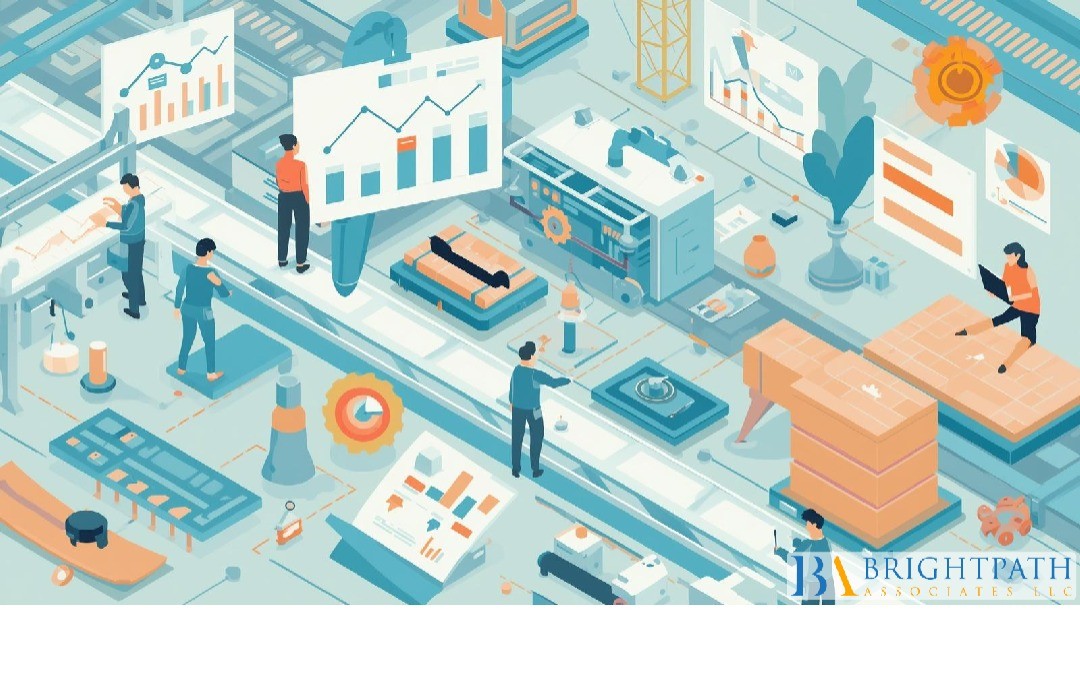
Market Volatility and the New Reality of Industrial Materials
From 2023 to 2025, the glass, ceramic, and #ConcreteIndustries have operated in a state of sustained volatility. Energy price fluctuations, raw material shortages, regulatory pressure around emissions, and shifting construction demand have created an environment where profitability is no longer driven by volume alone. For leadership teams, especially within small to mid-sized organizations, margin preservation has become a strategic challenge that extends beyond operations into talent, governance, and long-term planning.
Glass market analysis during this period shows that manufacturers experienced cost increases ranging from 18% to 30%, largely driven by energy and logistics volatility. At the same time, customer expectations for sustainability, customization, and faster delivery intensified. These opposing forces have placed unprecedented pressure on executive teams to deliver financial performance while reengineering operational models.
Leadership as a Profit Lever, Not an Overhead
Historically, leadership hiring in the glass, ceramic, and concrete sectors prioritized technical expertise and tenure. However, the current market environment has elevated leadership effectiveness as a direct driver of profitability. Companies with agile executive teams consistently outperform peers in cost control, production efficiency, and strategic adaptation.
Industry workforce data indicates that nearly 55% of materials manufacturers faced senior leadership gaps between 2023 and 2025, particularly in operations, sustainability, and supply chain leadership. These gaps are not merely human resource concerns; they directly impact concrete production efficiency, furnace utilization rates, capital investment decisions, and go-to-market agility.
As margins tighten, executive capability increasingly determines whether a company can navigate volatility or be consumed by it.
Shifting Role Expectations Across the C-Suite
Executive roles across the glass, ceramic, and concrete industries have evolved significantly. Plant leaders are now expected to integrate advanced concrete technology and #CeramicManufacturingTechnology into production workflows while meeting stricter environmental standards. Supply chain executives must manage geopolitical sourcing risk while maintaining consistent input quality. Finance leaders are tasked with balancing capital-intensive modernization projects against short-term profitability demands.
These expanded expectations have created a mismatch between traditional leadership profiles and modern business needs. Many organizations have discovered that technically proficient leaders lack exposure to sustainability frameworks, digital transformation, or cross-functional strategy. This misalignment slows decision-making and erodes competitive advantage in fast-moving construction and infrastructure markets.
Sustainability as a Profitability Imperative
Cement industry sustainability and sustainable building materials have shifted from regulatory obligations to profit-driving strategies. Customers, investors, and governments increasingly favor suppliers that demonstrate measurable reductions in carbon emissions and energy consumption. Companies that proactively invest in low-emission kilns, recycled inputs, and energy-efficient furnaces consistently achieve stronger contract positioning and pricing power.
However, sustainability initiatives require leadership capable of aligning environmental goals with financial performance. Organizations lacking executives who understand both compliance and commercial impact often struggle to convert sustainability investments into measurable returns. This leadership gap has become one of the most critical constraints on profitable growth within the sector.
Technology Adoption and the Leadership Bottleneck
#GlassIndustry innovation and ceramic industry growth are increasingly tied to automation, data analytics, and predictive maintenance technologies. These tools promise higher yield, reduced downtime, and improved quality control. Yet many modernization efforts stall due to leadership hesitation or lack of digital fluency at the executive level.
Between 2023 and 2025, companies that successfully implemented smart manufacturing technologies reported productivity gains of up to 20%. In contrast, firms with outdated leadership structures often delayed adoption, citing cost concerns while absorbing hidden inefficiencies. This divergence underscores how executive mindset and capability now directly influence profitability outcomes.
Recruitment Practices Under Pressure
Traditional recruitment approaches have struggled to keep pace with these evolving leadership requirements. Posting vacancies and relying on generalist hiring processes often results in candidates who meet historical expectations but lack future readiness. As a result, executive hiring mistakes have become increasingly costly in an already volatile market.
Construction materials recruitment has shifted toward strategic talent acquisition, where leadership alignment with long-term business objectives is prioritized over immediate role fulfillment. Executive search recruitment has emerged as a critical tool for identifying leaders who possess not only industry expertise but also strategic adaptability, change leadership capability, and sustainability acumen.
Executive Search Recruitment as a Strategic Advantage
From 2023 to 2025, forward-looking glass, ceramic, and concrete companies increasingly adopted #ExecutiveSearchRecruitment to secure leadership aligned with market realities. Rather than reacting to vacancies, they used search partners to anticipate future capability needs tied to technology, sustainability, and operational resilience.
Executive search firms with deep sector specialization provide access to passive leadership talent—executives who are not actively seeking roles but bring proven experience in navigating industry cycles. Organizations partnering with firms such as Brightpath Associates have positioned executive hiring as a growth enabler rather than a reactive expense, reducing leadership turnover and strengthening execution during periods of uncertainty.
Profitability Through Strategic Leadership Alignment
Maximizing profit in a fluctuating glass market requires more than cost containment. It demands leaders who can balance short-term margin pressures with long-term investment decisions. Companies that align leadership capability with business strategy consistently outperform peers in return on capital, customer retention, and operational efficiency.
Executive teams with diverse yet complementary skill sets are better equipped to integrate advanced concrete technology, manage energy volatility, and capitalize on ceramic industry growth opportunities. In contrast, leadership misalignment often results in fragmented decision-making, delayed investments, and erosion of competitive position.
Preparing for the Next Market Cycle
Looking ahead, volatility is expected to remain a defining characteristic of the glass, ceramic, and concrete industries. Infrastructure spending, #GreenConstruction mandates, and technological disruption will continue to reshape demand and cost structures. Profitability will increasingly depend on leadership agility rather than market stability.
Organizations that proactively invest in executive capability through structured executive search recruitment will be best positioned to navigate future cycles. By securing leaders who understand both industrial complexity and strategic growth, companies can transform uncertainty into opportunity and volatility into sustained profitability.
For C-suite executives and founders, the conclusion is clear: leadership is no longer a supporting function—it is a core profit driver. Addressing leadership gaps decisively is not optional; it is essential to thriving in the modern glass, ceramic, and concrete market.
Find your next leadership role in Glass, Ceramic, Concrete Industry today!
Stay informed with the latest insights on Glass, Ceramic, Concrete Industry!