
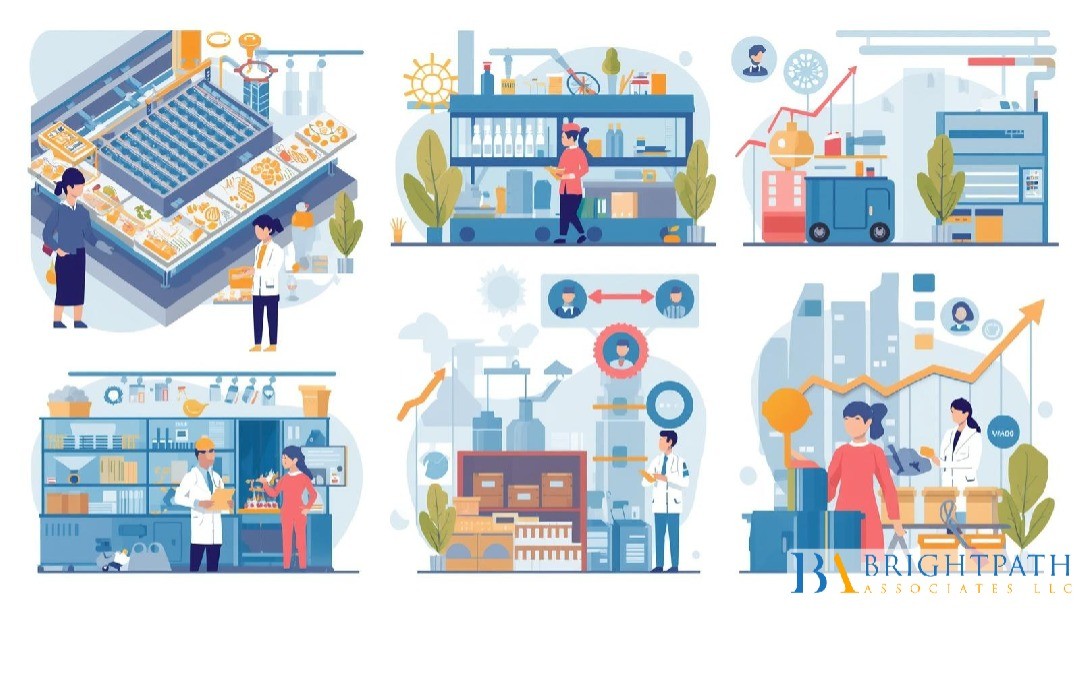
The Shifting Leadership Landscape in Food Production
Between 2023 and 2025, the global #FoodProductionIndustry has experienced one of its most complex leadership transitions in decades. Rapid changes in consumer demand, stricter food production safety certification requirements, rising input costs, and accelerated technology adoption have reshaped how food businesses operate and, more importantly, how they are led. For decision-makers in small to mid-sized food production companies, leadership capability is no longer a supporting function—it has become a core driver of growth strategy, operational resilience, and long-term competitiveness.
Industry data shows that more than 60% of food manufacturing firms reported leadership capability gaps during this period, particularly in roles tied to food production management, supply chain optimization, and technology-driven process innovation. As senior executives retire or exit faster than successors are developed, companies face mounting pressure to secure leaders who can scale operations while maintaining compliance, quality, and margin discipline.
Why Leadership Shortages Are Intensifying
The leadership talent shortage in food production is not a temporary cycle; it is structural. The industry has historically relied on tenure-based progression, where operational expertise naturally led to executive responsibility. However, modern food production business strategy demands far more than operational familiarity. Today’s leaders must integrate automation, sustainability mandates, digital traceability, and global sourcing complexities into everyday decision-making.
From 2023 onward, executive role expectations expanded significantly. A plant head is now expected to understand industrial trends in food production, oversee capital investment in advanced food production processing equipment, and align operations with enterprise-wide growth initiatives. Similarly, supply chain leaders must manage volatility while implementing technology in food production to enhance visibility and reduce waste. These expanded expectations have outpaced the available talent pool, leaving many organizations exposed at the leadership level.
Growth Strategy Meets Operational Reality
Food production growth strategy has become increasingly multifaceted. Organic growth, #GeographicExpansion, private label partnerships, and vertical integration are all on the table for mid-market producers. Yet, execution often falters due to leadership gaps rather than market limitations. Research indicates that companies with misaligned leadership teams are 2.3 times more likely to miss growth targets, even when demand remains strong.
Effective food production consultants consistently emphasize that strategy without leadership capability is merely theoretical. Leaders must translate growth objectives into executable operational plans while ensuring compliance, safety, and workforce engagement. This is especially critical as food safety incidents and regulatory penalties carry both financial and reputational consequences. Strong leadership is now inseparable from risk management.
The Rising Role of Innovation and Technology
Innovation in food production has shifted from experimentation to necessity. Automation, AI-driven quality control, predictive maintenance, and smart packaging solutions are now mainstream investments rather than future aspirations. Executives are expected to evaluate, adopt, and scale these technologies without disrupting production continuity.
However, many leadership candidates possess either deep operational experience or strong digital acumen—rarely both. This imbalance has forced organizations to rethink how they assess executive readiness. Leaders must demonstrate adaptability, data literacy, and the ability to manage cross-functional transformation. Companies that fail to recruit for these competencies risk falling behind more agile competitors who treat technology as a leadership issue rather than an IT initiative.
Supply Chain Complexity as a Leadership Test
Food production supply chain challenges intensified significantly between 2023 and 2025. Geopolitical disruptions, climate volatility, and transportation constraints exposed vulnerabilities across sourcing and distribution networks. Executives are now accountable for building resilient supply chains that balance cost efficiency with continuity.
This shift has elevated #SupplyChain leadership from an operational role to a strategic one. Executives must collaborate across procurement, production, and sales to align inventory strategies with market demand. Organizations lacking experienced leadership in this area often experience margin erosion, service failures, and stalled expansion plans.
Recruitment Practices Undergoing Strategic Evolution
Traditional recruitment methods have struggled to keep pace with these evolving demands. Posting roles and screening resumes no longer delivers leaders capable of navigating today’s food production environment. As a result, executive search recruitment has emerged as a critical strategic function rather than a reactive hiring solution.
Executive search firms specializing in #FoodProductionManagement bring market intelligence, leadership benchmarking, and sector-specific insight that internal teams often lack. They understand how industrial trends in food production are reshaping executive roles and can identify candidates who combine operational depth with strategic foresight. This approach significantly reduces the risk of costly mis-hires, which studies estimate can exceed three times the executive’s annual compensation.
Why Executive Search Recruitment Is Now Essential
From 2023 to 2025, successful food producers increasingly relied on #ExecutiveSearchRecruitment to secure leadership aligned with their business trajectory. Rather than filling vacancies, they focused on building leadership capability ahead of growth milestones. This proactive approach allows organizations to remain competitive while navigating regulatory, technological, and workforce challenges.
Firms such as Brightpath Associates have positioned executive search as a value-driven partnership, aligning leadership talent with long-term business objectives rather than short-term staffing needs. By leveraging deep industry networks and a consultative recruitment model, companies gain access to candidates who are not actively seeking roles but possess the precise expertise required for transformation and scale.
Leadership as a Competitive Advantage
In the current market, leadership quality has become a differentiator. Companies with strong executive teams adapt faster, innovate more effectively, and maintain operational stability during disruption. Those without aligned leadership struggle to execute even the most promising strategies.
As food production companies continue to evolve, the ability to attract and retain high-impact leaders will define success more than access to capital or equipment. Executive hiring decisions made today will shape organizational performance for years to come, influencing safety outcomes, growth trajectories, and brand credibility.
Preparing for the Next Phase of Industry Growth
Looking ahead, food production will continue to face pressure from #SustainabilityDemands, workforce shortages, and consumer expectations for transparency and quality. Navigating this complexity requires leaders who understand both the science of production and the strategy of growth. Organizations that invest in leadership capability through structured executive search recruitment are better positioned to turn industry disruption into opportunity.
For C-suite executives and founders, the message is clear: leadership is no longer a background function—it is the engine of competitive advantage. Addressing leadership gaps decisively is not just a hiring decision; it is a strategic imperative for the future of food production.
Find your next leadership role in Food Production Industry today!
Stay informed with the latest insights on Food Production Industry!