
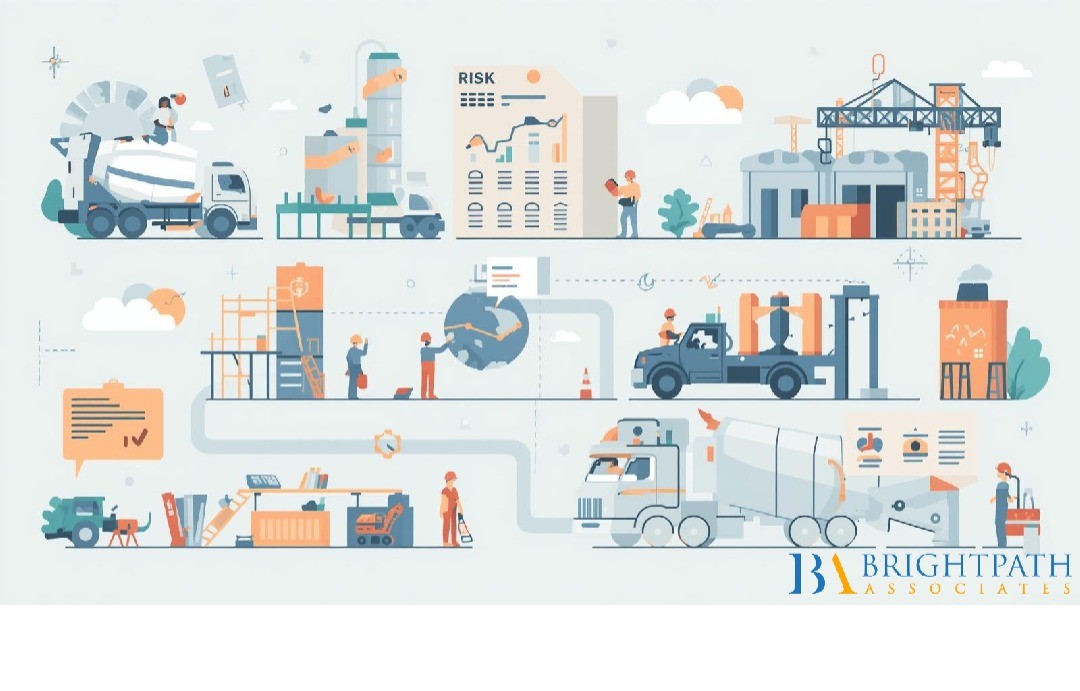
Understanding Risk in the Concrete Supply Chain
In the contemporary construction materials sector, the #ConcreteSupplyChain represents a critical yet vulnerable component of business operations. For small to mid-sized companies in the Glass, Ceramic, and Concrete industries, effective risk management is no longer optional—it is a strategic necessity. The complexities of concrete production, distribution, and end-use involve multiple stakeholders, including raw material suppliers, transport operators, and end customers. Each node in this chain carries potential risks that can affect operational efficiency, project timelines, and financial performance.
Recent studies indicate that disruptions in construction material supply chains have increased by nearly 35% between 2020 and 2024, largely due to global logistical challenges, raw material shortages, and fluctuating market demand. For executives, this signals a need to develop comprehensive mitigation strategies that not only address operational bottlenecks but also safeguard long-term organizational resilience.
Key Risks Affecting the Concrete Supply Chain
Concrete supply chains face a unique set of risks, ranging from raw material volatility to regulatory compliance issues. One prominent challenge is the fluctuation in cement and aggregate prices, which can significantly impact production costs. Between 2021 and 2023, the average cost of cement in global markets rose by approximately 12%, largely due to energy price inflation and supply shortages. Such volatility underscores the importance of strategic sourcing agreements and diversified supplier networks.
Operational risks also remain high. Delays in transport, particularly for ready-mix concrete, can compromise project timelines and quality. Unlike other construction materials, concrete has a limited workable lifespan once mixed, meaning disruptions in logistics can lead to wastage and cost overruns. Companies must therefore implement real-time monitoring systems and predictive analytics to anticipate and mitigate delays.
Environmental and regulatory risks are equally critical. The cement and concrete industries are under increasing pressure to reduce carbon emissions and comply with sustainability standards. For example, the International Energy Agency (IEA) reports that cement production accounts for roughly 7% of global CO2 emissions, prompting governments worldwide to introduce stricter environmental regulations. Companies failing to align with sustainable practices face penalties, reputational damage, and diminished market access.
Strategic Mitigation Approaches
To counteract these risks, executives in the concrete, glass, and #CeramicIndustries are increasingly adopting multi-layered risk management strategies. One approach involves leveraging advanced concrete technology to enhance production efficiency and reduce material waste. Innovations such as high-performance concrete, self-compacting mixtures, and recycled aggregate incorporation allow companies to maintain quality while mitigating resource dependency. By embracing these technologies, firms not only reduce operational risk but also strengthen their competitive position in an increasingly sustainability-conscious market.
Supply chain diversification is another crucial strategy. Companies that rely on a limited number of suppliers are inherently vulnerable to disruptions. By establishing multiple sourcing channels and forging long-term relationships with reliable partners, businesses can reduce exposure to market volatility. This approach also enables flexibility in adjusting production schedules based on demand fluctuations, ensuring continuity of supply even under adverse conditions.
Investing in digital tools for supply chain visibility is a growing trend among leading firms. Predictive analytics, AI-driven inventory management, and blockchain-based traceability solutions allow executives to identify potential bottlenecks before they escalate. For instance, real-time monitoring of concrete transport from batching plants to construction sites can significantly reduce delays and maintain product integrity. These digital capabilities not only minimize risk but also improve operational transparency, facilitating more informed decision-making at the executive level.
Addressing Talent and Leadership Gaps
While technological and operational strategies are critical, human capital remains a pivotal factor in supply chain resilience. The Glass, Ceramic, and Concrete industries are currently facing a shortage of leadership talent capable of navigating complex supply chain challenges. According to industry reports, nearly 48% of mid-sized construction materials companies have identified executive vacancies as a top operational risk, citing difficulty in attracting candidates with both technical expertise and strategic vision.
This talent shortage has prompted a shift in recruitment practices from traditional hiring methods to more strategic executive search approaches. Executive search recruitment enables companies to access highly qualified professionals who possess the expertise necessary to manage risk, optimize operations, and drive sustainable growth. Firms that proactively integrate executive search into their talent acquisition strategy can not only fill critical gaps but also secure leaders who are aligned with long-term organizational goals.
Moreover, evolving role expectations necessitate leaders who are adept at digital transformation and sustainability management. Modern executives must balance operational efficiency with compliance, innovation, and ESG commitments, making the selection of top-tier talent even more strategic. In this context, executive search recruitment is not merely a staffing solution—it becomes a core component of risk mitigation and organizational resilience.
Leveraging Data-Driven Insights
#DataAnalytics plays a transformative role in both operational risk management and strategic decision-making. Concrete production involves multiple variables, including raw material quality, mixing ratios, weather conditions, and transportation logistics. By employing predictive modeling and advanced analytics, companies can anticipate risks and adjust operations accordingly. For example, historical data on supply chain delays and quality deviations can inform contingency planning, inventory management, and scheduling decisions, ultimately reducing financial exposure.
Additionally, market intelligence regarding industry trends such as ceramic manufacturing technology advancements or glass market innovations allows executives to make informed investment and expansion decisions. Companies that integrate data-driven insights into strategic planning are better positioned to respond to emerging challenges, maintain supply chain continuity, and capitalize on growth opportunities.
Sustainability as a Risk Mitigation Tool
Sustainability is no longer a peripheral concern; it has become a central pillar of risk management in the concrete supply chain. Cement and concrete production are under intense scrutiny due to environmental impacts, and companies that fail to adopt sustainable practices risk regulatory penalties and market marginalization. Strategies such as incorporating low-carbon materials, optimizing energy usage, and adopting circular economy principles can mitigate both environmental and operational risks.
Moreover, sustainability initiatives can enhance brand reputation and attract investors, clients, and talent who prioritize environmental responsibility. In an era where corporate responsibility is increasingly linked to profitability, integrating sustainability into risk management strategies is both a defensive and an offensive business move.
Future Outlook and Strategic Imperatives
The coming years are likely to see continued volatility in the construction materials sector, driven by geopolitical shifts, technological advancements, and evolving regulatory frameworks. For executives, the imperative is clear: adopt comprehensive risk management strategies that address operational, environmental, and human capital challenges simultaneously.
Integrating #ExecutiveSearchRecruitment into this strategy ensures that companies have the leadership talent necessary to navigate complex risks while driving innovation and growth. By combining advanced concrete technology, supply chain diversification, digital analytics, and sustainable practices with a forward-looking talent strategy, businesses can achieve both resilience and competitive advantage.
In conclusion, managing risk in the concrete supply chain is a multifaceted challenge that demands strategic foresight, operational excellence, and leadership acumen. Small to mid-sized companies in the Glass, Ceramic, and Concrete industries must prioritize comprehensive risk mitigation strategies to ensure continuity, compliance, and growth. Executive search recruitment emerges as a critical solution, enabling organizations to secure the leadership talent necessary to implement these strategies effectively. By taking a proactive, data-driven, and sustainability-oriented approach, companies can transform #SupplyChain risks into opportunities for innovation, efficiency, and long-term success.
Find your next leadership role in Glass, Ceramic, Concrete Industry today!
Stay informed with the latest insights on Glass, Ceramic, Concrete Industry!